Activity

History_of_China

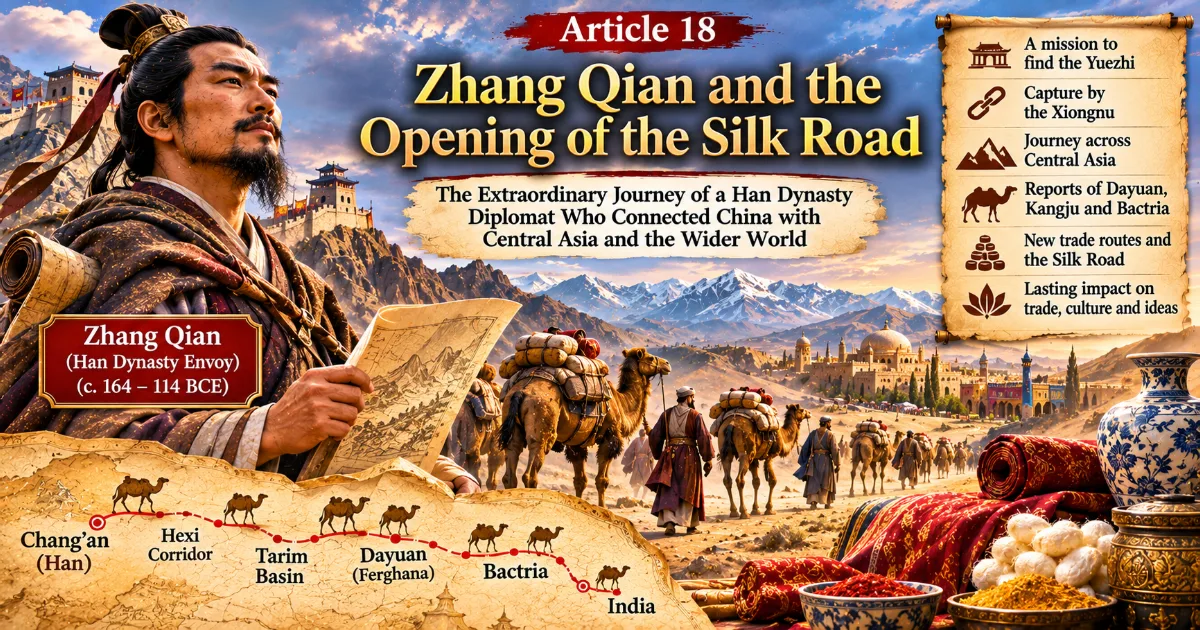
Zhang Qian and the Opening of the Silk Road

Zhang Qian and the Opening of the Silk Road

The Journey That Connected China with the Wider World The history of the Silk Road is closely connected with one extraordinary journey undertaken during the reign of Emperor Wu of the Han dynasty. More than two thousand years ago, a Chinese diplomatic envoy travelled westward from the imperial territories into unfamiliar lands, crossing dangerous regions controlled by powerful nomadic groups and …
1
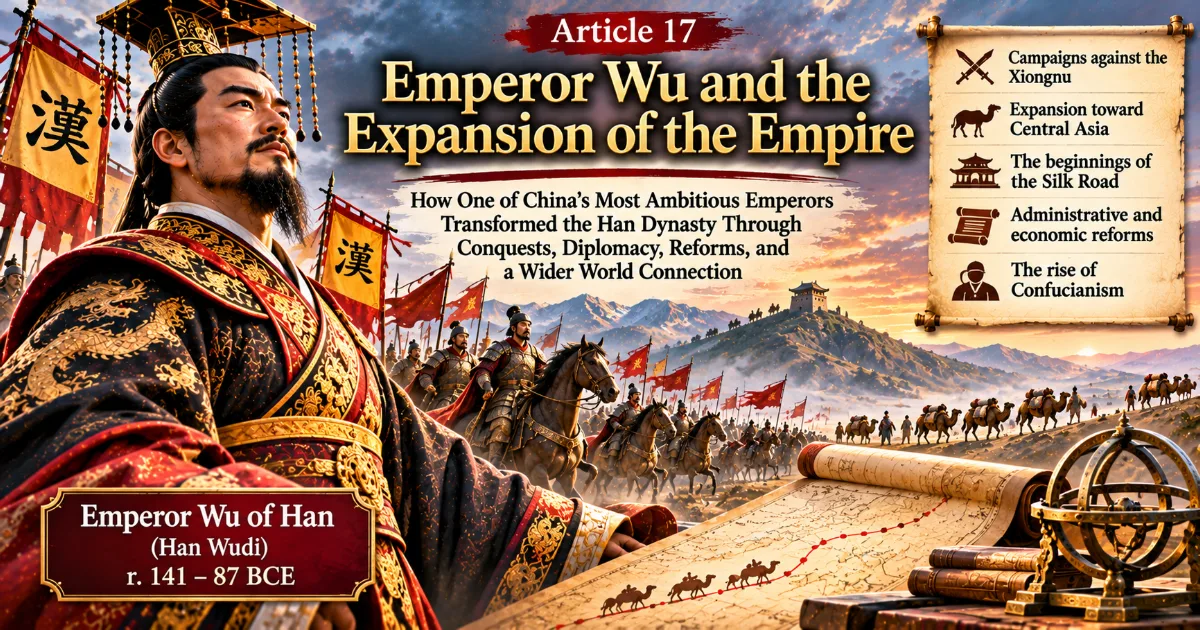
Emperor Wu and the Expansion of the Empire

Emperor Wu and the Expansion of the Empire

The Emperor Who Transformed Han China The Han dynasty began in 202 BCE under Liu Bang, known after his accession as Emperor Gaozu. Its early rulers concentrated on rebuilding the economy, restoring agricultural production, strengthening central authority, and preventing the political instability that had contributed to the collapse of the Qin dynasty. Their policies helped establish a relatively …

1
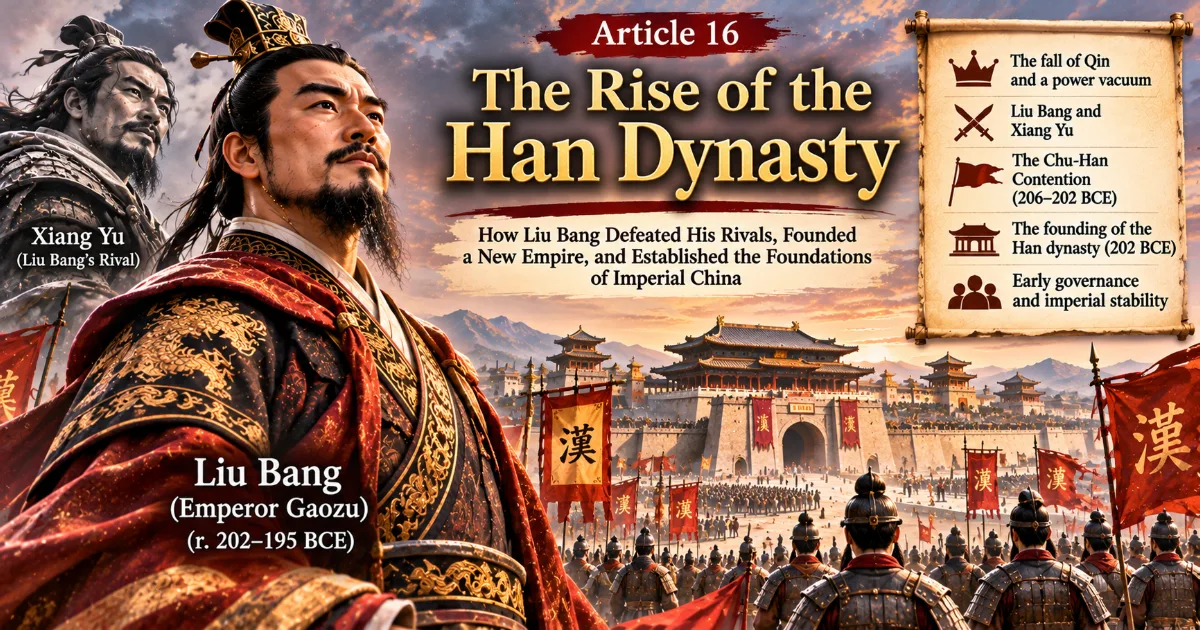
The Rise of the Han Dynasty

The Rise of the Han Dynasty

A New Empire Emerges from the Ashes of Qin The fall of the Qin dynasty in 206 BCE marked the end of China's first attempt to govern the entire country under a single centralized empire. Although Qin Shi Huang had unified the competing states and introduced a powerful administrative system, his dynasty did not survive long after his death. Harsh laws, heavy taxation, compulsory labour, military ca…

2
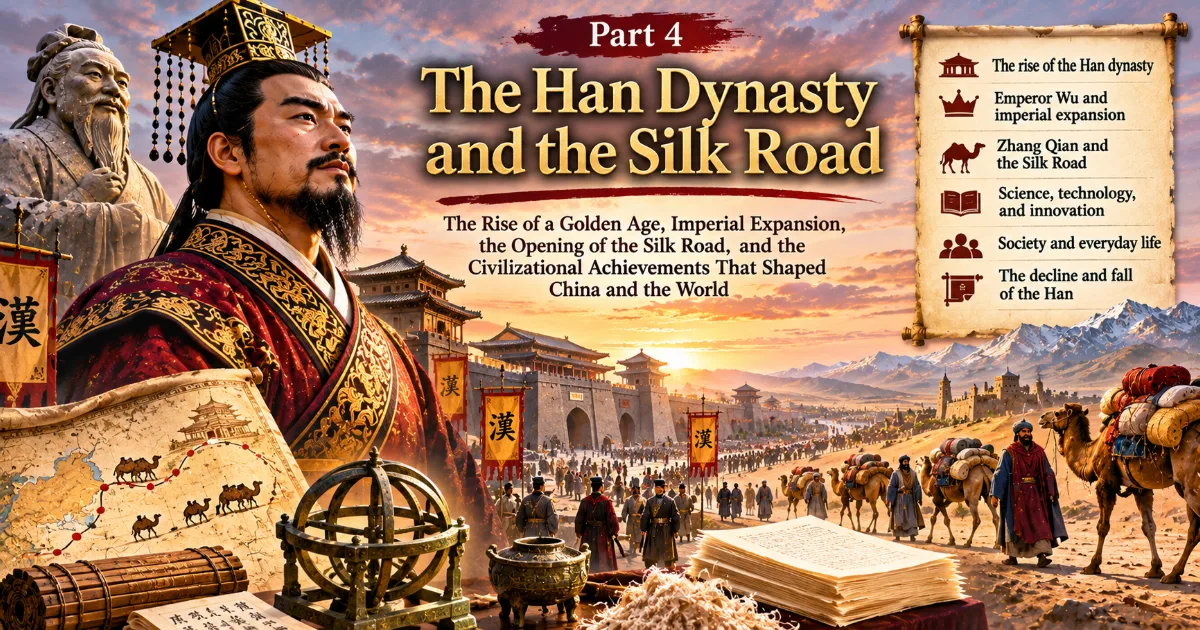
Part 4: The Han Dynasty and the Silk Road

Part 4: The Han Dynasty and the Silk Road

The Dynasty That Shaped Imperial China The collapse of the Qin dynasty in 206 BCE brought an end to China's first imperial experiment, but it did not bring an end to the idea of a unified Chinese empire. The political institutions established by Qin Shi Huang had transformed the country's administration, and the next generation of rulers inherited a foundation that would influence Chinese governm…

1
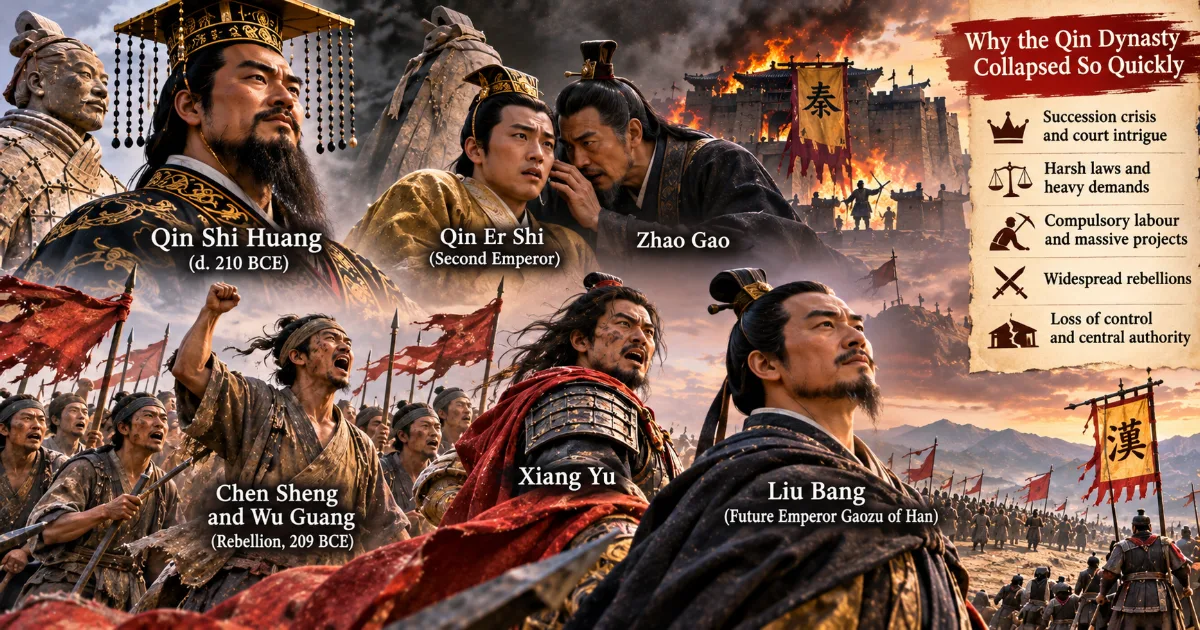
Why the Qin Dynasty Collapsed So Quickly

Why the Qin Dynasty Collapsed So Quickly

The Empire That Could Not Survive Its Founder In 221 BCE, Qin Shi Huang achieved something that had remained beyond the reach of China's earlier rulers. After centuries of political division and warfare, he defeated the rival kingdoms and established the first unified Chinese empire. His government introduced centralized administration, standardized writing, currency, weights and measures, and an…

0
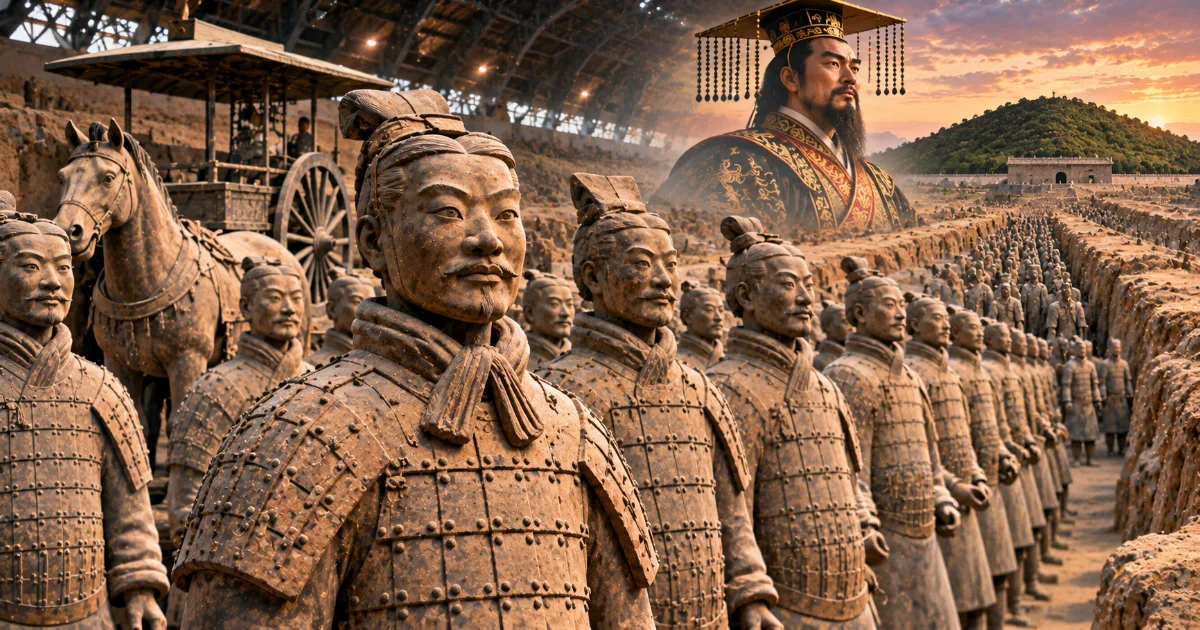
The Terracotta Army and the Emperor's Quest for Immortality

The Terracotta Army and the Emperor's Quest for Immortality

An Army Waiting Beneath the Earth In March 1974, farmers digging a well near the city of Xi'an in China's Shaanxi Province made an extraordinary discovery. Beneath the dry earth, they encountered fragments of ancient pottery and what appeared to be parts of human figures. Further investigation revealed something far more remarkable: thousands of life-sized terracotta soldiers, arranged in militar…

2
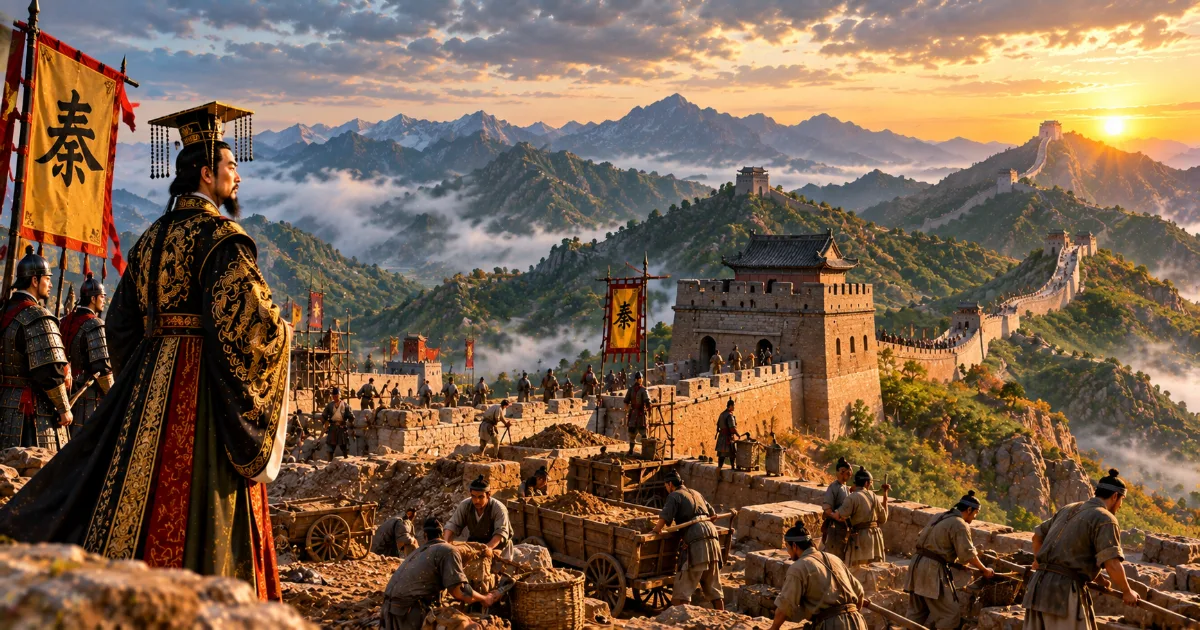
The Great Wall: Early Defences and the Qin Legacy

The Great Wall: Early Defences and the Qin Legacy

How Ancient Chinese Kingdoms Built Frontier Walls, Why Qin Shi Huang Connected Earlier Defences, and How the Great Wall Became a Lasting Symbol of China Introduction: The Wall That Became a Legend The Great Wall of China is one of the most recognizable structures in world history. Stretching across mountains, valleys, plateaus, and deserts, its surviving sections represent centuries of military p…

0
The First Emperor's Reforms and Centralized Government

The First Emperor's Reforms and Centralized Government

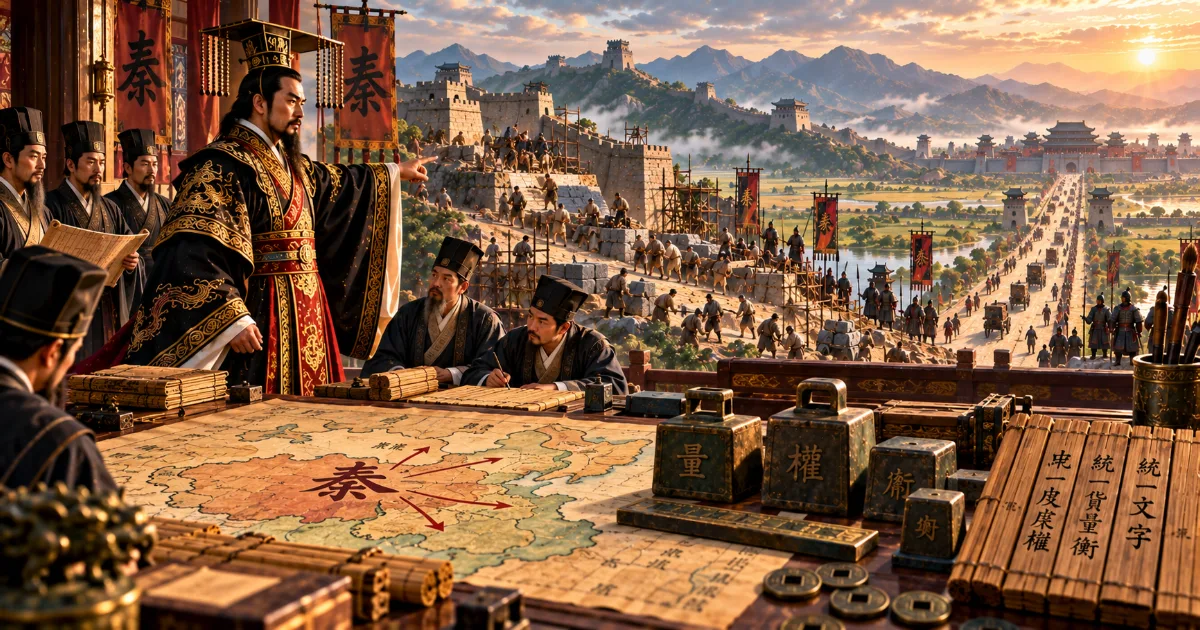
How Qin Shi Huang Standardized Writing, Weights, Measures, Currency, and Administration to Govern a Unified China Introduction: Turning Conquest into an Empire When Qin Shi Huang unified the rival kingdoms in 221 BCE, he achieved something that generations of rulers had pursued without success. For centuries, ancient China had been divided among competing states, each with its own political insti…

3
How Qin Shi Huang Unified China

How Qin Shi Huang Unified China

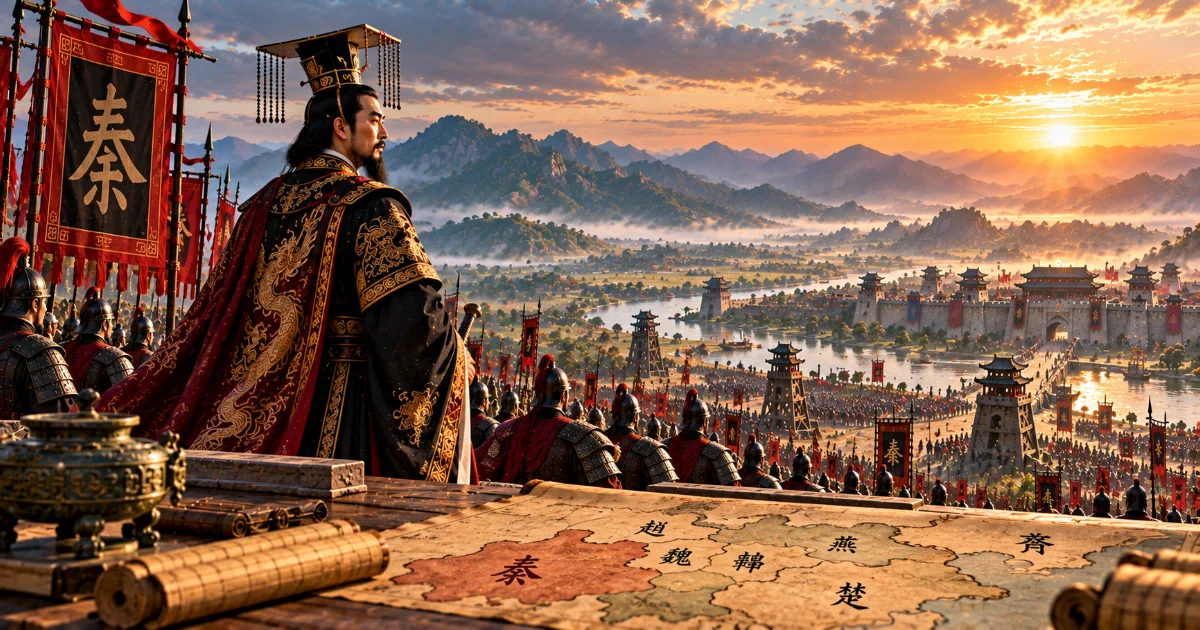
The Rise of Ying Zheng, the Conquest of the Rival Kingdoms, and the Birth of China's First Empire in 221 BCE Introduction: The Man Who Ended Centuries of Division In 221 BCE, the political history of China entered a new era. After centuries of conflict among rival kingdoms, the ruler of Qin conquered the remaining independent states and established the first unified Chinese empire. He was known a…

1
Part 3: Qin Shi Huang and the First Empire

Part 3: Qin Shi Huang and the First Empire

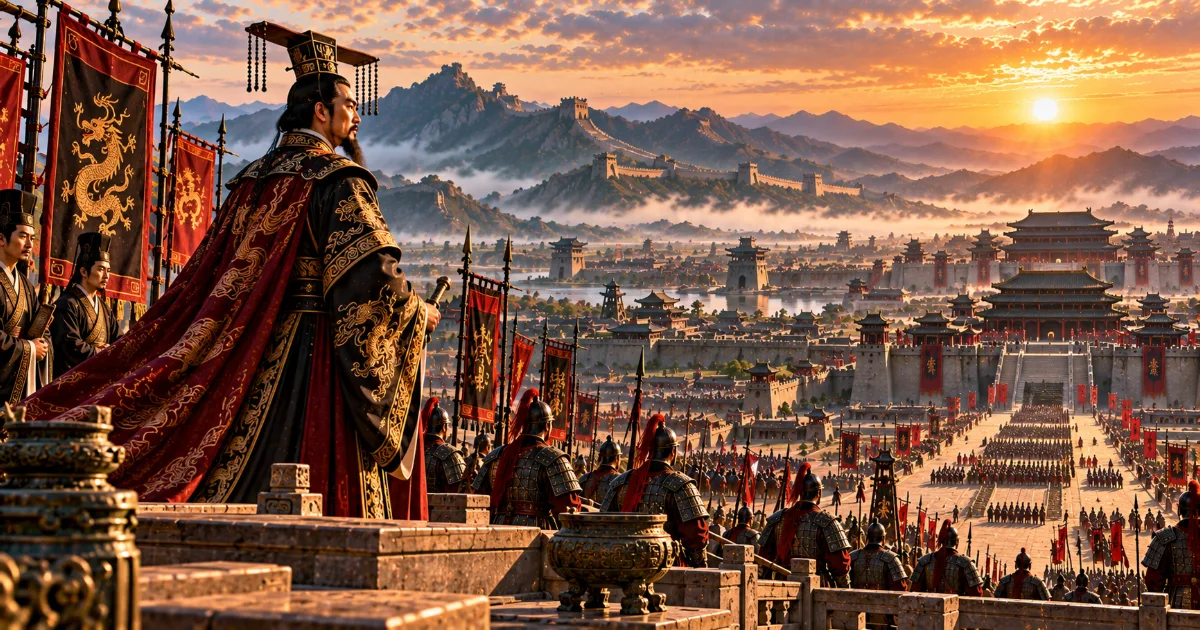
How China's First Emperor United the Warring States, Transformed an Ancient Civilization, and Created an Imperial System That Shaped Chinese History for Centuries Introduction: The King Who Ended the Age of Rival Kingdoms In 221 BCE, a momentous transformation took place in ancient China. After centuries of warfare among rival kingdoms, the ruler of Qin defeated the remaining independent states a…

0