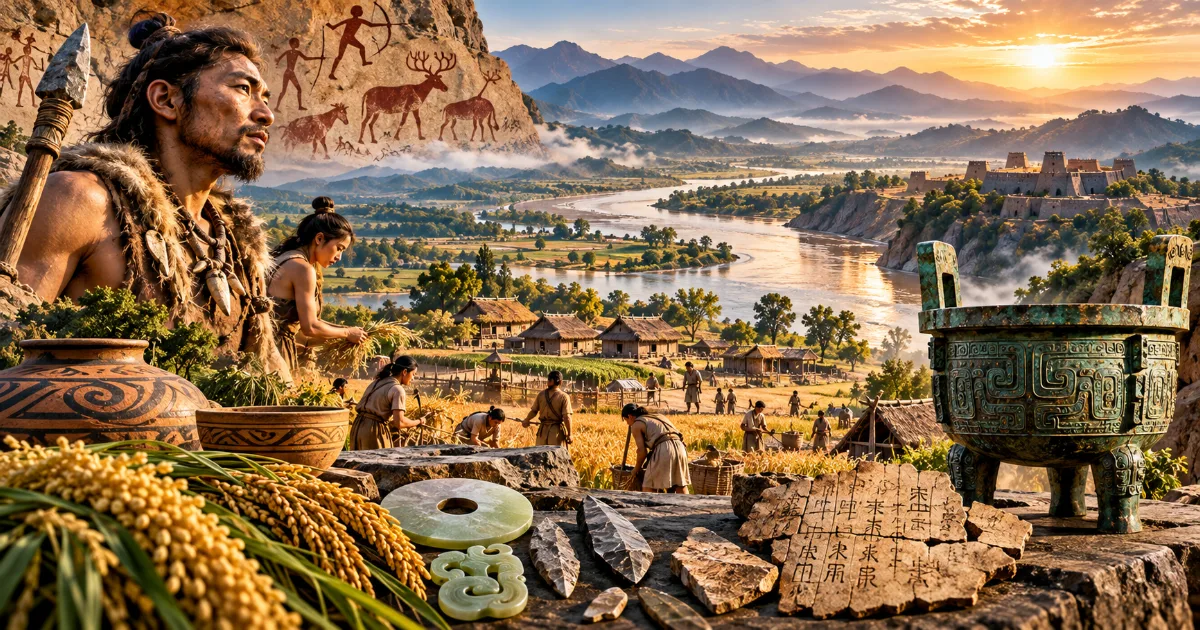
From Prehistoric Communities to the Foundations of Chinese History
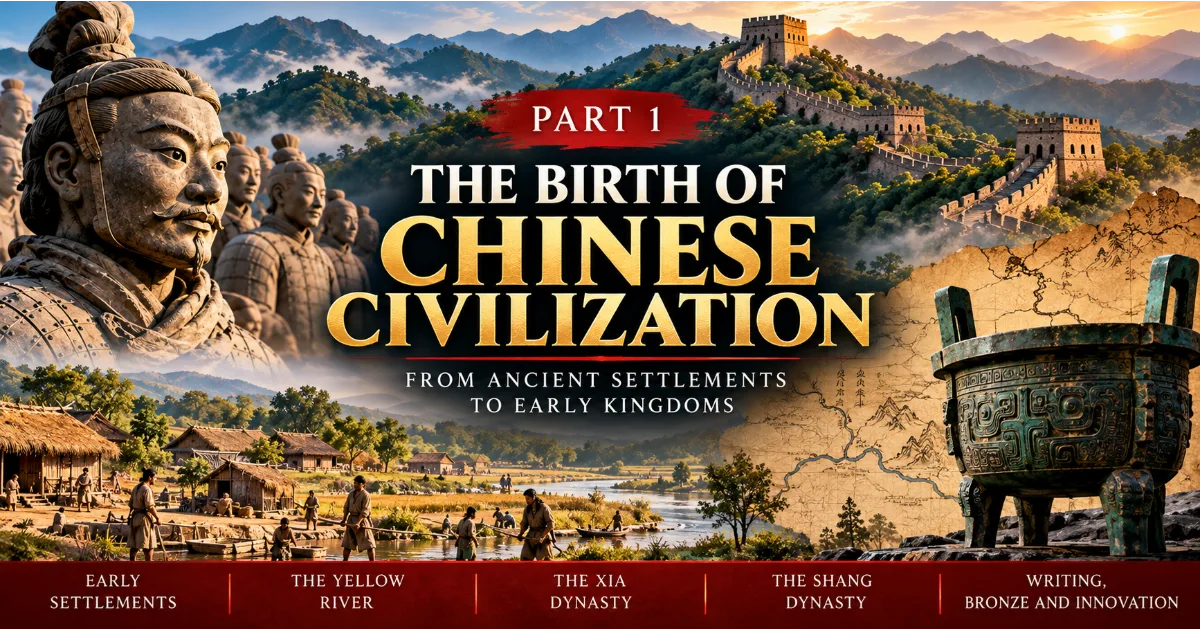
The story of China began thousands of years before the construction of its famous imperial palaces, the unification of its warring kingdoms, or the rise of emperors who ruled vast territories. Long before China emerged as a unified political entity, the lands of East Asia were home to diverse communities that developed their own agricultural practices, technologies, cultural traditions, and systems of social organization. Over many generations, these communities established the foundations of one of the world's most influential civilizations.
The origins of Chinese civilization cannot be attributed to a single individual, dynasty, settlement, or moment in history. They emerged gradually through the interaction of geography, agriculture, technological innovation, population growth, religious beliefs, and the organization of human communities. Rivers provided water and fertile soil, farming encouraged permanent settlement, and increasingly complex societies developed new ways of managing resources, resolving disputes, and exercising authority.
Archaeological discoveries have transformed our understanding of this early period. Ancient settlements, pottery fragments, stone tools, burial sites, agricultural remains, and inscriptions provide evidence of how people lived long before written historical records became available. These discoveries also reveal that early China was not a single, uniform cultural region. Different communities developed distinctive traditions across the Yellow River basin, the Yangtze River basin, and other parts of present-day China.
Understanding the origins of Chinese civilization requires looking beyond the familiar stories of emperors and dynasties. It means exploring the everyday lives of early farmers, the development of villages, the emergence of specialized crafts, and the gradual formation of political authority. These developments created the conditions that eventually supported the early states and dynasties that appear in Chinese historical traditions.
Continue Reading
1. China Before the First Dynasties
The history of human settlement in the region that is now China extends far beyond the beginning of agriculture. Archaeological evidence demonstrates that ancient human populations inhabited different parts of this vast region over hundreds of thousands of years. Discoveries at sites such as Zhoukoudian, near Beijing, have contributed significantly to the study of early human evolution and prehistoric life in East Asia.
The remains associated with Peking Man, discovered at Zhoukoudian during the twentieth century, became particularly important in the history of paleoanthropology. These fossils are generally associated with Homo erectus and demonstrate the deep antiquity of human occupation in the region. They belong to a much earlier period than the agricultural communities that later contributed to the development of Chinese civilization.
During the Paleolithic, or Old Stone Age, people survived through hunting, gathering, fishing, and other methods of obtaining food from their surroundings. They used stone tools to process animal remains, prepare plants, and perform other essential tasks. Their survival depended on knowledge of seasonal changes, local landscapes, animal movements, and available resources.
These prehistoric populations should not be imagined as members of a single continuous society that already possessed a shared Chinese national identity. The modern concept of China developed through a long and complicated historical process. Early populations belonged to different groups and communities, and their relationships changed as people migrated, exchanged knowledge, adapted to environmental conditions, and developed new ways of living.
Over time, the transition toward food production transformed human societies across several regions of what is now China. People began cultivating plants, managing domesticated animals, and establishing settlements that remained occupied for longer periods. These changes did not happen everywhere at once, nor did all communities abandon hunting and gathering. Instead, different ways of obtaining food continued to coexist and gradually interacted with one another.
The development of agriculture was one of the most important changes in human history because it allowed some communities to produce more predictable food supplies. This did not immediately create cities or kingdoms, but it established conditions under which populations could grow, occupations could become more specialized, and increasingly complex forms of social organization could emerge.
2. The Geography That Shaped Early China
China's geography played a major role in the development of its early societies. The region contains enormous environmental diversity, including high plateaus, mountain ranges, deserts, grasslands, forests, river valleys, and fertile plains. These landscapes influenced where communities settled, which crops they cultivated, how they traveled, and how they interacted with neighboring populations.
Two river systems were particularly important in the development of early Chinese civilization: the Yellow River in northern China and the Yangtze River in the south. Both supported agricultural communities, although the environments surrounding them differed considerably.
The Yellow River, known in Chinese as the Huang He, flows through areas that include the Loess Plateau before reaching the North China Plain. Its basin contains extensive deposits of fine, windblown sediment known as loess. This material can be fertile and relatively easy to cultivate, making parts of the region suitable for early agriculture when adequate water and suitable farming techniques were available.
However, the Yellow River also created serious challenges. Its sediment load can accumulate in river channels, contributing to changes in the river's course and increasing the risk of flooding. Floods could destroy settlements, damage crops, and force communities to relocate. The river therefore represented both an opportunity for agricultural development and a continuing environmental challenge.
Farther south, the Yangtze River basin supported agricultural traditions adapted to warmer and generally wetter conditions. Rice cultivation became especially important in several southern regions. Archaeological evidence from sites across the Yangtze basin reveals that rice farming developed over a long period, with different communities adopting and refining agricultural practices according to local circumstances.
The Yellow River and Yangtze River should not be understood as isolated cradles that independently created two completely separate civilizations. Communities across northern, southern, and other regions of China exchanged goods, technologies, and cultural practices over time. The eventual development of Chinese civilization resulted from interactions among numerous regional societies rather than from a single river valley alone.
Other regions also contributed to this development. Communities in the northeast, northwest, southwest, and coastal areas developed their own traditions of agriculture, pottery, settlement, and exchange. Their experiences remind us that the earliest history of China was geographically diverse and cannot be reduced to the history of one region.
3. The Agricultural Revolution and the Rise of Permanent Settlements
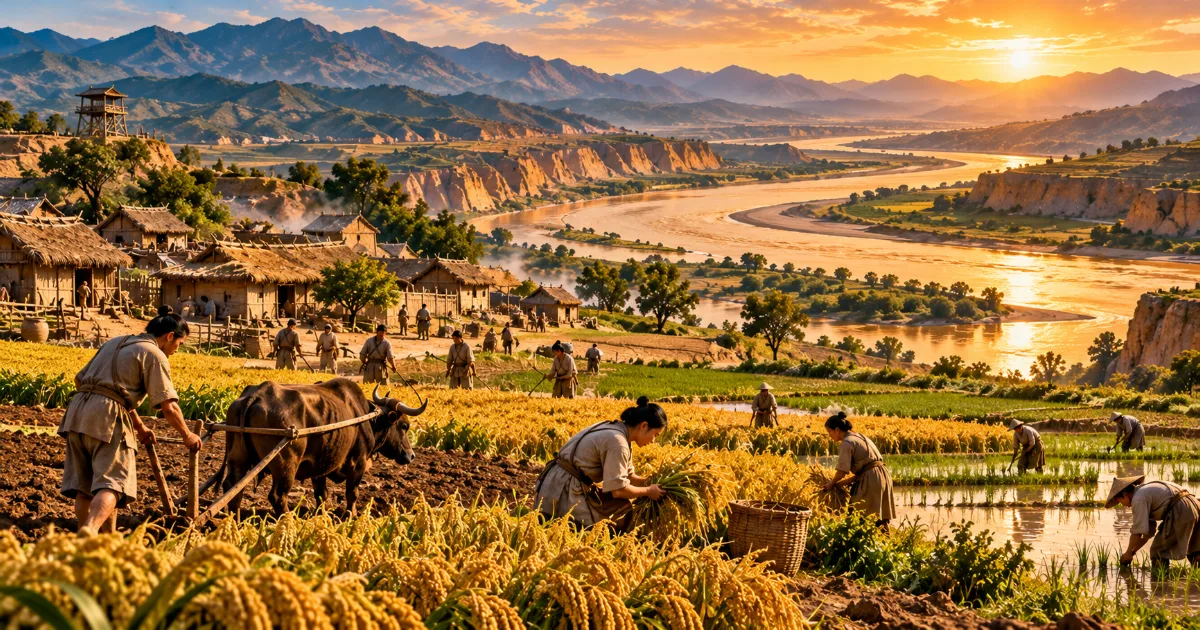
The development of agriculture changed how many communities obtained food and organized their daily lives. In parts of northern China, people increasingly cultivated millet and other crops suited to local conditions. In southern China, rice cultivation became an important component of several early agricultural systems. These developments took place over thousands of years rather than through a single sudden transformation.
Farming required people to understand seasonal cycles, prepare land, plant seeds, manage water, and harvest crops at appropriate times. Communities also needed to store food for periods when fresh supplies were unavailable. The ability to produce and preserve food helped some populations establish more permanent settlements, although hunting, fishing, and gathering continued to contribute to their diets.
Archaeological sites associated with early agricultural communities reveal houses, storage pits, pottery, stone tools, and remains of cultivated plants. These discoveries help researchers reconstruct the organization of village life. Houses provided shelter, storage facilities protected food, and shared spaces supported social activities and practical work.
Permanent settlement encouraged new forms of cooperation. Families and neighbors could share agricultural knowledge, coordinate activities, exchange tools, and work together on tasks that benefited the wider community. The management of land and water also required people to develop ways of negotiating access to important resources.
Agriculture did not automatically create peaceful or equal societies. Access to fertile land, stored food, and valuable goods could produce differences in wealth and influence. Population growth could increase pressure on resources, while disputes over land or other necessities could create tension between neighboring groups. Over time, some communities developed more pronounced social hierarchies than others.
The spread of agriculture also encouraged craft specialization. When food production became sufficiently reliable, some people could devote more time to pottery, toolmaking, weaving, construction, ritual activities, and other occupations. These specialized skills improved the material life of communities and supported increasingly complex networks of exchange.
It is important to recognize that agricultural development did not mean that every person became a full-time farmer or that all settlements developed at the same speed. Early societies followed different paths, depending on their environment, population, access to resources, and contact with neighboring communities. The agricultural transition was therefore a long process of adaptation rather than a universal sequence of identical stages.
Nevertheless, the growth of agricultural settlements created an essential foundation for later developments. Communities with dependable food production, organized labor, and specialized crafts were better positioned to support larger populations and more elaborate social institutions.
4. The Growth of Neolithic Communities
The Neolithic period, often described as the New Stone Age, witnessed important developments in agriculture, pottery, settlement, and community organization across many parts of China. It was not one uniform period with identical characteristics everywhere. Different regions experienced changes at different times and developed distinctive archaeological cultures.
In northern China, the Yangshao culture, which emerged around the fifth millennium BCE, is known for agricultural settlements and distinctive painted pottery. Archaeological discoveries associated with Yangshao communities include houses, storage facilities, tools, and pottery decorated with geometric designs and other patterns. These objects provide evidence of the practical skills and artistic traditions of early communities.
Some Yangshao settlements contained arrangements of houses and other features that suggest organized village life. The distribution of buildings, storage areas, and burial sites allows researchers to investigate how people used space and how social relationships may have operated. However, archaeological evidence must be interpreted carefully because the precise meanings of many ancient practices cannot be established with certainty.
Another important archaeological culture was the Longshan culture, which developed later in parts of northern China, particularly during the third millennium BCE. Longshan sites are known for fine black pottery, some fortified settlements, and evidence of increasing social complexity in certain areas. Differences in settlement size, defensive structures, and burial goods have encouraged researchers to investigate growing inequalities and competition between communities.
These developments did not necessarily mean that a single centralized state had already emerged throughout the region. Instead, they indicate that some communities were becoming more complex and that local leaders may have exercised increasing influence over resources, labor, and exchange.
In the Yangtze River basin, several Neolithic cultures developed agricultural traditions, including important rice-growing communities. Archaeological sites in the lower Yangtze region have revealed evidence of early rice cultivation, settlement organization, and, in some cases, sophisticated water management. These discoveries demonstrate the importance of southern China in the broader history of agricultural development.
The study of Neolithic cultures has changed the way historians understand China's origins. Rather than seeing civilization as the achievement of one isolated group, researchers increasingly examine how multiple communities contributed to a wider network of cultural development. Regional traditions influenced one another, and different communities developed technologies and social practices that later societies could adopt or transform.
5. Food, Family, and Everyday Life in Ancient Settlements
The history of early civilization is often told through kings, wars, and monumental buildings, but the daily lives of ordinary people provide an equally important perspective. Most members of early agricultural communities spent much of their time producing food, maintaining homes, preparing meals, caring for children, and manufacturing the objects needed for everyday survival.
Agriculture required sustained physical labor. Farmers prepared fields, planted seeds, controlled weeds, harvested crops, and stored food. The exact work performed by individuals varied according to local customs, age, ability, and household organization. Fishing, hunting, gathering, and raising animals could supplement cultivated crops and help communities manage seasonal shortages.
Homes were generally designed around available materials and local environmental conditions. Some communities constructed houses partly below ground level, while others used different arrangements suited to their surroundings. Archaeological remains reveal that building techniques varied across regions and changed over time.
Pottery became especially useful because it provided containers for storing, preparing, and serving food. Different forms of pottery were adapted to different purposes. Cooking vessels needed to withstand heat, while storage containers had to accommodate grain and other materials. Decorative patterns also demonstrate that pottery was not purely functional. It could express artistic traditions and shared cultural preferences.
Tools made from stone, bone, wood, and other materials supported agriculture and domestic work. Spinning and weaving developed in several early societies, allowing people to produce fibers and textiles. Although many organic materials decay over time, surviving tools and impressions left in archaeological remains provide evidence of these activities.
Family and community relationships were essential to survival. People depended on cooperation to obtain food, maintain settlements, raise children, and pass practical knowledge from one generation to the next. Communities also developed rituals and customs that helped express shared beliefs and reinforce social relationships.
Burial practices offer particularly valuable evidence of how early communities understood death and social identity. Some graves contain relatively simple offerings, while others include more elaborate objects. Differences between burials can suggest distinctions in status, access to resources, or ritual roles, although the interpretation of any particular grave requires careful analysis.
Everyday life in prehistoric China was not identical across the region. Climate, agricultural practices, available materials, and cultural traditions influenced how communities lived. Nevertheless, the basic tasks of obtaining food, creating shelter, raising families, and cooperating with neighbors formed the foundation of society long before written records began describing rulers and dynasties.
6. The Emergence of Leadership and Social Hierarchies
As some settlements grew larger and economic activities became more complex, communities faced new organizational challenges. Decisions about land, water, food storage, construction, ritual activities, and relations with neighboring groups could affect many people. These circumstances created opportunities for certain individuals or families to acquire greater influence.
Leadership in early communities may have taken different forms. Some leaders could have gained authority through experience, religious responsibilities, control of valuable resources, success in conflict, or their ability to organize collective work. Archaeological evidence does not always reveal exactly how leadership operated, but differences in settlements and burial practices can provide important clues.
In certain regions, larger settlements developed alongside smaller communities. Some sites contained defensive walls or other features that suggest concern about conflict and the protection of valuable resources. Such evidence does not mean that warfare was constant everywhere, but it indicates that competition and security sometimes influenced settlement organization.
Control over food supplies could also contribute to social authority. Communities that produced agricultural surpluses might exchange goods with neighboring groups or support people engaged in specialized occupations. Those who controlled storage facilities, trade relationships, or important ritual activities could acquire influence beyond the immediate household.
Over generations, differences in wealth and power became more pronounced in some societies. Elaborate graves, rare materials, and specialized crafts provide evidence of growing social differentiation. These developments were important because later states depended on the ability of leaders to organize labor, gather resources, establish rules, and maintain relationships with other communities.
However, the emergence of hierarchy did not follow one universal pattern. Some societies may have remained relatively decentralized, while others developed stronger concentrations of authority. The process was uneven, and different communities responded to environmental pressures and social opportunities in different ways.
The origins of political authority in China therefore lie in a long period of social development rather than in the sudden appearance of a fully formed state. Before the first historically documented dynasties emerged, communities had already developed many of the agricultural, economic, technological, and organizational practices that could support more centralized forms of government.
7. Early Chinese Cultures and the Development of Technology
Technological innovation was central to the growth of early Chinese societies. People gradually improved the tools and techniques they used to cultivate land, prepare food, construct buildings, make pottery, and manufacture other objects. These innovations often developed through experimentation and the exchange of knowledge between communities.
Stone tools remained important for many practical activities, including cutting, grinding, and agricultural work. Pottery technology also improved as craftspeople developed different methods of shaping, firing, and decorating vessels. The ability to produce useful containers and specialized tools supported both domestic life and economic exchange.
Agricultural knowledge was equally significant. Communities developed methods of cultivating crops suited to their environments and adapted their practices to seasonal conditions. In areas where rice farming became important, managing water and preparing suitable land were essential skills. In northern regions, millet cultivation formed a major part of several early agricultural traditions.
Trade and exchange helped spread materials and techniques. Objects found at archaeological sites sometimes originated from distant regions, suggesting that communities were connected through networks of movement and interaction. These connections could involve the exchange of raw materials, finished goods, marriage relationships, or shared cultural practices.
The development of jade craftsmanship is another important feature of several prehistoric Chinese cultures. Jade objects required considerable skill to shape and polish, and some were associated with ritual or ceremonial purposes. Their production demonstrates that certain craftspeople possessed specialized knowledge and that particular materials held significance beyond their practical use.
The later development of bronze technology marked another major stage in the transformation of early societies. Bronze objects became especially important during the early Bronze Age, including the Shang period. Producing them required access to appropriate raw materials, technical knowledge, and organized labor. The manufacture of elaborate bronze vessels eventually became closely associated with royal rituals and elite power.
These technological developments did not emerge independently of society. They depended on the transmission of knowledge, access to materials, cooperation between people, and the needs of communities. Technology was both a cause and a consequence of growing social complexity, helping people accomplish new tasks while also creating opportunities for some groups to gain greater influence.
8. From Regional Communities to Early States
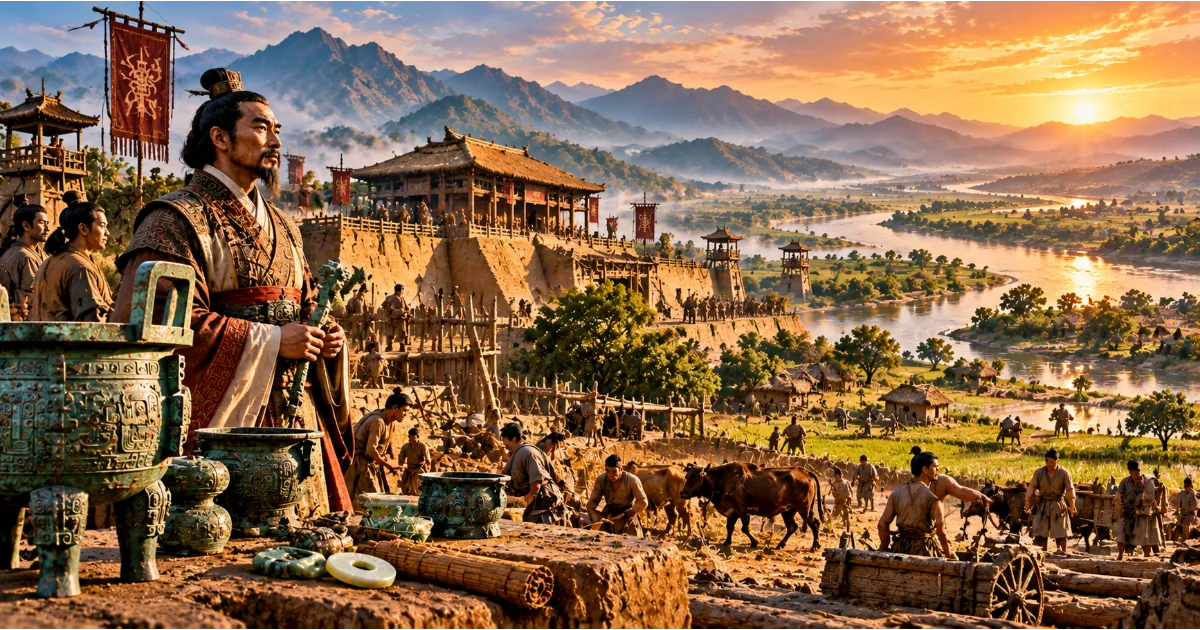
By the late Neolithic and early Bronze Age, several parts of the region that is now China contained increasingly complex settlements and political centers. These societies differed considerably, but some displayed characteristics associated with the emergence of early states, including larger settlements, social stratification, specialized production, defensive structures, and organized ritual practices.
Archaeological discoveries at sites such as Erlitou in present-day Henan Province have played an important role in discussions about the origins of early Chinese states. Erlitou flourished during the early second millennium BCE and contained evidence of planned settlement areas, specialized craft production, elite buildings, and bronze-working.
Some scholars have associated Erlitou with the Xia dynasty described in traditional Chinese historical accounts. However, no generally accepted body of written evidence definitively identifies the Erlitou culture as the Xia dynasty. The relationship between the archaeological record and traditional accounts remains an important subject of research and debate.
This distinction matters because archaeological cultures are identified through material evidence, while dynasties are political entities known through historical traditions and, where available, contemporary records. The two may be related, but the relationship cannot simply be assumed without sufficient evidence.
The development of early states was not solely a matter of constructing large buildings or producing sophisticated objects. It also involved changes in authority, labor organization, resource management, and relationships between communities. Political leaders increasingly required ways to coordinate production, maintain alliances, organize ceremonies, and defend their territories.
The emergence of early states therefore represented a major transformation in social life. People became part of political systems that could influence communities beyond the boundaries of individual settlements. Such systems created new forms of cooperation and administration, but they could also impose obligations and unequal burdens on the people they governed.
These developments laid the groundwork for the Shang dynasty, which provides much clearer evidence of a centralized royal authority and a developed writing tradition. The Shang period marks an important transition from the largely prehistoric societies known primarily through archaeology to a world in which inscriptions and material remains can be studied together.
9. The Xia Dynasty: The Boundary Between Tradition and Evidence
Traditional Chinese histories describe the Xia dynasty as the first hereditary dynasty, preceding the Shang. Accounts of its rulers and its eventual overthrow by the Shang became important elements of later Chinese historical writing and political thought.
According to these traditions, the Xia rulers governed an early kingdom and were eventually displaced because the final ruler had become corrupt and lost the moral legitimacy of his authority. Later accounts connected such stories with the broader concept that rulers could lose the Mandate of Heaven through misgovernment.
However, historians must distinguish between the importance of these traditions and the availability of direct evidence. Unlike the Shang, the Xia dynasty is not securely documented by contemporary inscriptions that can be confidently attributed to its rulers. The precise relationship between the Xia described in traditional texts and archaeological cultures of the early Bronze Age remains disputed.
Archaeological sites such as Erlitou demonstrate that complex societies existed in the relevant region during a period that overlaps with some traditional chronologies for the Xia. Yet the existence of an advanced archaeological culture does not, by itself, establish the name or identity of its rulers.
This uncertainty does not make the Xia tradition unimportant. It offers insight into how later Chinese scholars understood the origins of dynastic government, political legitimacy, and the transition from one ruling house to another. It also demonstrates why historical investigation depends on comparing written accounts with material evidence rather than accepting every traditional narrative as a verified fact.
The Xia question illustrates a broader principle in the study of ancient history. Some events and societies can be established through several independent forms of evidence, while others remain uncertain because the available records are incomplete. Responsible history acknowledges these differences instead of presenting every claim with the same level of certainty.
10. The Shang Dynasty and the Beginning of Documented Chinese History
The Shang dynasty, conventionally dated from approximately 1600 to 1046 BCE in many historical chronologies, represents a major milestone in the history of China. Its rulers presided over political centers supported by agricultural production, specialized crafts, religious ceremonies, and organized labor.
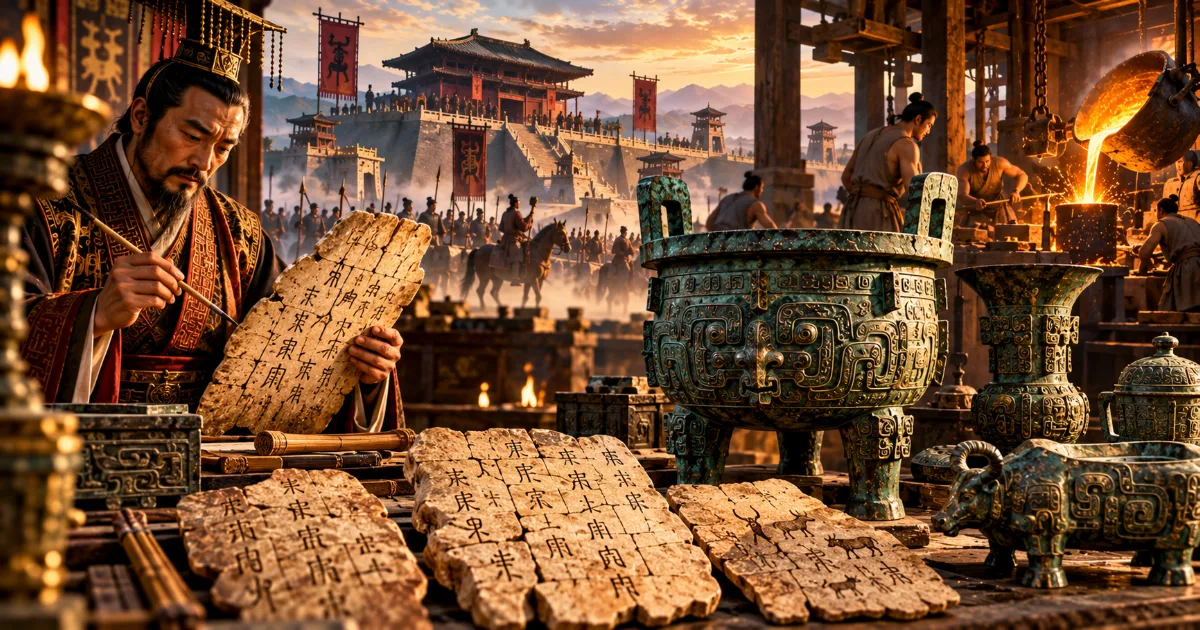
Archaeological discoveries at Anyang, one of the most important late Shang centers, have revealed palace foundations, royal tombs, workshops, bronze vessels, and large collections of inscribed oracle bones. These remains provide direct evidence of the society's political and religious practices.
Oracle bones were used in divination, a process through which rulers and ritual specialists sought answers to questions about matters such as warfare, harvests, weather, hunting, and royal affairs. Questions were inscribed on animal bones or turtle shells, and the results of heating these objects were interpreted through the patterns of cracks that appeared. Some inscriptions also recorded the outcomes of events.
These inscriptions are especially important because they contain an early form of Chinese writing. They reveal information about Shang rulers, royal ancestors, religious beliefs, and aspects of political life. Their relationship to later Chinese writing traditions demonstrates a remarkable historical continuity, although written forms evolved considerably over subsequent centuries.
Shang bronze production also reached a high level of sophistication. Craftspeople manufactured ritual vessels and other objects that required specialized knowledge, raw materials, and organized production. Many vessels featured elaborate shapes and decorative patterns associated with elite ceremonies and ancestral worship.
The Shang economy depended on agriculture, while crafts, exchange, and political organization supported the royal centers. The ruling elite exercised authority through a combination of political power, military capability, and religious practices. Royal rituals helped connect the living rulers with their ancestors, reinforcing the importance of lineage and ceremonial authority.
The Shang dynasty was not the final stage in the formation of Chinese civilization. Its achievements were followed by the Zhou dynasty, which developed new political ideas and eventually contributed to traditions that remained influential throughout Chinese imperial history. Nevertheless, the Shang provides one of the clearest windows into the world of early Chinese states and marks a crucial point in the transition from prehistoric archaeology to documented history.
11. Why the Origins of Chinese Civilization Still Matter
The origins of Chinese civilization remain important because they help explain the long-term development of institutions, cultural traditions, and political ideas that later shaped Chinese history. The earliest communities established agricultural practices, developed craft technologies, created forms of social organization, and participated in exchanges that connected different regions.
These developments also demonstrate the importance of environmental adaptation. Communities responded to different climates, river systems, soils, and natural resources by developing varied agricultural and settlement practices. Their experiences reveal that civilizations are shaped not only by leaders and political decisions but also by the environments in which people live.
The archaeological record further reminds us that the development of civilization was a collective achievement. Farmers produced food, craftspeople created tools and objects, builders constructed settlements, and communities preserved knowledge through practice and cultural transmission. The people whose names were never recorded formed the foundation upon which later political systems were built.
The early history of China also challenges the idea that civilization emerged in only one place or followed a single path. Different regions contributed distinctive traditions, and their interactions gradually produced increasingly complex societies. Understanding this diversity provides a more accurate picture of China's past than a narrative focused exclusively on dynasties and emperors.
Finally, the distinction between legend and evidence is essential. Traditional stories can reveal how later generations understood their origins, but historical conclusions must also account for archaeological discoveries, inscriptions, and the limits of available evidence. This approach allows us to appreciate cultural traditions while continuing to investigate the past critically.
Conclusion: The Foundations of a Civilization
The origins of Chinese civilization were shaped by thousands of years of human experience. Prehistoric communities developed tools, cultivated crops, established settlements, and created cultural traditions that changed as people adapted to their surroundings. Agricultural societies became increasingly complex, specialized crafts developed, and certain communities emerged as influential political centers.
The Yellow River and Yangtze River basins played major roles in this history, but they were part of a much wider landscape of regional cultures and interactions. Neolithic communities developed varied agricultural practices, artistic traditions, and settlement patterns. During the early Bronze Age, some societies acquired more centralized forms of leadership, laying the foundations for early states.
The Xia dynasty remains an important part of traditional Chinese historical accounts, although its identification as a securely documented historical dynasty remains debated. The Shang dynasty provides stronger direct evidence through archaeological discoveries and oracle-bone inscriptions, allowing historians to study an early Chinese state in considerable detail.
These developments established the foundations for the dynasties, philosophies, and institutions that would shape China in later centuries. The civilization that eventually emerged was not created in a single moment. It was built gradually through the work, knowledge, and experiences of countless generations.
In the next article, we will explore the Yellow River and the Birth of Chinese Agriculture, examining how water, fertile land, farming, and environmental challenges influenced the development of early Chinese communities.
History of China | A Journey Through Time
#HistoryOfChina #AncientChina #ChineseCivilization #EarlyChina #WorldHistory #AncientHistory #Archaeology #HistorySeries