How Qin Shi Huang Standardized Writing, Weights, Measures, Currency, and Administration to Govern a Unified China
Introduction: Turning Conquest into an Empire
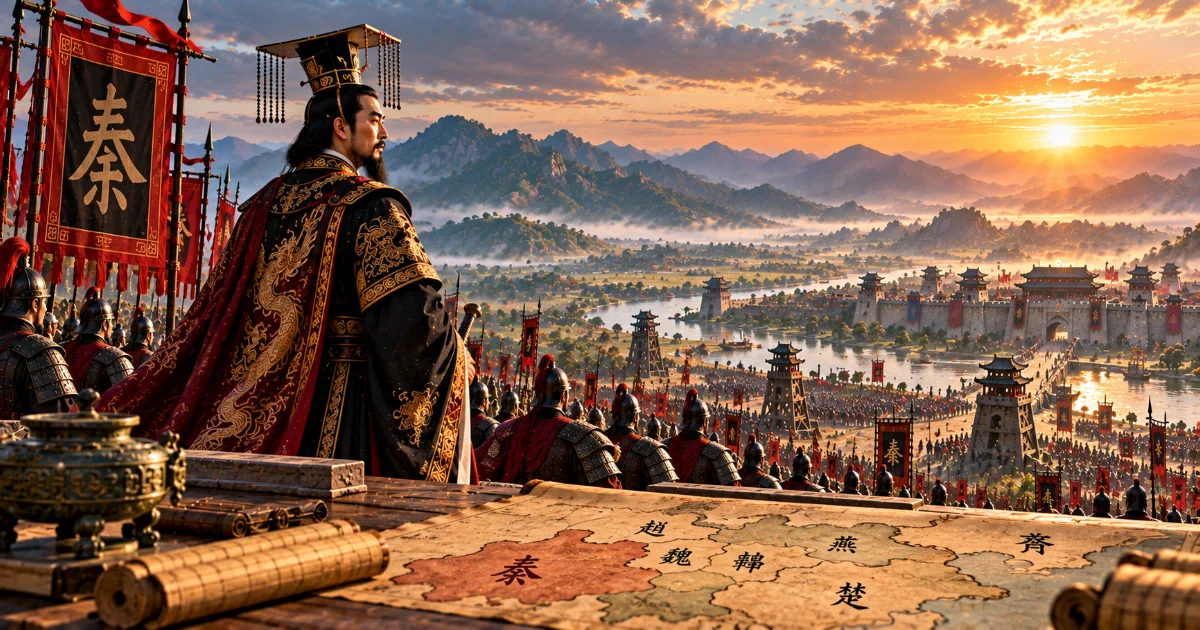
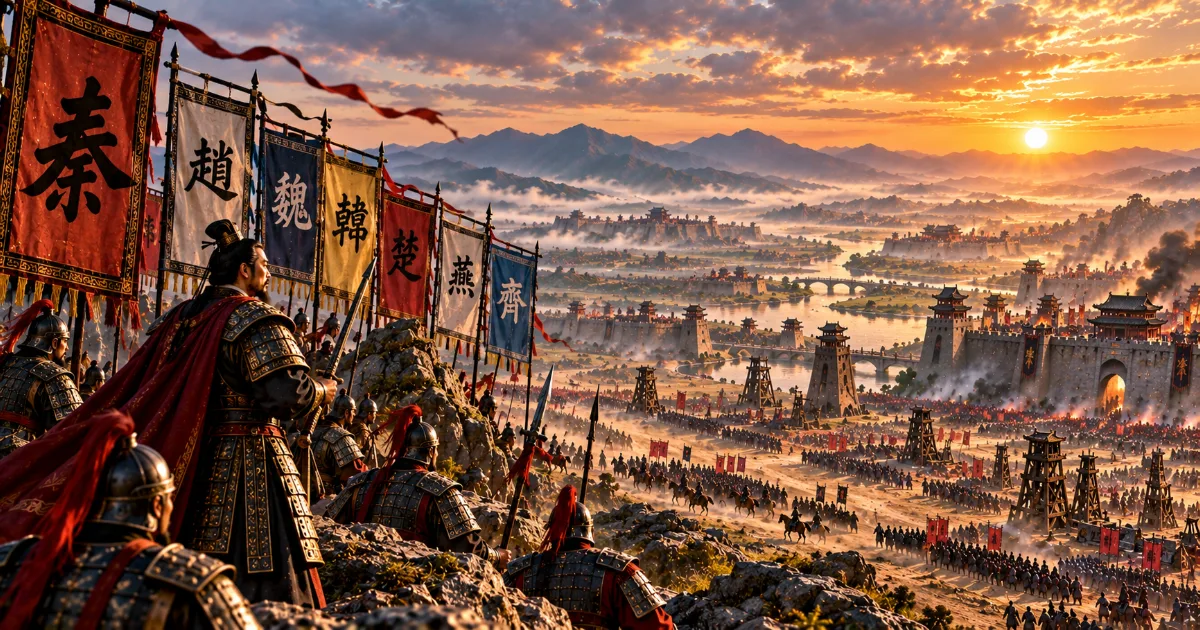
When Qin Shi Huang unified the rival kingdoms in 221 BCE, he achieved something that generations of rulers had pursued without success. For centuries, ancient China had been divided among competing states, each with its own political institutions, administrative practices, and regional traditions. The victory of Qin ended this age of political fragmentation, but it created a new challenge. Conquering territory was one task. Governing an enormous and diverse population under a single authority was another.
Qin Shi Huang understood that military victory alone could not guarantee lasting unity. The newly conquered territories had developed different administrative practices and retained local political identities. Former kingdoms had their own elites, customs, and systems of economic exchange. If these differences were allowed to become the foundations of renewed political independence, the empire could fragment again.
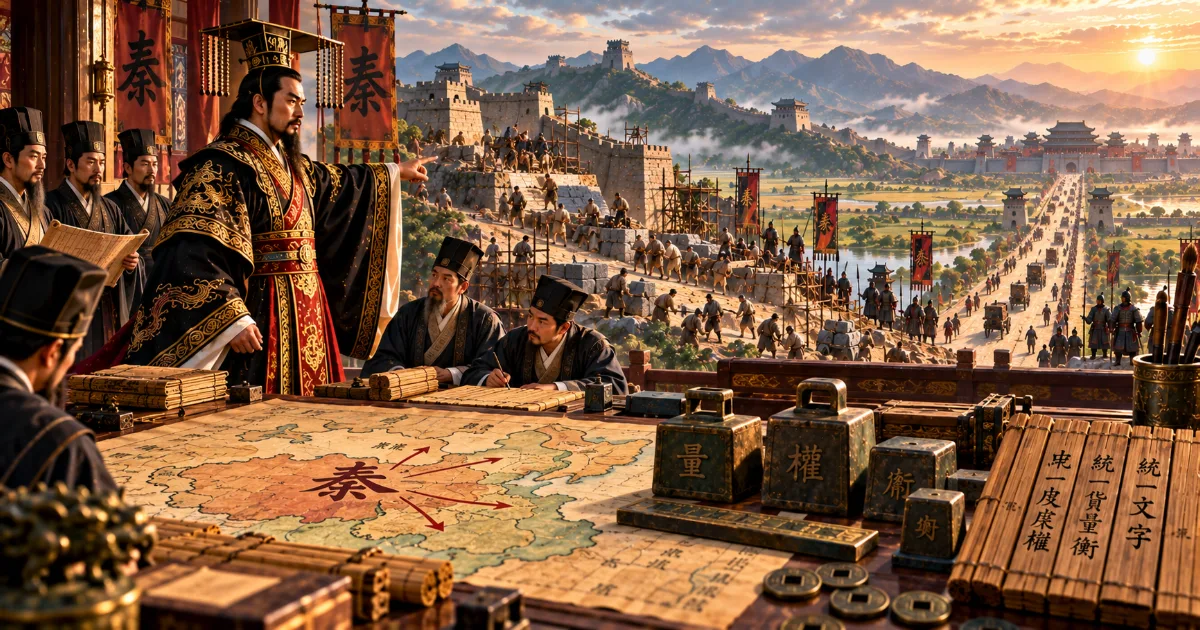
The First Emperor therefore pursued a programme of centralization and standardization. His government reorganized the administration of conquered lands, strengthened the authority of appointed officials, and attempted to establish common standards for writing, currency, weights, measures, and other aspects of public life. Roads and infrastructure projects helped connect important regions, while the imperial court sought to prevent former aristocratic families from rebuilding independent political power.
These reforms were among the most consequential developments in early Chinese history. They helped create institutions through which a central government could administer extensive territories. They also established precedents that influenced the Han dynasty and later imperial governments, even though subsequent rulers modified Qin policies in important ways.
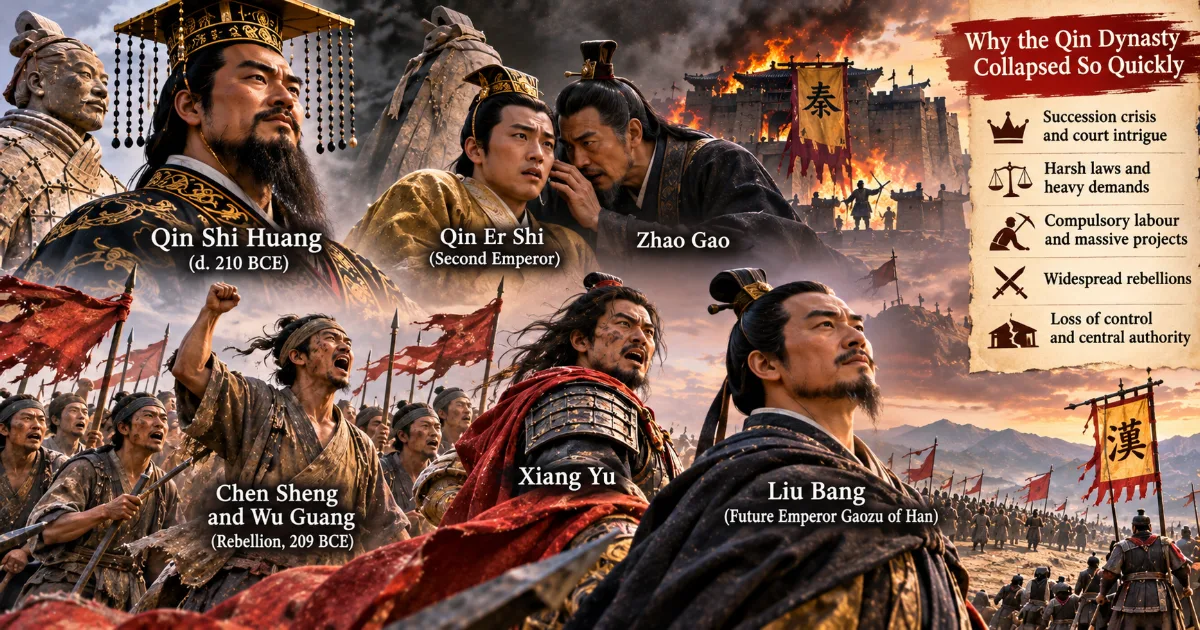
However, the reforms came with serious costs. The Qin government relied on strict laws, compulsory labour, heavy demands on resources, and severe penalties. The same system that made the empire administratively powerful could also make it difficult for ordinary people to escape excessive burdens. The dynasty's rapid collapse after Qin Shi Huang's death demonstrated that a highly centralized government could establish uniformity without necessarily creating lasting political stability.
Understanding Qin Shi Huang's reforms therefore requires attention to both their achievements and their limitations. His government transformed how China was administered, but it also revealed the dangers of concentrating power without sufficient attention to social conditions.
1. The Problem of Governing a Newly Unified China
Before Qin's victory, the major Chinese states had developed independently for centuries. Although they shared important cultural traditions and historical connections, their political systems were not identical. Each kingdom maintained its own court, officials, military organization, taxation practices, and local relationships.
During the Warring States period, rulers had introduced reforms to strengthen their governments and compete more effectively against their neighbours. Some states developed advanced systems for recording households, organizing military service, collecting agricultural revenue, and rewarding officials. Others retained stronger elements of aristocratic authority or relied upon distinctive regional institutions.
When Qin conquered these states, it inherited a political landscape that could not be transformed simply by issuing a declaration of unity. The government needed to establish control over cities, agricultural communities, transportation routes, and former royal territories. It also had to determine how officials would be appointed, how taxes would be collected, how disputes would be handled, and how the central government would communicate its decisions.
A major danger was the restoration of the old kingdoms. Former royal families and aristocratic elites still possessed local influence. If Qin had allowed powerful hereditary rulers to retain extensive territorial authority, they might eventually have challenged the imperial government.
The emperor's advisers therefore faced a fundamental choice. They could restore a modified version of the older Zhou system, with hereditary lords governing semi-independent territories, or they could establish a more centralized administration in which local officials depended upon the central government.
The Qin court chose the second approach. Rather than distributing the conquered territories among a new generation of hereditary kings, it organized them into administrative units governed by appointed officials. The system was intended to ensure that local authority remained connected to the emperor and the central state.
This decision became one of the defining features of Qin government. It weakened the political independence of former regional elites and created a more direct relationship between the imperial court and the territories it governed.
The challenge, however, extended beyond political structure. A unified empire needed common administrative procedures and reliable communication. The government could not easily coordinate taxation, military recruitment, transportation, and legal administration if every region used incompatible standards. Standardization therefore became an important instrument of centralization.
2. Replacing Hereditary Kingdoms with Central Administration
One of Qin Shi Huang's most consequential decisions was the adoption of a centralized territorial administration. Instead of allowing conquered regions to remain under hereditary kings, the government divided the empire into administrative units overseen by appointed officials.
The system is commonly associated with commanderies and counties. Commanderies were larger administrative divisions, while counties operated at a more local level. Officials were responsible for implementing government decisions, maintaining order, collecting revenue, and managing administrative affairs.
The exact organization of the empire evolved over time, and the number of commanderies changed as Qin expanded its territory. Ancient accounts describe the empire as being divided into thirty-six commanderies at an important stage of its development, but the administrative structure should not be treated as a perfectly fixed arrangement that remained unchanged throughout Qin rule.
The significance of the system lay in the principle behind it. Local administrators received their authority through appointment rather than inheriting an independent territorial kingdom. Their positions were connected to the central state, and the government could transfer, evaluate, or remove officials according to its requirements.
This arrangement reduced the likelihood that powerful local families could establish independent dynasties. It also made the empire more directly governable from the centre, at least in principle.
The system required extensive administrative records. Officials needed information about households, land, agricultural production, legal obligations, and the movement of people. Such records helped the state collect taxes, recruit labourers, and organize military service.
Central administration also created a hierarchy of responsibility. Orders could move from the imperial court through regional officials to county-level administrators. Reports and records could move in the opposite direction, allowing the government to gather information about conditions across the empire.
In practice, the effectiveness of this system depended upon communication, transportation, local cooperation, and the quality of officials. A centralized structure could not guarantee that every order would be implemented correctly. Nevertheless, it established an administrative framework that later Chinese governments could preserve and adapt.
The Han dynasty, which followed Qin, maintained the principle of governing extensive territories through appointed officials. Later dynasties developed more elaborate bureaucratic systems, but the basic idea that the emperor could exercise authority through a territorial administration became central to imperial Chinese government.
3. The Debate Between Centralization and Feudal Rule
Qin's decision to avoid restoring hereditary kingdoms was controversial. According to traditional accounts, some advisers argued that the empire should distribute territories among members of the royal family and trusted supporters, creating a system resembling the older Zhou arrangement.
Supporters of this approach believed that hereditary rulers could provide local stability and defend distant regions. Because members of the imperial family would have a personal interest in protecting the dynasty, they might help maintain order across the empire.
Others argued that the earlier system had contributed to political fragmentation. Regional lords had gradually accumulated military and economic power, becoming strong enough to challenge the central authority. Repeating the arrangement could recreate the same problem that Qin had just overcome.
The debate concerned more than administrative convenience. It raised a fundamental question about political power: should a unified empire rely upon powerful local rulers, or should authority be concentrated in a central government that appointed officials to administer territory?
Qin Shi Huang supported the centralized approach. The empire was organized around the principle that regional administration should not become the foundation of independent political power. Former kingdoms were incorporated into the new structure rather than restored under their old ruling families.
This decision helped prevent the immediate re-emergence of the Warring States system. It also changed the relationship between the emperor and the aristocracy. Political authority increasingly depended upon service within the imperial administration rather than simply upon inherited territorial rights.
However, the centralization of power created its own difficulties. The imperial court had to manage a vast territory and depended upon officials who might be far removed from local conditions. If the central government made poor decisions, local communities could have limited means of correcting them.
The debate therefore illustrates a recurring problem in Chinese political history. Decentralized authority can allow local leaders to respond to regional needs, but it can also encourage fragmentation. Centralization can improve coordination, but it can also make government rigid and place excessive demands upon the population.
Qin Shi Huang's solution favoured administrative unity over regional autonomy. The empire's later history would repeatedly revisit this balance.
4. Standardizing the Written Language
One of the most influential measures associated with Qin Shi Huang was the standardization of written forms. Before unification, the major states used related but regionally varied forms of writing. These differences had developed over centuries and reflected the independent histories of the kingdoms.
Written characters were essential to administration. Government officials needed to record laws, register households, document transactions, issue orders, and maintain accounts. If written forms varied significantly between regions, communication could become more difficult, particularly when officials moved from one former kingdom to another.
The Qin government promoted standardized forms of writing based on the script used in its own administrative tradition. This process is often associated with the work of Li Si, an influential official and adviser who played an important role in Qin administration.
The standardization of writing did not mean that every regional form disappeared immediately. Nor did it mean that all people suddenly spoke the same language. Spoken varieties of Chinese remained diverse, and the ability to read and write was concentrated among a relatively small portion of the population.
Instead, the reform sought to create a more consistent written system for official use. This made it easier for government documents to circulate across the empire and supported the work of administrators who needed to operate under common procedures.
Writing also carried political significance. A standardized official script helped express the idea that the former kingdoms were now part of a single political order. Government communication no longer needed to be framed primarily through the institutions of independent regional states. It could be conducted through the shared administrative language of the empire.
The long-term significance of this process should not be exaggerated into a claim that modern Chinese writing emerged fully formed under Qin. Written Chinese continued to evolve over many centuries. Nevertheless, Qin's standardization was an important stage in the history of written administration and contributed to the development of a shared cultural and bureaucratic tradition.
The reform also illustrates a broader principle of imperial government. Common standards could create practical advantages, but they could also reinforce political authority. By promoting consistent writing, Qin helped make the empire more administratively connected while symbolically expressing the unity the emperor intended to establish.
5. Standardizing Weights and Measures
Trade, taxation, construction, and military supply all depended upon the ability to measure goods and materials reliably. Before unification, different states could use different standards for weight, length, capacity, and other measurements. Such variation created difficulties when officials attempted to administer a territory that had previously belonged to several independent governments.
Qin Shi Huang's government promoted common standards for weights and measures. These reforms helped establish more consistent methods for evaluating agricultural products, commercial goods, building materials, and other resources.
Standardized measurements were particularly important for taxation. If officials collected grain or other goods according to incompatible regional systems, the central government could struggle to calculate revenue consistently. Common measures made it easier to assess obligations and compare records from different areas.
Construction also depended upon measurement. Roads, fortifications, canals, palaces, and administrative buildings required coordinated planning. Standard units could help officials organize labour and materials across projects involving large numbers of workers.
Trade benefited from greater consistency as well. Merchants moving goods between regions could face fewer disputes if the relevant standards were recognized across the empire. However, standardization did not automatically eliminate fraud, local practices, or economic inequalities. It provided a common framework rather than a complete solution to every commercial problem.
Archaeological evidence has helped historians study Qin measurement systems. Standardized weights and official inscriptions show how the government communicated its requirements and connected practical standards with imperial authority.
Some surviving objects carry inscriptions indicating that measurement standards were established or confirmed under imperial direction. These objects provide evidence that standardization was not merely an abstract policy described by later historians. It formed part of the administrative practice of the Qin state.
The reform demonstrates how seemingly technical measures could have political consequences. A government that controlled the standards used in taxation, commerce, and construction could coordinate activities more effectively. Standardization helped turn the idea of imperial unity into a practical administrative system.
6. The Unification of Currency
Economic activity across the former kingdoms was complicated by differences in currency and exchange practices. During the Warring States period, several states issued their own forms of money. These included different shapes and denominations associated with regional traditions and economic needs.
Qin Shi Huang's government promoted a common currency system across the empire. The round bronze coin with a square central hole became closely associated with the monetary tradition of imperial China, although its history developed over time and should not be treated as a modern currency system imposed everywhere in a single moment.
The standardization of currency helped facilitate exchange between regions that had previously belonged to separate states. Merchants, officials, and taxpayers could operate within a more consistent monetary framework, reducing some of the complications caused by incompatible local issues.
A common currency could also strengthen the central government. If monetary standards were established under imperial authority, the state could exercise greater influence over official payments, taxation, and commercial exchange.
However, the transition would not have been immediate or uniform. Existing coins could remain in circulation, local economic practices continued, and the availability of money varied across communities. Many rural transactions relied upon agricultural products, labour, or other forms of exchange rather than exclusively upon coinage.
The monetary reform therefore represented an important step toward economic integration, not the complete creation of a single modern market. Transportation costs, regional resources, political conditions, and local demand continued to shape trade.
Nevertheless, the principle of a common currency remained influential in later Chinese history. Governments repeatedly sought to establish monetary standards that would support taxation, commerce, and the authority of the state.
Qin's currency reforms also reveal the connection between economic administration and political unity. A unified empire needed ways to move resources between regions and maintain consistent financial practices. Standardized currency helped provide one of the instruments through which the central government attempted to achieve these goals.
7. The Imperial Road Network
Roads were essential to Qin Shi Huang's ambition to govern an extensive empire. Military campaigns had shown the importance of transportation, and unification created new demands for communication between the central government and distant regions.
The Qin government developed and expanded road networks that connected important cities, administrative centres, and strategic areas. These routes supported the movement of officials, soldiers, supplies, and information. They also helped the government respond to threats and maintain control over newly conquered territories.
One of the best-known developments was the construction of major imperial roads associated with the capital region and the empire's wider network. Some routes were designed with military and administrative needs in mind, allowing forces and government personnel to move more efficiently across the territory.
Road construction required considerable labour. Workers had to clear land, prepare surfaces, build bridges, manage drainage, and maintain routes in difficult terrain. The costs were significant, particularly when construction was undertaken through compulsory labour obligations.
The road system helped connect regions that had previously been separated by political borders. Under the Warring States system, movement between kingdoms could involve diplomatic restrictions, military danger, or the need to navigate different administrative jurisdictions. Imperial roads helped establish a more integrated network under central authority.
Yet roads did not erase geographical obstacles. Mountains, rivers, seasonal weather, and the sheer size of the empire continued to make transportation difficult. The effectiveness of a route depended upon maintenance, security, and the availability of supporting infrastructure.
The road network also served as a symbol of imperial power. It demonstrated that the government could organize labour and resources on a scale that individual regional states might struggle to match. A road stretching across conquered territory represented the practical reach of the central government.
These projects contributed to the administrative foundations inherited by the Han dynasty. Later Chinese governments continued to invest in transportation networks because roads remained essential for taxation, military defence, trade, and communication.
8. The Great Wall and Qin's Northern Defences
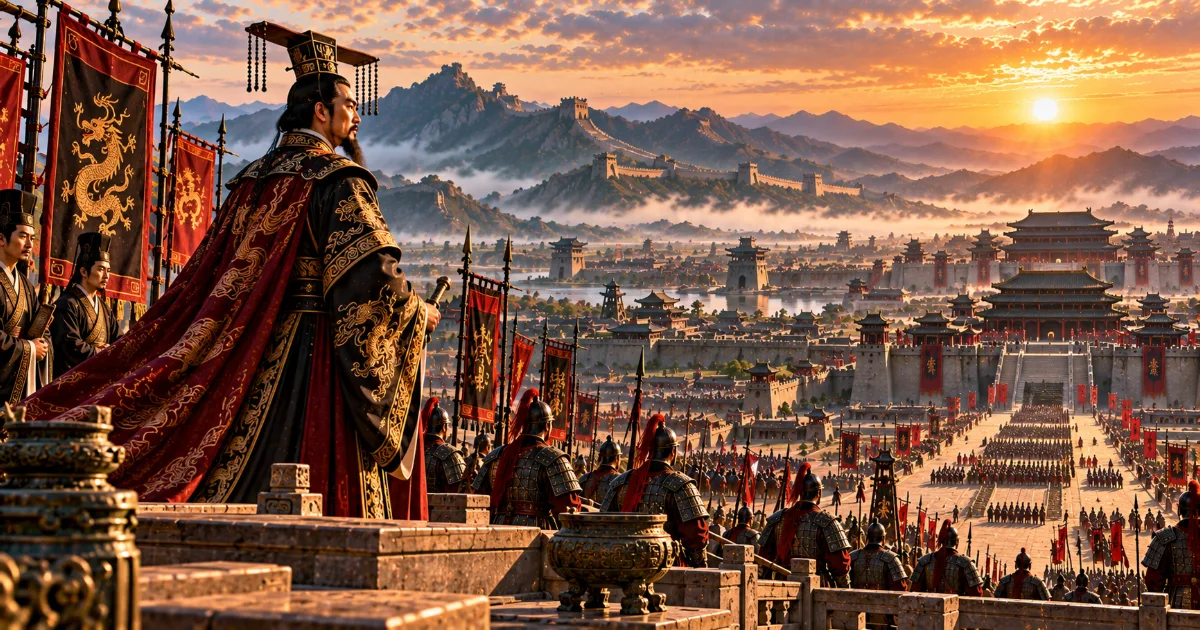
Qin Shi Huang is frequently associated with the Great Wall of China, but the historical relationship requires careful explanation. The emperor did not construct the entire wall visible today. Many of the most famous surviving sections date from much later periods, particularly the Ming dynasty.
Before Qin unification, northern Chinese states had already constructed walls and defensive fortifications to protect their territories from rival states and groups beyond their borders. These structures were built in different locations and at different times according to regional military needs.
After unification, the Qin government undertook campaigns to connect, extend, or reinforce existing defensive works in the north. These efforts were intended to strengthen the empire's frontier and improve its ability to resist incursions. General Meng Tian is traditionally associated with military operations in the northern regions and the organization of defensive measures.
The resulting system was not a single continuous stone wall resembling the modern tourist image. Early walls often used rammed earth and other materials available in the regions where they were built. Their form varied according to terrain, construction methods, and strategic requirements.
The construction and maintenance of northern defences required enormous labour. Soldiers, conscripted workers, and other labourers could be assigned to demanding projects far from their homes. The burden of frontier defence therefore extended beyond military expenditure and affected communities throughout the empire.
The defensive system also reflected the strategic challenges faced by Qin. Unification had eliminated the major rival Chinese kingdoms, but it had not ended all external threats. The northern frontier remained a zone of military competition, movement, and interaction with different peoples.
The Qin walls became part of the longer history of Chinese frontier defence. Later dynasties built new fortifications, extended existing systems, or adopted different strategies depending on their military circumstances.
The Great Wall's later symbolic importance should not obscure the diversity of its historical forms. Qin's contribution was one stage in a long process of frontier construction rather than the creation of the entire structure in its present form.
9. Legal Administration and the Authority of the State
The Qin government relied heavily upon law and administrative discipline. Its approach was influenced by ideas associated with Legalist thinkers, who argued that effective government required clear rules, enforceable penalties, and methods for evaluating officials.
Legalist approaches had developed during the Warring States period, when rulers needed reliable ways to organize armies, collect taxes, and control extensive territories. Thinkers such as Shang Yang and Han Fei questioned whether political stability could depend primarily upon the personal virtue of rulers or the inherited privileges of aristocratic families.
The Qin state placed considerable emphasis on written laws and administrative procedures. Officials were expected to carry out assigned duties, maintain records, and enforce government requirements. Penalties were used to discourage violations and encourage compliance.
The legal system was not identical to a modern system of law. Qin government operated within a different political and social framework, and the emperor held enormous authority. Nevertheless, surviving legal documents and administrative records reveal a sophisticated system of rules governing matters such as labour obligations, property, official conduct, and criminal responsibility.
The state also sought to make administrative responsibility measurable. Officials could be evaluated according to whether they fulfilled assigned tasks and maintained required records. This approach was intended to reduce the influence of personal relationships and make government more predictable from the central court's perspective.
However, legal administration under Qin was often severe. Punishments could be harsh, and the demands of the state were extensive. A system designed to enforce consistency could become oppressive when rules failed to account for local conditions or when penalties were disproportionate.
The legal approach also created a tension between administrative efficiency and political legitimacy. Strict enforcement could make government decisions difficult to ignore, but it could also generate resentment. People might obey because they feared punishment rather than because they regarded the government as fair.
The Qin dynasty's collapse exposed the limitations of a political system that relied heavily upon coercion. Later governments continued to use laws and bureaucratic procedures, but many also emphasized moral education, public welfare, and the responsibility of rulers to maintain social stability.
10. Standardizing Weapons and Military Equipment
The military success of Qin depended upon more than the number of soldiers it could recruit. It also required the production, distribution, and maintenance of weapons and equipment on a large scale.
During the Warring States period, states developed increasingly sophisticated systems for manufacturing weapons. Bronze remained important for certain military objects, while iron technology became more widespread. Crossbows, spearheads, swords, arrowheads, and other equipment formed part of the military infrastructure that supported large armies.
The Qin government placed considerable emphasis on the organization of production. Archaeological evidence from Qin-related sites reveals inscriptions on weapons and other objects that identify officials, workshops, or stages of production. Such inscriptions suggest that the state monitored aspects of manufacturing and administrative responsibility.
Standardized equipment could provide practical advantages. Soldiers operating within a large army benefited when weapons and components followed recognizable patterns. Government officials could also inspect production and identify responsibility for defects or failures.
However, the evidence should not be interpreted as proving that every weapon was identical or that Qin operated a modern industrial system. Production methods varied, and craftsmanship remained important. The significance lies in the degree of organization and administrative oversight that the state could bring to military production.
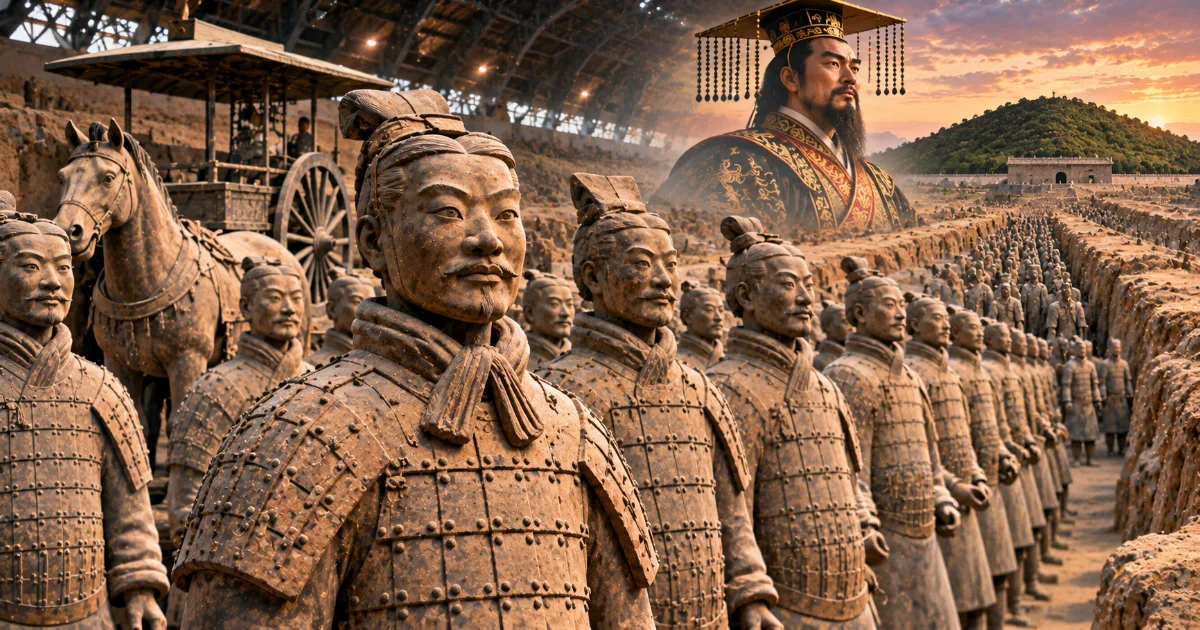
The Terracotta Army provides further evidence of Qin's military organization, although it was created for the emperor's burial complex rather than serving as a living battlefield force. Its figures display a wide range of faces, clothing details, and military roles. Archaeologists have studied the manufacturing techniques and organization involved in producing the thousands of figures.
Military standardization was part of a broader transformation in which the state coordinated production, recruitment, supply, and administration. These systems helped Qin sustain campaigns that would have been difficult for a less organized government to undertake.
The same institutional capacity later supported imperial projects beyond the military sphere. Qin's ability to mobilize labour and standardize procedures became a defining feature of its government, even as the costs of that mobilization contributed to popular dissatisfaction.
11. The Reorganization of the Economy
The Qin government viewed agricultural production as a foundation of political strength. Food was required to sustain the population, support armies, and supply officials. A state that could reliably collect agricultural revenue possessed a major advantage over rivals whose resources were less secure.
Qin's earlier reforms had already emphasized farming and the state's ability to record households and agricultural obligations. After unification, these principles were extended across the conquered territories. The government sought to bring land, population, and production under a more consistent administrative framework.
Agriculture remained central to the economy, although commerce, crafts, mining, transport, and regional exchange were also important. Different areas produced different goods, and the empire's size created opportunities for trade between regions with distinct resources.
Standardized currency and measurements helped facilitate exchange, while roads improved the movement of goods. Administrative integration also allowed the government to organize the transfer of supplies to military and construction projects.
However, economic integration did not benefit everyone equally. Merchants and producers could gain opportunities from more consistent standards and improved transportation, but state demands could also increase their costs. Farmers faced taxes and labour obligations, while artisans might be recruited for government projects.
The central government needed resources to maintain its administration, military forces, infrastructure, and imperial household. These requirements created a continuous demand for revenue and labour. When obligations became excessive, households could struggle to maintain their own production and livelihoods.
The Qin experience illustrates the difference between increasing a state's capacity to extract resources and improving the welfare of the population. A government may become more efficient at collecting taxes without necessarily creating a more prosperous or secure society for its people.
The Han dynasty later retained important aspects of Qin administration while making adjustments to taxation, governance, and political ideology. The experience of Qin helped later rulers recognize that economic production had to be sustained rather than simply extracted.
12. The Role of Li Si in Building the Qin State
Li Si was one of the most influential officials associated with Qin Shi Huang's government. He had studied under the Confucian thinker Xunzi before entering Qin service, and he became an important adviser during the final stages of unification and the early imperial period.
Li Si supported the centralized model of government and played a major role in the administrative policies associated with Qin. He is traditionally connected with the standardization of writing and with arguments against restoring hereditary regional kingdoms.
His career illustrates the opportunities available to talented officials during the Warring States period. Political competition encouraged rulers to recruit advisers who could help strengthen their states, and individuals with administrative or intellectual ability could rise through service even if they did not belong to the most powerful hereditary families.
Li Si understood that the empire required a consistent administrative structure. A unified territory could not be governed effectively if former kingdoms remained independent political centres. The central government needed officials who implemented common policies and reported through a hierarchy connected to the emperor.
His support for strict administration reflected the intellectual environment in which Qin had developed. The government placed great value on measurable performance, enforceable rules, and the prevention of political challenges.
Li Si's later career also reveals the dangers of concentrated authority. After Qin Shi Huang's death, court politics became increasingly unstable. Li Si became involved in the succession crisis associated with the rise of Qin Er Shi and the influence of Zhao Gao. He was eventually executed in 208 BCE.
His fate demonstrates that a powerful administrative system could still be vulnerable to court intrigue, succession disputes, and the personal ambitions of officials. Centralization did not eliminate political conflict. In some circumstances, it concentrated the consequences of conflict within the imperial court.
Li Si's legacy is therefore closely connected with both the achievements and the failures of Qin government. He helped shape the institutions that made the empire possible, but he also operated within a political system that gave enormous influence to a small group of powerful individuals.
13. The Suppression of Intellectual Opposition
Qin Shi Huang's government sought political unity not only through administrative reform but also through control over the circulation of ideas. Ancient accounts describe measures against certain writings and scholars, especially those whose teachings were believed to encourage criticism of the Qin government or promote political traditions associated with the former kingdoms.
The best-known episode is the account of the burning of books and the execution of scholars, traditionally dated to 213 and 212 BCE. According to later historical narratives, Li Si recommended restricting or destroying certain texts and punishing scholars accused of using historical precedents to criticize imperial policies.
These accounts became central to later assessments of Qin Shi Huang as a ruler who attempted to control thought through coercion. However, the details and scale of the events remain subjects of historical debate. The surviving narratives were written after the Qin dynasty had fallen, and historians must consider the political and moral perspectives of the authors.
It is important not to assume that every book in China was destroyed or that all philosophical traditions disappeared. Texts survived through different channels, and many intellectual traditions continued to develop under later dynasties. The historical evidence supports the conclusion that Qin imposed restrictions on certain forms of writing and intellectual activity, but the full extent of the destruction is difficult to determine.
The government's concerns were closely connected to its political objectives. The emperor sought to prevent the restoration of the old kingdoms, and historical writings could provide arguments for alternative forms of political authority. Thinkers who praised earlier rulers or criticized current policies might be perceived as threats to imperial unity.
From the Qin government's perspective, controlling intellectual opposition was another way to reduce the possibility of political fragmentation. Yet the policy also narrowed the space for criticism and reinforced the image of a government that demanded conformity.
Later Confucian historians condemned the Qin government's treatment of scholars and texts. Their accounts helped shape the dynasty's negative reputation. The Han dynasty's promotion of Confucian learning created a contrasting political narrative in which moral education and scholarly traditions were presented as important sources of legitimate government.
The episode demonstrates that standardization could extend beyond practical systems such as currency and measurement. Qin Shi Huang's government also sought to influence the intellectual environment in which political authority was discussed. This effort, however, proved less durable than the administrative reforms themselves.
14. Infrastructure and the Physical Integration of the Empire
The Qin government undertook major infrastructure projects to strengthen its control over the newly unified territory. Roads, canals, fortifications, palaces, and other constructions required extensive coordination and substantial labour.
Transportation was essential to imperial administration. Officials needed to travel between regional centres, military units required supplies, and the government needed reliable routes for moving information. Roads helped connect the capital region with distant territories and made it easier for the state to respond to political or military challenges.
Water-management projects also had practical importance. Irrigation could support agriculture, while canals and other waterways could improve the movement of goods in certain regions. The benefits of individual projects depended upon local conditions, engineering methods, and the ability to maintain the infrastructure after construction.
The empire's physical integration was not complete or uniform. China was geographically diverse, with mountains, rivers, forests, plains, and frontier regions. Transportation remained difficult in many areas, and the central government could not exercise identical levels of control everywhere.
Nevertheless, infrastructure helped transform the empire from a collection of conquered territories into a connected political space. Roads and administrative centres made the movement of officials, soldiers, and supplies more predictable, while standard procedures supported coordination across regions.
The costs were substantial. Large projects often required compulsory labour, and workers could be sent far from their homes. Agricultural production could suffer when people were removed from fields during critical periods. The demands of construction therefore contributed to the broader burden imposed by Qin government.
These projects reveal the double character of Qin centralization. The state demonstrated extraordinary organizational capacity, but that capacity was frequently exercised through coercive methods. Infrastructure could benefit future generations, yet the immediate costs were borne by people who had limited ability to refuse the demands placed upon them.
The legacy of Qin infrastructure extended beyond the dynasty. Later governments continued to invest in roads, waterways, and defensive structures because physical connectivity remained essential to governing a large empire.
15. Why the Qin Reforms Were So Influential
Qin Shi Huang's reforms were influential because they addressed practical problems that had become increasingly important during the Warring States period. A large state needed reliable methods for collecting revenue, administering territory, communicating orders, organizing production, and maintaining military power.
The centralized administrative system reduced the independence of regional rulers and established a direct relationship between local government and the imperial court. Standardized writing, currency, weights, and measures helped create common procedures across former political boundaries. Roads and infrastructure supported the movement of officials and resources.
These reforms were not invented entirely from nothing. Many had roots in earlier developments within Qin and other Warring States governments. The Qin achievement lay in extending selected practices across a much larger territory and connecting them to the authority of a single emperor.
The Han dynasty inherited much of this institutional framework. Although Han rulers rejected or modified important elements of Qin policy, they retained the principle of a unified empire governed through a central administration. The experience of Qin demonstrated both the advantages of centralized institutions and the dangers of imposing them too harshly.
Later dynasties developed more elaborate systems of civil administration, education, taxation, and law. They did not simply copy Qin in every respect, but they continued to operate within the broad political tradition that Qin had helped establish.
The idea of a unified written and administrative culture also became a powerful element of Chinese history. Regional differences remained significant, yet common institutions and written practices supported connections across extensive territories.
The reforms therefore mattered for more than the survival of one dynasty. They helped establish a political model that later rulers could adapt to new circumstances. Even after periods of division, the idea of restoring a unified empire remained influential.
Qin's historical importance rests partly on this institutional legacy. The dynasty itself was short-lived, but the political structure it introduced became a reference point for generations of Chinese rulers.
16. The Contradictions of Qin Centralization
The Qin government achieved remarkable administrative coordination, but its policies also created serious weaknesses. The empire depended upon the central state to direct officials, organize labour, collect revenue, and maintain military power. This structure could function effectively when political leadership was capable and the population could meet its obligations.
However, the demands of government were extensive. Military campaigns had already consumed resources, and major construction projects required additional labour. Strict laws and harsh penalties created fear, while the suppression of opposition limited opportunities to express criticism.
A centralized system can make policy consistent, but it can also magnify mistakes. When decisions are concentrated at the top, local officials may be reluctant to report difficulties, particularly if criticism risks punishment. Policies that impose excessive burdens on one region may continue even when local conditions make them unsustainable.
The Qin government also faced the problem of succession. Qin Shi Huang's authority had been central to the imperial system, but the institutions he created did not prevent severe conflict after his death. Court factions competed for influence, and the succession crisis undermined confidence in the new government.
The resulting instability exposed the limits of an empire that relied heavily upon coercion and personal authority. Administrative uniformity could help govern territory, but it could not automatically create loyalty or ensure that the central government responded effectively to social grievances.
The rapid collapse of Qin became an important lesson for later Chinese rulers. The Han dynasty preserved many Qin institutions while developing a political ideology that emphasized moral leadership and the responsibilities of government. The aim was not to abandon central administration but to combine it with a more sustainable relationship between ruler and population.
The contradiction at the heart of Qin centralization remains one of its most important historical lessons. The ability to organize society on a large scale can produce impressive achievements, but it must be balanced with political judgment, social stability, and attention to the costs imposed upon ordinary people.
Conclusion: The Administrative Foundations of Imperial China
Qin Shi Huang's reforms transformed the political landscape of ancient China. After unifying the rival kingdoms in 221 BCE, the First Emperor sought to create a government capable of maintaining unity across a vast and diverse territory. His administration replaced hereditary regional kings with appointed officials, promoted common standards for writing, weights, measures, and currency, and expanded infrastructure intended to connect the empire.
These policies helped establish a centralized administrative system that influenced Chinese government for centuries. The Han dynasty inherited important aspects of Qin's territorial administration and the principle that a unified empire could be governed through a hierarchy of officials. Later dynasties adapted these institutions to changing political, economic, and cultural circumstances.
The reforms also had practical consequences. Standardized measurements supported taxation and construction, a common currency facilitated exchange, and more consistent written forms helped officials communicate. Roads strengthened the movement of soldiers and administrators, while the territorial administration reduced the independence of former kingdoms.
Yet the Qin system also relied upon harsh laws, compulsory labour, and heavy demands on the population. The suppression of intellectual opposition and the concentration of authority reinforced the impression of a government that prioritized control above all else. These policies contributed to the resentment and instability that followed the First Emperor's death.
The Qin dynasty's collapse in 206 BCE did not erase its institutional achievements. Instead, later governments preserved selected reforms while attempting to avoid the mistakes that had made Qin rule unsustainable. The lasting influence of Qin therefore lies in both what it created and what its failure taught subsequent rulers.
The history of Qin Shi Huang's reforms demonstrates that political unity requires more than common standards and a powerful administration. It also requires institutions that can respond to local conditions, manage public burdens, and maintain stability after the founding ruler is gone.
Qin Shi Huang established the foundations of China's first empire. His reforms helped turn conquest into administration and a collection of rival kingdoms into a unified political system. The empire did not survive him for long, but the model he created became one of the most enduring legacies in Chinese history.
The next article in the History of China series will examine Article 13: The Great Wall: Early Defences and the Qin Legacy, exploring the defensive walls built by earlier states, Qin's northern frontier campaigns, the labour involved in constructing fortifications, and how later dynasties transformed these early defences into the long historical legacy associated with the Great Wall.
#HistoryOfChina #QinShiHuang #QinDynasty #FirstEmperor #AncientChina #ChineseHistory #ImperialChina #ChineseCivilization #AncientGovernment #GreatWallOfChina #HistoryEducation