Navratri is a sacred Hindu festival dedicated to Goddess Durga and her nine divine forms, collectively known as Navdurga. Each day of the festival celebrates a different form of the Goddess and offers devotees an opportunity to reflect on the spiritual values associated with her.
The fifth day of Navratri is dedicated to Maa Skandamata, the fifth form of Goddess Durga. She represents motherhood, unconditional love, compassion, protection, and the nurturing power of a mother. Her name is associated with Lord Skanda, also known as Kartikeya or Murugan, the son of Goddess Parvati and Lord Shiva. The word Mata means mother, so Skandamata is understood as the mother of Skanda.
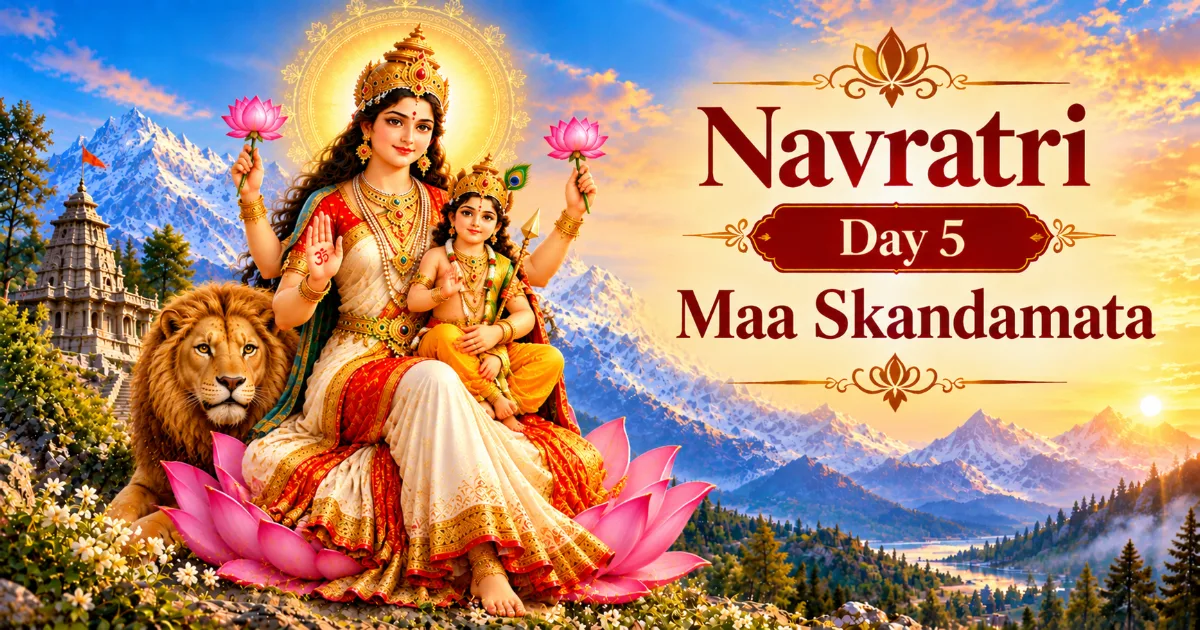
Maa Skandamata is usually depicted seated on a lotus, holding her young son Skanda in her lap. She is often shown with four arms, carrying lotus flowers in two of her hands, while another hand supports her child and the remaining hand is raised in a gesture of blessing. Because of her association with the lotus, she is also known in devotional traditions as Padmasana Devi and Padmasana.
Her divine form expresses a beautiful combination of tenderness and strength. She represents the love that nurtures a child, the courage required to protect loved ones, and the wisdom needed to guide others. Her worship reminds devotees that compassion is not a sign of weakness. Caring for others, offering guidance, and standing beside people during difficult times require patience, responsibility, and inner strength.
On the fifth day of Navratri, devotees honour Maa Skandamata through prayer and traditional worship while reflecting on the importance of love, family, care, and selfless service.
Continue Reading
Who Is Maa Skandamata?
Maa Skandamata is the fifth manifestation of Goddess Durga worshipped during Navratri. She is revered as the mother of Lord Skanda, the divine warrior who is also widely known as Kartikeya. In South India, he is worshipped as Murugan, while different regions of India follow their own traditions and stories associated with him.
In Hindu mythology, Lord Skanda is associated with courage, leadership, and the protection of divine order. As his mother, Maa Skandamata represents the nurturing power that supports the development of strength, wisdom, and responsibility.
Her appearance is distinctive. She is generally portrayed seated on a lotus, with her son Skanda resting in her lap. Her four arms hold lotus flowers and display gestures associated with blessing and protection. In some depictions, she is shown riding a lion, connecting her gentle maternal presence with the strength and courage associated with Goddess Durga.
The lotus is an important symbol in her imagery. It represents purity, spiritual growth, and the ability to remain grounded in one's values even when surrounded by difficulties. Her association with the flower highlights the spiritual beauty of compassion and selfless love.
Maa Skandamata is not only worshipped as the mother of a divine warrior. She is also honoured as a universal mother figure who offers care, protection, and blessings to her devotees. Her form reminds people that nurturing others can help develop courage, character, and wisdom.
The Story of Maa Skandamata
The story of Maa Skandamata is closely connected with Goddess Parvati and the birth of Lord Skanda. Hindu religious traditions contain different accounts of Skanda's birth, but many describe his arrival as an important event in the restoration of divine order.
According to popular mythology, powerful forces threatened the balance of the universe, and the gods needed a warrior capable of confronting the danger. Lord Skanda emerged as a divine figure associated with this responsibility. He became known for his courage, leadership, and role in the battle against the demon Tarakasura in widely told versions of the story.
Goddess Parvati, as his mother, nurtured and cared for Skanda. Her maternal role represents the love, protection, and guidance through which a child grows and develops the qualities needed to face life's challenges.
In her Skandamata form, Parvati is depicted holding her son close to her. This image expresses the special bond between a mother and child, while also connecting maternal care with divine strength. Skanda may be a powerful warrior, but his image in his mother's lap reminds devotees that strength can grow from a foundation of love and care.
The story does not suggest that every child must become a warrior or that every parent must be able to remove every difficulty from a child's life. Its deeper message is that nurturing relationships can help people develop confidence, responsibility, and resilience.
Maa Skandamata's story also reminds devotees that caring for someone is an active responsibility. Love is expressed through attention, patience, encouragement, and the willingness to guide another person toward what is right.
The Symbolism of Maa Skandamata
The traditional image of Maa Skandamata contains several meaningful symbols. Each one offers insight into motherhood, compassion, spiritual growth, and the balance between gentleness and strength.
Lord Skanda in Her Lap: The Bond Between Mother and Child
The most distinctive feature of Maa Skandamata is her son Skanda resting in her lap. This image represents maternal love, care, and protection.
A mother's lap is often understood as a place of comfort and security for a child. Through this symbol, the Goddess represents the emotional foundation that helps a child feel supported while learning to face the world.
The symbolism also extends beyond biological motherhood. Teachers, caregivers, mentors, and family members can provide encouragement and guidance that help others grow. Supporting someone does not mean making every decision for them. It means offering the care and direction they need to develop their own abilities.
The Lotus: Purity and Spiritual Growth
Maa Skandamata is commonly shown seated on a lotus and holding lotus flowers. The lotus holds deep significance in Indian religious traditions and is associated with purity, beauty, and spiritual development.
The flower grows in muddy water yet rises above the surface and blooms. This quality makes it a powerful symbol of maintaining one's values while living in a world full of challenges.
In everyday life, the lotus can remind people to remain kind even when circumstances are difficult, to learn from mistakes without losing hope, and to grow through experience.
Her Four Arms: Care, Strength and Blessings
Maa Skandamata is generally depicted with four arms. The objects and gestures in her hands vary between artistic representations, but they commonly express blessing, protection, and divine power.
Her form shows that compassion and strength can exist together. A person may be gentle while also being capable of making difficult decisions and protecting others when necessary.
The four-armed image also suggests that caring for others involves more than affection. It may require practical support, wise guidance, patience, and the courage to establish healthy boundaries.
Her Lion: Courage in the Service of Love
In some depictions, Maa Skandamata is shown riding a lion. The lion is a familiar symbol of courage, authority, and the fearless power associated with Goddess Durga.
Its presence alongside her maternal form reminds devotees that love can require courage. Protecting a child, supporting a vulnerable person, or speaking up against injustice may demand strength and determination.
The symbol also teaches that protection should be guided by wisdom. Courage is most valuable when it is used responsibly and with concern for the well-being of others.
Her Peaceful Expression: Compassion and Emotional Balance
Maa Skandamata is often depicted with a calm and compassionate expression. Her face reflects the patience and emotional steadiness associated with nurturing others.
Caring relationships require the ability to listen, understand, and respond thoughtfully. Anger and impatience can sometimes damage trust, while calm communication can help people work through disagreements.
Her peaceful expression encourages devotees to practise compassion without abandoning their own dignity or responsibilities.
Why Is Maa Skandamata Worshipped on the Fifth Day of Navratri?
The fifth day of Navratri is dedicated to Maa Skandamata. In the traditional sequence of Navdurga worship, this day follows the worship of Maa Shailputri, Maa Brahmacharini, Maa Chandraghanta, and Maa Kushmanda.
The nine forms are often understood as expressing different qualities of spiritual development. After reflecting on faith, discipline, courage, and creative energy, devotees turn to the qualities of motherhood, compassion, and nurturing care represented by Maa Skandamata.
Devotees worship her to seek blessings for family well-being, the health and happiness of children, peace, wisdom, and strength in fulfilling their responsibilities. Her worship can also encourage people to reflect on how they care for family members, friends, and others who depend on them.
The significance of this day extends beyond asking for blessings. It invites people to consider whether their relationships are built on respect, patience, and genuine care. The values represented by Maa Skandamata can be practised by listening carefully, helping someone who is struggling, encouraging children to learn, and offering support without expecting something in return.
How Do Devotees Worship Maa Skandamata?
Worship practices differ across regions, temples, and families. Many devotees begin the fifth day of Navratri with a bath, prepare a clean place for worship, and offer prayers to Maa Skandamata.
A picture or idol of the Goddess may be placed in the prayer area. Flowers, fruits, incense, a lamp, and other offerings may be presented according to family traditions. Lotus flowers are especially associated with her imagery, although the availability of particular offerings and local customs varies.
Devotees may recite devotional hymns, read passages about Goddess Durga, chant mantras, or spend time in quiet prayer. A widely recited mantra for Maa Skandamata is:
ॐ देवी स्कन्दमातायै नमः॥
Om Devi Skandamatayai Namah.
This mantra is a respectful salutation to Maa Skandamata. Devotees recite it as an expression of reverence and a prayer for wisdom, compassion, protection, and family well-being.
Some families observe fasting during Navratri, while others follow different devotional practices. Fasting traditions vary by region, family custom, and personal circumstances. Religious observances should be followed thoughtfully, with appropriate attention to health and well-being.
Acts of service are another meaningful way to honour the values associated with Maa Skandamata. Caring for children, supporting elderly family members, helping someone who is unwell, sharing food, and treating others with patience can all express the spirit of compassionate motherhood.
Spiritual Lessons We Can Learn from Maa Skandamata
Maa Skandamata's form offers lessons that are relevant to family life, friendships, education, community relationships, and personal development.
1. Love Is Expressed Through Actions
Love is not limited to words or feelings. It becomes meaningful through everyday actions such as listening, offering help, keeping promises, and being present when someone needs support.
Maa Skandamata's maternal form reminds devotees that caring for others requires consistent attention. A small act of kindness may provide reassurance to someone who is facing uncertainty or hardship.
2. Compassion Is a Form of Strength
Some people mistakenly believe that kindness makes a person weak. Maa Skandamata's form challenges that idea by combining maternal tenderness with the strength associated with Goddess Durga.
Compassion requires patience and the willingness to understand another person's difficulties. It can also require courage, especially when helping someone involves challenging unfair behaviour or making a difficult but responsible decision.
Being compassionate does not mean accepting harmful treatment. It means responding with humanity while maintaining appropriate boundaries.
3. Children Need Guidance as Well as Protection
The image of Skanda in his mother's lap symbolises care during the process of growth. Children need safety and affection, but they also need opportunities to learn, make age-appropriate decisions, and develop independence.
Parents and caregivers can provide guidance by setting clear expectations, listening to children's concerns, encouraging curiosity, and helping them learn from mistakes. Protecting children is important, but so is preparing them to navigate the world with confidence and responsibility.
This lesson also applies to teachers and mentors who support younger people in their development.
4. Patience Helps Relationships Grow
Healthy relationships are built over time. Differences in opinions, mistakes, and misunderstandings are natural parts of human interaction.
Maa Skandamata's peaceful expression encourages people to practise patience and thoughtful communication. Listening before responding, apologising when necessary, and trying to understand another person's point of view can help relationships become stronger.
Patience does not require ignoring serious problems. It means giving situations careful attention and choosing responses that support understanding and fairness.
5. Protect Others Without Controlling Them
Protection is an important theme in Maa Skandamata's symbolism. However, genuine care also involves respecting another person's individuality and ability to grow.
Parents, friends, and caregivers can offer advice and support without trying to control every choice. Allowing others to develop their own judgment is an important part of helping them become confident and responsible.
The Goddess's maternal image encourages a balance between providing security and allowing room for growth.
6. Nurturing Others Strengthens Communities
Care is not limited to the home. Communities also grow stronger when people look after children, respect older people, support those facing hardship, and help one another during difficult times.
A neighbour who checks on an elderly person, a teacher who encourages a struggling student, or a volunteer who supports a family in need demonstrates the wider meaning of nurturing care.
Maa Skandamata's form encourages devotees to extend compassion beyond their immediate circle and contribute to a more caring society.
Maa Skandamata and the Importance of Motherhood
Motherhood is one of the central themes associated with Maa Skandamata. Her image expresses the relationship between care, responsibility, and the development of a child.
In many families, mothers play a significant role in providing emotional support, guidance, and practical care. Their work may include comforting children, teaching values, managing daily responsibilities, and helping family members through difficult periods. Much of this work happens quietly and may not always receive recognition.
At the same time, the meaning of nurturing care is broader than one family role. Fathers, grandparents, adoptive parents, guardians, teachers, and other caregivers can also provide the affection and support that help children flourish.
Maa Skandamata's symbolism invites society to value caregiving and recognise that raising and supporting others is meaningful work. It also reminds families that caregivers themselves need respect, support, rest, and understanding.
The deeper message is that love becomes powerful when it is combined with responsibility, patience, and respect for the person receiving care.
The Cultural Significance of the Fifth Day of Navratri
Navratri is celebrated in different ways throughout India, with regional customs, devotional music, traditional food, temple rituals, and community gatherings. The fifth day provides an opportunity to reflect on motherhood, family bonds, and the importance of compassion in society.
Stories of Maa Skandamata are passed down through religious texts, devotional songs, oral traditions, and artistic representations. These traditions help younger generations learn about Hindu mythology and the values that communities associate with the Goddess.
Her image also offers a meaningful way to discuss the relationship between strength and care. In a world where power is sometimes understood only in terms of authority or physical ability, Maa Skandamata represents a different kind of strength: the ability to nurture, guide, protect, and encourage others.
The day can also be an opportunity for families to spend time together, express gratitude to caregivers, and renew their commitment to treating one another with respect.
Conclusion: Let Love, Compassion and Care Guide Your Life
Maa Skandamata, the fifth form of Goddess Durga worshipped during Navratri, represents motherhood, compassion, protection, and the nurturing power of love. Her image, with Lord Skanda resting in her lap and lotus flowers in her hands, expresses the close relationship between care and strength.
Her worship reminds devotees that love is demonstrated through patience, guidance, responsibility, and thoughtful action. These qualities matter not only in the relationship between a mother and child but also in friendships, families, workplaces, and communities.
On the fifth day of Navratri, devotees can honour Maa Skandamata through prayer and traditional worship while reflecting on how they treat the people around them. Listening to someone who needs support, guiding a child with patience, respecting caregivers, and helping those who are vulnerable are meaningful ways to practise her teachings.
The enduring message of Maa Skandamata is that nurturing others is a powerful contribution to the world. When love is combined with wisdom and responsibility, it can help people grow in confidence, character, and compassion.
May Maa Skandamata bless everyone with family happiness, good health, wisdom, peace, and the strength to care for others with love.
Jai Maa Skandamata!
#ShubhoMahalaya #MaaDurga #DurgaPuja2026 #DivineFeminine #Shakti #CulturesOfIndia