Navratri is a sacred Hindu festival dedicated to the worship of Goddess Durga and her nine divine forms, collectively known as Navdurga. Each day of this festival holds a special spiritual meaning and encourages devotees to reflect on different qualities that can bring peace, strength, and wisdom into their lives.
The second day of Navratri is dedicated to Maa Brahmacharini, the second form of Goddess Durga. She represents devotion, penance, self-discipline, patience, and unwavering determination. Her worship reminds devotees that meaningful achievements often require dedication, control over one's desires, and faith in the path one has chosen.
While Maa Shailputri, worshipped on the first day, represents the beginning of a spiritual journey, Maa Brahmacharini represents the discipline and commitment needed to continue that journey. Her story teaches that true strength is not always expressed through physical power. Sometimes, it is found in the ability to remain patient, make wise choices, and stay committed to one's principles even when life becomes difficult.
Who Is Maa Brahmacharini?
Maa Brahmacharini is the second manifestation of Goddess Durga worshipped during the nine days of Navratri. Her name carries a deep spiritual meaning. The word Brahma in this context is associated with spiritual truth and the ultimate reality, while charini refers to one who follows or practises a particular path. Together, the name Brahmacharini is commonly understood as one who follows the path of spiritual discipline and devotion.
Continue Reading
According to Hindu tradition, this form of the Goddess represents the period of intense penance undertaken by Parvati to attain Lord Shiva as her husband. Through her dedication and determination, she became an enduring symbol of sincere devotion and self-control.
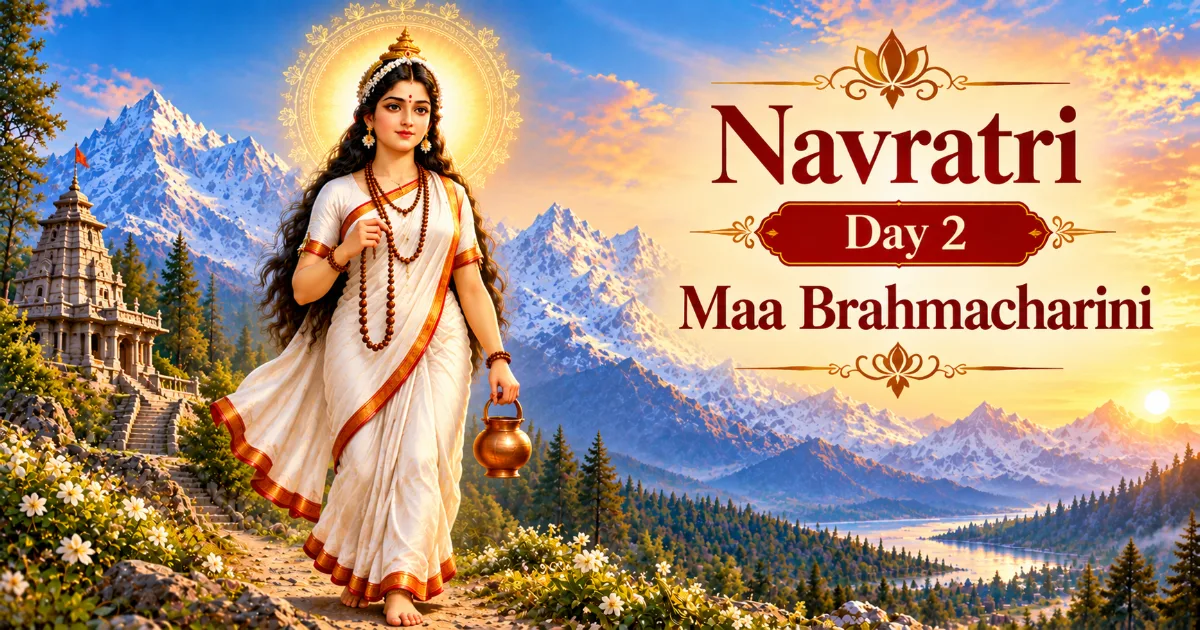
Maa Brahmacharini is usually depicted walking barefoot, holding a rosary, known as a japamala, in one hand and a water pot, known as a kamandalu, in the other. Her simple appearance reflects the spiritual values she represents. Unlike depictions of the Goddess that emphasise weapons and fierce power, her form highlights calmness, austerity, patience, and inner strength.
Her image reminds devotees that a peaceful mind and a determined heart can become powerful sources of strength.
The Story of Maa Brahmacharini
Hindu traditions tell the story of Parvati, the daughter of Himavan, the king of the mountains. She is also known as Shailputri, the Goddess worshipped on the first day of Navratri. From an early stage, Parvati was devoted to Lord Shiva and wished to marry him.
However, attaining this goal required extraordinary patience and spiritual commitment. According to popular accounts, Parvati undertook severe penance to demonstrate the depth of her devotion. She gave up many comforts and continued her spiritual practices with remarkable determination.
Traditions describing her penance explain that she initially survived on fruits and roots, later sustained herself on leaves, and eventually continued her austerities without food. These accounts are understood as expressions of her extraordinary resolve and unwavering dedication.
Her penance was not a display of pride or a desire for worldly recognition. It represented the strength of her purpose and the sincerity of her devotion. Despite the hardships involved, she remained firm in her spiritual commitment.
Lord Shiva eventually accepted Parvati's devotion, and their divine marriage became a celebrated event in Hindu tradition. The form of Parvati associated with this period of penance came to be worshipped as Maa Brahmacharini.
The story carries a message that extends beyond marriage or religious observance. It teaches the importance of patience, perseverance, and staying committed to meaningful goals. It also reminds us that genuine dedication is demonstrated through consistent effort rather than words alone.
The Symbolism of Maa Brahmacharini
Every element associated with Maa Brahmacharini reflects a particular spiritual quality. Understanding these symbols helps devotees appreciate the deeper meaning of her worship.
The Japamala: Faith and Concentration
The rosary in Maa Brahmacharini's hand represents prayer, meditation, and continuous remembrance of the divine. Repeating a sacred name or mantra can help devotees focus their minds and develop a regular spiritual practice.
The japamala also symbolises consistency. Just as each bead is counted with attention, progress in life often comes through small, repeated efforts. Whether someone is learning a skill, preparing for an examination, or working toward a personal goal, steady practice can be more valuable than occasional bursts of enthusiasm.
The Kamandalu: Simplicity and Self-Control
The water pot held by the Goddess represents simplicity, restraint, and the disciplined life of a spiritual seeker. Water is essential for life, yet it can also symbolise purity and renewal in religious traditions.
The kamandalu reminds devotees that a meaningful life does not depend entirely on material possessions. Learning to distinguish between genuine needs and unnecessary desires can help a person live with greater clarity and balance.
Her Calm Appearance: Inner Strength
Maa Brahmacharini is portrayed with a calm and composed expression. This peaceful appearance reflects her ability to remain focused despite difficulties.
Her example suggests that strength does not always require anger, aggression, or confrontation. The ability to respond thoughtfully, remain patient, and make decisions with a clear mind can be equally powerful.
Her Bare Feet and Simple Attire: Austerity and Dedication
The Goddess is often depicted without elaborate royal ornaments or luxurious clothing. Her simple appearance reflects renunciation, humility, and dedication to spiritual practice.
This symbolism does not suggest that material comfort is inherently wrong. Instead, it encourages people to avoid becoming so attached to comfort that they lose sight of their values and responsibilities.
Why Is Maa Brahmacharini Worshipped on the Second Day of Navratri?
The second day of Navratri is associated with the development of discipline after the beginning of the spiritual journey. Maa Shailputri represents the foundation, while Maa Brahmacharini inspires devotees to strengthen their determination and continue with sincerity.
Devotees worship her to seek blessings for patience, wisdom, peace of mind, and the strength to overcome challenges. Students may reflect on her dedication while preparing for examinations. Professionals may draw inspiration from her discipline when working toward long-term goals. Families may remember the importance of patience, understanding, and commitment in their relationships.
The significance of this day lies not only in performing rituals but also in reflecting on the qualities represented by the Goddess. Prayer can become more meaningful when it encourages positive conduct and thoughtful action in everyday life.
How Do Devotees Worship Maa Brahmacharini?
Worship practices differ across regions, families, and traditions. Many devotees begin the day by bathing, cleaning the place of worship, and offering prayers to Maa Brahmacharini.
Flowers, fruits, incense, lamps, and other traditional offerings may be presented according to family customs. Devotees may chant mantras, read devotional texts, or meditate quietly while remembering the Goddess.
One widely recited mantra is:
ॐ देवी ब्रह्मचारिण्यै नमः॥
Om Devi Brahmacharinyai Namah.
This mantra is a respectful invocation of Maa Brahmacharini. Devotees recite it as an expression of reverence and a prayer for spiritual discipline and inner strength.
Some traditions observe fasting during Navratri. Fasting practices vary, and people generally follow the customs appropriate to their family traditions and personal circumstances. The spiritual purpose of such observances is to encourage devotion, restraint, and mindfulness rather than competition or hardship.
Acts of kindness, helping those in need, speaking truthfully, and treating others with respect are also meaningful ways to express the values associated with the Goddess.
Spiritual Lessons We Can Learn from Maa Brahmacharini
The teachings associated with Maa Brahmacharini remain relevant even outside the festival. Her story offers practical lessons for people facing personal, academic, professional, or family challenges.
1. Patience Is an Essential Strength
Many important goals cannot be achieved immediately. Education, career development, personal growth, and healthy relationships require time and consistent effort.
Maa Brahmacharini's story reminds us not to abandon a worthwhile goal simply because the results are taking longer than expected. Patience does not mean doing nothing. It means continuing to make sensible efforts while accepting that progress may take time.
2. Discipline Helps Turn Intentions into Actions
People often begin new plans with enthusiasm but struggle to maintain them. Discipline provides a structure that helps intentions become habits.
A student who studies regularly, a professional who keeps learning, and a person who works patiently to improve their health all demonstrate the value of consistent effort. Maa Brahmacharini symbolises the commitment needed to keep moving forward.
3. Simplicity Can Bring Clarity
Modern life often encourages people to pursue more possessions, recognition, and constant entertainment. While comfort and achievement have their place, excessive attachment can distract people from what matters most.
The simple appearance of Maa Brahmacharini encourages reflection on priorities. Living simply can mean managing time wisely, avoiding unnecessary comparisons, and giving greater attention to relationships, learning, and personal values.
4. Faith Should Be Supported by Effort
Faith can provide hope and courage during uncertain times. However, the story of Maa Brahmacharini also highlights the importance of action.
Praying for success while refusing to prepare for an examination, for example, does not reflect the discipline represented by the Goddess. A balanced approach combines faith with responsibility, preparation, and honest effort.
5. Inner Strength Can Be Quiet
Not every challenge requires a dramatic response. Sometimes, strength means controlling anger, listening carefully, accepting a mistake, or continuing to work without seeking constant praise.
Maa Brahmacharini's calm and determined form reminds devotees that quiet perseverance can be a powerful expression of character.
Maa Brahmacharini and the Importance of Self-Control
Self-control is one of the central themes associated with the Goddess. It means developing the ability to pause before acting, consider the consequences of a decision, and choose what is beneficial over what is merely tempting in the moment.
In everyday life, self-control may involve using time responsibly, managing anger, avoiding harmful habits, keeping promises, and resisting the urge to give up when a task becomes difficult.
Self-control should not be confused with ignoring genuine needs or punishing oneself. A balanced approach recognises the importance of rest, health, emotional well-being, and seeking help when necessary. The deeper lesson is to live consciously rather than allowing every impulse to determine one's actions.
The Cultural Significance of the Second Day of Navratri
Navratri is celebrated in many different ways throughout India. Regional customs, languages, music, food, and forms of worship vary, yet devotion to the Goddess connects communities across these differences.
In homes and temples, devotees may gather for prayers, devotional singing, readings, and other religious activities. The second day provides an opportunity to discuss values such as discipline, humility, patience, and dedication with younger generations.
These traditions help preserve cultural knowledge by passing stories and rituals from one generation to another. They also create opportunities for families and communities to come together in a shared spirit of devotion.
The worship of Maa Brahmacharini illustrates how religious stories can communicate ethical and spiritual ideas through memorable symbols and narratives. Her story encourages people to reflect on how their beliefs influence their behaviour and how they can put positive values into practice.
Conclusion: Walk the Path with Patience and Devotion
Maa Brahmacharini, the second form of Goddess Durga worshipped during Navratri, represents devotion, discipline, patience, and inner strength. Her story of penance and determination reminds us that meaningful progress often requires sustained effort and a willingness to remain committed during difficult times.
On the second day of Navratri, devotees can honour the Goddess through prayer and traditional rituals while also reflecting on the values she represents. Practising patience, keeping promises, learning continuously, and acting with integrity are simple ways to bring these teachings into everyday life.
The message of Maa Brahmacharini is timeless: remain sincere in your purpose, disciplined in your actions, and patient on your journey. With faith, wisdom, and consistent effort, even a long and challenging path can become an opportunity for growth.
May Maa Brahmacharini bless everyone with peace, wisdom, patience, and the strength to follow the right path.
Jai Maa Brahmacharini!
#ShubhoMahalaya #MaaDurga #DurgaPuja2026 #DivineFeminine #Shakti #CulturesOfIndia