How an Ancient Chinese Philosophy Explored the Way of Nature, the Power of Simplicity, and the Art of Living in Balance
Introduction: A Different Path to Wisdom
Ancient China produced several philosophical traditions that profoundly influenced its civilization, but few offered a vision of life as distinctive as Daoism. While Confucius emphasized moral responsibility, social relationships, education, and good government, Daoist thinkers explored a different question: how could human beings live in harmony with the natural order of the universe? Their answers encouraged simplicity, humility, flexibility, quiet observation, and a willingness to work with the natural course of events rather than attempting to control everything through rules and force.
At the heart of this tradition lies the concept of the Dao, often translated as the Way. The Dao is not simply a road or a set of instructions. It refers to the underlying course, pattern, or source through which the world unfolds. Rivers flow, plants grow, seasons change, animals adapt, and stars move through the heavens. Daoist philosophy asks whether human life might become more balanced if people learned to understand these processes instead of constantly struggling against them.
The figure most closely associated with this philosophy is Laozi, whose name is commonly translated as Old Master. Tradition presents him as an ancient Chinese sage who composed the Daodejing, a short but remarkably influential work of philosophical writing. Its compact passages discuss the Dao, virtue, leadership, desire, knowledge, humility, and the relationship between apparent weakness and genuine strength.
However, the historical identity of Laozi remains uncertain. Scholars debate whether he was a single historical individual, when he lived, and how the text associated with him developed. The stories about his life belong partly to the history of Chinese religious and cultural tradition rather than to securely established biography. Understanding this distinction allows us to appreciate both the historical complexity of Daoism and the extraordinary influence of the ideas associated with its founding figure.
Daoism developed during a period when Chinese thinkers were searching for answers to political disorder, warfare, social conflict, and the limitations of established institutions. Its philosophy offered an alternative vision of wisdom, one in which the ability to remain calm, recognize natural patterns, and avoid unnecessary interference could be more valuable than ambition or domination.
1. China Before Laozi: A World Searching for Order
To understand the emergence of Daoist thought, it is necessary to consider the political and intellectual environment of ancient China. The Zhou dynasty had established its authority over a large part of northern China during the eleventh century BCE, traditionally dated to approximately 1046 BCE. Early Zhou rulers justified their rule through the Mandate of Heaven, the belief that legitimate authority depended on moral conduct and the maintenance of order.
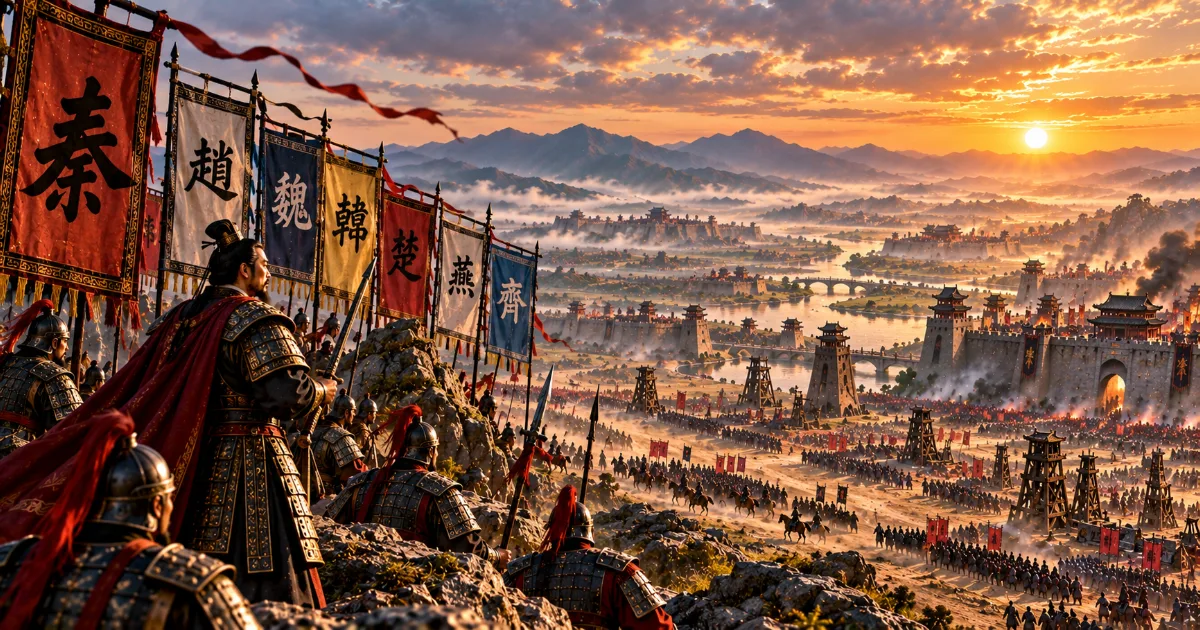
Over time, however, the political structure of the Zhou world weakened. Regional rulers became increasingly powerful, and the authority of the Zhou kings gradually declined. During the Spring and Autumn period, conventionally dated from 770 to 476 BCE, political competition intensified. In the following Warring States period, usually dated from 475 to 221 BCE, rival states fought prolonged wars in pursuit of territorial expansion and supremacy.
These struggles transformed Chinese society. Governments developed larger armies, reorganized taxation, expanded administrative systems, and competed to attract talented advisers. Rulers sought practical solutions to problems of warfare, economic management, diplomacy, and political legitimacy. Philosophers travelled between courts, offering teachings intended to improve government and restore stability.
This era became one of the most important periods in the intellectual history of China. Confucianism, Mohism, Legalism, Daoism, and other traditions emerged or developed within a broad debate about the nature of human beings and the best way to organize society.
Confucian thinkers generally emphasized moral education, ritual conduct, family responsibility, and the example set by virtuous rulers. Mohist thinkers criticized wasteful practices and advocated impartial concern for others. Legalist thinkers emphasized effective institutions, clear laws, administrative discipline, and the concentration of political authority.
Daoist thinkers questioned the assumption that more rules, stronger institutions, and greater intervention would necessarily produce a better society. They suggested that excessive attempts to control human behavior could create additional problems. They also warned that ambition, rigid distinctions, and the desire to impose personal preferences upon the world could separate people from the natural processes that sustained life.
This did not mean that every Daoist thinker rejected government or social life completely. Rather, Daoist writings challenged the belief that complex problems could always be solved through force, regulation, or deliberate planning. Their central concern was the quality of human action and its relationship with the larger order of existence.
2. Laozi: The Sage Behind the Tradition
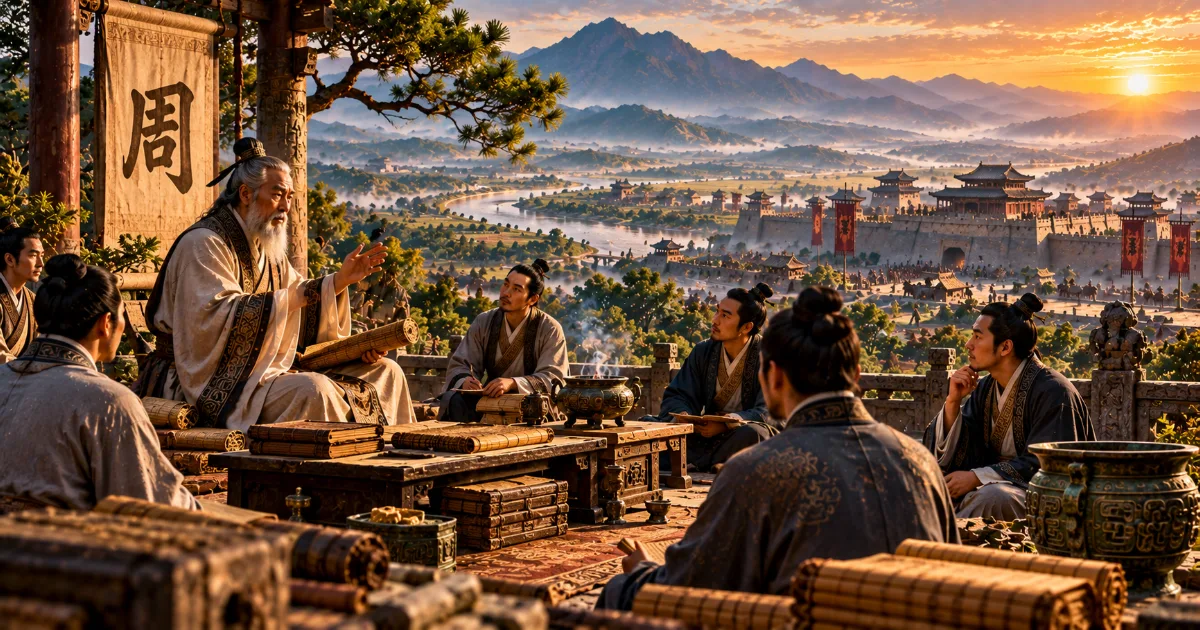
The name Laozi is associated with one of the most mysterious figures in Chinese intellectual history. The traditional account presents him as an older contemporary of Confucius who lived during the Zhou period. According to later accounts, he served as an archivist or keeper of records at the royal court. His occupation would have placed him near written traditions, historical records, and the intellectual culture of the time.
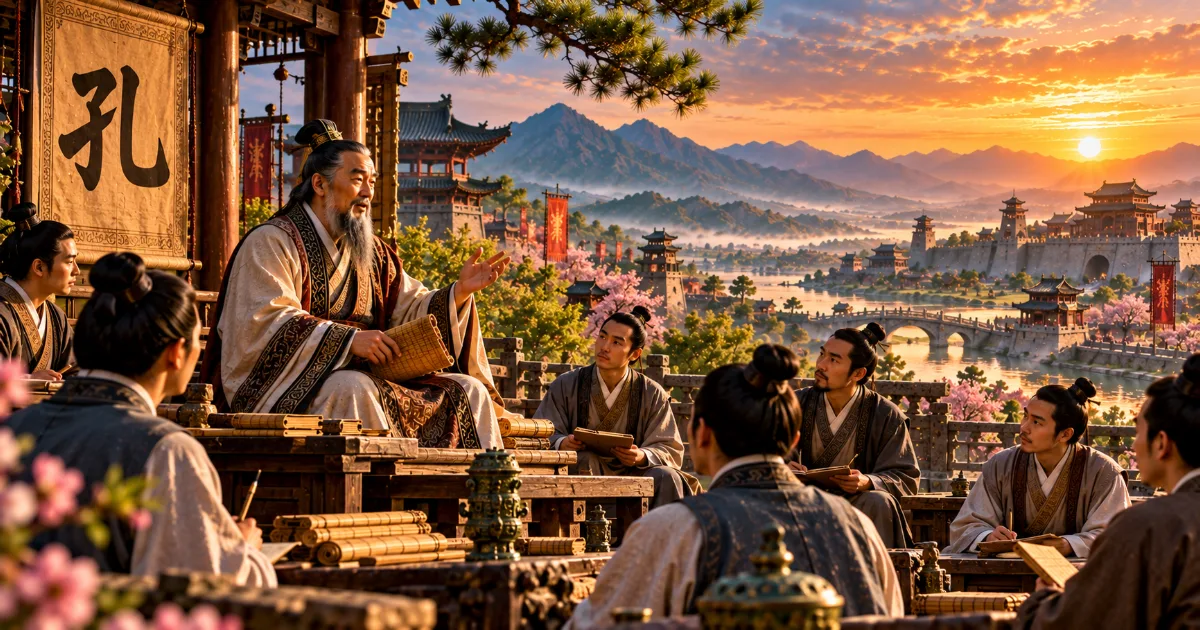
One famous story describes Confucius visiting Laozi to ask about ritual and proper conduct. In the account, Laozi advises Confucius against becoming too attached to outward forms and reputation. The story contrasts Confucian concern with ritual and social responsibilities with the Daoist emphasis on naturalness and freedom from excessive ambition.
The encounter is important as a cultural expression of the relationship between the two traditions. However, historians cannot establish with confidence that this meeting actually occurred. The surviving stories were written down long after the period in which the encounter was supposed to have taken place. They reveal how later Chinese thinkers understood the relationship between Confucianism and Daoism more securely than they reveal a verifiable conversation between two historical individuals.
The best-known account of Laozi's life appears in the Records of the Grand Historian, written by Sima Qian around the second century BCE. Sima Qian collected several traditions about Laozi, including accounts that connected him with the Daodejing. He also acknowledged uncertainty about the identity of the figure.
Modern scholarship generally treats Laozi's historical existence and biography with caution. The Daodejing may preserve ideas developed by more than one thinker over time, and the text probably took shape through a process of composition and transmission rather than through a single event that can be securely dated. Its language, structure, and historical references remain subjects of scholarly discussion.
This uncertainty does not diminish Laozi's importance. Historical influence does not always depend on a fully documented biography. Laozi became a central figure through the authority of the text associated with his name, the philosophical traditions that developed around it, and the religious communities that later revered him.
Over centuries, Laozi came to represent a kind of wisdom that stood apart from political ambition. He became the image of a sage who understood the world deeply enough to avoid unnecessary struggle. The uncertainty surrounding his life is therefore part of the story of his enduring place in Chinese civilization.
3. The Daodejing: A Small Book with an Immense Influence
The Daodejing is the foundational text most closely associated with Laozi. Its title is often translated as The Classic of the Way and Virtue. The word Dao means the Way, while De can refer to virtue, potency, character, or the effective expression of the Way in a person or thing. Jing means a classic or authoritative text.
The work is comparatively short, traditionally divided into eighty-one chapters. These chapters contain compact reflections, poetic images, paradoxes, and observations about the world. Unlike a modern philosophical textbook, it does not usually present its ideas through extended definitions or formal arguments. Instead, it invites readers to consider contradictions and question familiar assumptions.
The text repeatedly suggests that the deepest truths cannot always be captured by ordinary language. A name can identify something, but it cannot necessarily communicate the whole of its nature. A rule can guide behavior, but it cannot anticipate every circumstance. A leader can issue commands, but excessive control may weaken the very society the leader hopes to strengthen.
The Daodejing discusses both personal conduct and political authority. It explores how rulers should govern, how individuals should respond to conflict, why desire can create dissatisfaction, and how apparent weakness may contain a form of strength. These themes are connected by the belief that effective action requires an understanding of the larger patterns within which action takes place.
The text has survived in several versions. Archaeological discoveries, including manuscripts found at Guodian and Mawangdui, have helped scholars understand the early transmission of Daoist writings. These discoveries demonstrate that the text circulated in forms that were not always identical to the version most widely read today.
The manuscript evidence also reminds us that ancient Chinese philosophy developed through processes of copying, teaching, editing, and reinterpretation. The Daodejing was not merely a fixed collection of sentences passed unchanged from one generation to another. It belonged to a living intellectual tradition whose readers repeatedly explored its meaning.
Its influence eventually extended far beyond philosophical discussion. The text became central to Daoist religious traditions, inspired poetry and painting, influenced political thought, and shaped Chinese understandings of nature, health, self-cultivation, and human behavior.
4. Understanding the Dao: The Way That Cannot Be Fully Named
The central concept of Daoism is the Dao. It is difficult to translate because it operates at several levels of meaning. In ordinary Chinese usage, the word can refer to a road, path, method, teaching, or way of doing something. In Daoist philosophy, it also points toward the underlying process through which the world comes into being and continues to change.
The opening of the Daodejing famously warns that a Dao that can be completely expressed in words is not the constant or enduring Dao. The passage does not necessarily mean that language is useless. Instead, it suggests that the deepest reality cannot be reduced to a final verbal formula. Words can point toward understanding, but they cannot exhaust what they describe.
Consider the natural world. A person may study the movement of water, the growth of a tree, the behavior of animals, or the changing seasons. Scientific observation can explain many of these processes in increasingly precise ways. Yet the Daoist question extends beyond the collection of facts. It asks how people should live when they recognize that the world is dynamic, interconnected, and not entirely subject to individual control.
The Dao is not simply another name for a personal god who issues commands. In many philosophical interpretations, it is understood as the underlying source, pattern, or process of reality. Different Daoist religious traditions later developed more elaborate understandings of divine beings, sacred powers, and cosmology, but the philosophical Dao is often described through images of naturalness, transformation, and the origin of the many things in existence.
The Dao is also not merely a moral law imposed upon the universe from outside. It is associated with the way things unfold when they are not distorted by excessive interference. Water moves downhill. Seeds develop according to their nature when conditions permit. The day gives way to night, and winter eventually yields to spring. These examples do not explain every aspect of the Dao, but they help illustrate why Daoist thinkers looked to nature for insight into human life.
Human beings often create difficulties by assuming that reality must conform to their immediate wishes. They may pursue wealth without limit, compete for status, attempt to dominate others, or insist that every problem requires a forceful solution. Daoist philosophy encourages a different response. It asks people to observe carefully, recognize limits, and act in ways that are appropriate to the circumstances.
Living according to the Dao does not mean abandoning all effort. It means developing a more intelligent relationship with effort. A skilled person learns when action is needed, when patience is wiser, and when interference will make a situation worse. Wisdom consists partly in recognizing that the world has patterns that cannot be commanded into existence.
5. Wu Wei: The Art of Acting Without Forcing
One of the most distinctive concepts in Daoist philosophy is wu wei, often translated as non-action. The phrase can be misunderstood if it is interpreted as a command to remain inactive under all circumstances. In many contexts, it is better understood as non-forcing, effortless action, or action that does not rely on unnecessary interference.
A skilled musician does not consciously calculate every movement of the fingers once years of practice have made the instrument familiar. An experienced craftsperson may work smoothly because knowledge and practice have become integrated into movement. A person navigating a difficult conversation may achieve more by listening carefully than by insisting on being heard. These examples help explain the idea of action that is effective without becoming rigid or excessively deliberate.
In Daoist thought, wu wei reflects an ability to respond appropriately to the situation rather than impose a predetermined plan regardless of circumstances. It involves awareness, restraint, flexibility, and the avoidance of unnecessary struggle.
Imagine a person attempting to push a heavy object through a narrow doorway. Greater force may not solve the problem if the object is positioned incorrectly. A more effective response may involve changing its angle, adjusting the surroundings, or recognizing that a different route is available. The solution comes not from abandoning action but from understanding the conditions under which action can succeed.
The same principle can apply to leadership. A ruler who attempts to supervise every detail of society may produce fear, dependence, and resistance. A leader who establishes reasonable conditions, understands local needs, and avoids unnecessary interference may allow communities to function more effectively. Daoist political thought repeatedly explores this possibility.
The idea also challenges the assumption that visible effort is always evidence of achievement. Some people attempt to demonstrate authority through constant commands, public displays, and rigid control. Daoist thinkers question whether such behavior reflects genuine competence. A person who understands a situation deeply may need fewer dramatic gestures because the necessary action is already clear.
However, wu wei should not be confused with passivity in the face of injustice or danger. Its meaning depends on the philosophical and practical context. Daoist texts often criticize aggressive intervention, but they also value discernment and responsiveness. The point is not that nothing should be done. The point is that action should not be driven by blind ambition, needless force, or the desire to control every outcome.
6. Water as a Model of Wisdom
Water is one of the most powerful images in the Daodejing. It sustains life, nourishes plants, fills low places, and flows around obstacles. Although it is soft, it can gradually reshape stone and carve valleys. It does not need to compete with every object it encounters, yet it possesses extraordinary persistence.
Daoist writers use water to challenge conventional ideas about strength and weakness. Human societies often celebrate domination, aggression, wealth, and visible power. Water suggests that another kind of strength exists. It can be flexible without being fragile, yielding without being defeated, and humble without becoming useless.
Water naturally moves toward lower places. This is often interpreted as a symbol of humility. People who constantly seek the highest position may become trapped in rivalry, jealousy, and fear of losing status. A person who does not require constant recognition may have greater freedom to learn, cooperate, and respond calmly.
Water also adapts to the shape of its surroundings. It can occupy a narrow channel, spread across a broad surface, or collect in a quiet pool. This flexibility does not mean that water loses its nature. Instead, it expresses that nature through different conditions. Daoist philosophy uses this image to encourage people to remain responsive rather than rigid.
The metaphor has practical implications for conflict. A person who reacts to every disagreement with anger may increase resistance. Someone who listens, waits, and adjusts their approach may create an opportunity for resolution. This does not guarantee success in every situation, but it illustrates why flexibility can be more effective than confrontation.
Water also reminds human beings of their dependence on the natural world. It nourishes crops, sustains animals, supports settlements, and makes civilization possible. Its value is not limited to its power. Much of its importance comes from the quiet work it performs every day.
The lesson is not that strength is always harmful or that resistance is never necessary. Rather, Daoist thought asks people to broaden their understanding of strength. Sometimes strength lies in endurance, sometimes in adaptability, and sometimes in the ability to recognize when a struggle no longer serves a worthwhile purpose.
7. Simplicity, Desire, and the Problem of Excess
Daoist philosophy frequently questions the pursuit of endless accumulation. Wealth, possessions, recognition, and political influence can provide genuine benefits, but they can also create dissatisfaction when people treat them as the foundation of their identity.
The Daodejing suggests that desire can disturb the mind and pull people away from a more balanced way of living. A person who constantly compares themselves with others may never feel satisfied. Every achievement becomes the starting point for another competition. Every possession creates the possibility of losing it. Every rise in status brings new expectations.
This does not mean that Daoism requires universal poverty or that material needs should be ignored. Human beings require food, shelter, clothing, safety, and social relationships. The philosophical concern is with excess and attachment, especially when the desire for more begins to govern a person's decisions.
Simplicity offers an alternative. It encourages people to distinguish between what is necessary and what is merely desired because of social pressure or restless ambition. A simpler life may provide more room for reflection, meaningful relationships, and attention to the world beyond personal competition.
In political terms, Daoist writers also warn that excessive luxury among rulers can place burdens upon ordinary people. When elites consume resources without restraint, the wider population may face higher taxes, forced labor, or economic insecurity. The criticism of excess therefore extends beyond personal happiness into questions of social responsibility.
Simplicity can also be understood as clarity. A person who attempts to pursue too many goals at once may become distracted and ineffective. Someone who recognizes a smaller number of meaningful priorities may act with greater consistency. In this sense, simplicity is not merely a preference for fewer possessions. It is a way of reducing unnecessary complexity in thought and behavior.
Modern life makes these ideas especially relevant. Advertising, social media, professional competition, and consumer culture often encourage people to measure success through visible achievements. Daoist philosophy invites a different question: does the pursuit of these goals contribute to a balanced life, or does it create a permanent sense of insufficiency?
The answer will differ among individuals and circumstances. Nevertheless, the Daoist emphasis on moderation remains a useful reminder that a life filled with possessions and accomplishments is not automatically a life filled with contentment.
8. Humility and the Power of Not Seeking the Spotlight
Humility is another recurring theme in Daoist writings. The sage is often portrayed as someone who does not constantly advertise personal superiority or compete for public recognition. Such a person may possess considerable understanding while remaining modest in conduct.
This idea challenges societies that equate visibility with importance. People frequently seek praise because they believe that recognition confirms their worth. They may exaggerate their achievements, defend their reputation aggressively, or treat criticism as a personal attack. Daoist philosophy suggests that this dependence on recognition can become a source of weakness.
A person who requires constant approval is easily manipulated by praise and threatened by criticism. Their choices may gradually become shaped by the opinions of others rather than by careful judgment. Humility offers a degree of independence because it reduces the need to maintain an impressive public image.
Daoist humility is not necessarily a denial of ability. A skilled person can acknowledge their competence without treating it as a reason to dominate others. A wise leader can make decisions without demanding personal admiration for every success. A teacher can help students grow without making the learning process an advertisement for the teacher's authority.
The Daodejing also connects humility with leadership. The best ruler is sometimes described as one whose presence is barely noticed by the people. This image suggests that successful government should not depend upon constant displays of power. If people can live securely, perform their work, and maintain their communities without unnecessary interference, the ruler may have fulfilled an important responsibility.
Such a view differs from leadership models that emphasize charisma, personal glory, and visible command. It proposes that authority can be most effective when it creates conditions for others to flourish rather than demanding that everyone continually acknowledge the leader.
Humility also has an ethical dimension. Recognizing the limits of one's knowledge makes learning possible. Admitting uncertainty can prevent avoidable mistakes. Listening to people with different experiences may reveal information that personal confidence would otherwise conceal.
In this way, Daoist humility is not a call to become insignificant. It is an invitation to stop treating personal importance as the central purpose of life.
9. Yin and Yang: Understanding Complementary Opposites
The relationship between opposites is an important feature of the broader Chinese intellectual world. The familiar concepts of yin and yang describe complementary aspects of existence, often represented through darkness and light, stillness and movement, coolness and warmth, or receptivity and activity.
The familiar black-and-white circular symbol associated with yin and yang became influential through the development of Chinese cosmological thought. It should not be assumed that every detail of the modern symbol appeared in the earliest Daoist texts in its present form. Nevertheless, the broader idea that opposing qualities interact and transform one another became central to Chinese philosophy.
Yin and yang are not simply equivalent to good and evil. Darkness is not automatically bad, just as light is not automatically good. Rest can be necessary for activity, and stillness can prepare the way for movement. A period of decline may create conditions for renewal, while excessive expansion may lead to exhaustion.
Daoist philosophy encourages attention to these relationships because people often make poor decisions when they recognize only one side of a situation. Someone who values constant activity may ignore the need for rest. A leader who values strength alone may fail to understand the importance of patience and cooperation. A society that celebrates growth without considering limits may damage the resources upon which future prosperity depends.
The relationship between opposites also helps explain the Daoist interest in paradox. What appears weak may become strong through persistence. What appears empty may be useful because it leaves room for something else. A quiet person may understand more than someone who speaks constantly. A ruler who refrains from unnecessary interference may govern more effectively than one who issues commands at every opportunity.
These ideas should not be turned into simplistic formulas. Not every weakness produces strength, and not every apparent contradiction can be resolved through a single philosophical principle. The value lies in learning to examine circumstances from more than one perspective.
The broader lesson is that human beings live within changing relationships. Wisdom requires an understanding of context, proportion, and timing. Rather than assuming that one quality is always desirable, Daoist thinking asks how qualities interact and whether they remain appropriate under changing conditions.
10. Daoism and the Natural World
Nature occupies a central position in Daoist philosophy. Mountains, rivers, valleys, trees, clouds, and flowing water appear throughout Daoist imagery because they reveal processes that human beings can observe without reducing them to social rules or personal ambitions.
The natural world does not operate according to the same standards through which people evaluate status. A mountain does not need praise to remain a mountain. A river does not require a title to flow. A tree does not compare its height with every other tree before growing. These images encourage people to reconsider the pressure to constantly prove their worth.
Daoist writers often associate naturalness with ziran, a term that can be translated as spontaneity or being so of itself. The concept refers to what arises or develops according to its own nature rather than through artificial compulsion. It does not mean that every spontaneous impulse is wise. Human beings can act carelessly or destructively. Instead, the concept points toward a condition in which life unfolds without unnecessary distortion.
For Daoist thinkers, excessive interference can prevent natural processes from functioning well. In agriculture, for example, crops require appropriate conditions, but a farmer cannot force a seed to become a mature plant instantly. Cultivation involves preparing the soil, providing water, responding to weather, and allowing time for growth. The farmer's skill lies partly in understanding what can be influenced and what must be allowed to develop.
This perspective has consequences for human development. Education can support learning, but excessive pressure may suppress curiosity. Leadership can provide direction, but constant control may weaken initiative. Personal discipline can build ability, but rigid perfectionism can produce anxiety and exhaustion.
Daoist thought does not demand that people withdraw completely from society or refuse to cultivate their abilities. Rather, it encourages them to work with the nature of the person, task, or environment involved. Good action requires an understanding of conditions.
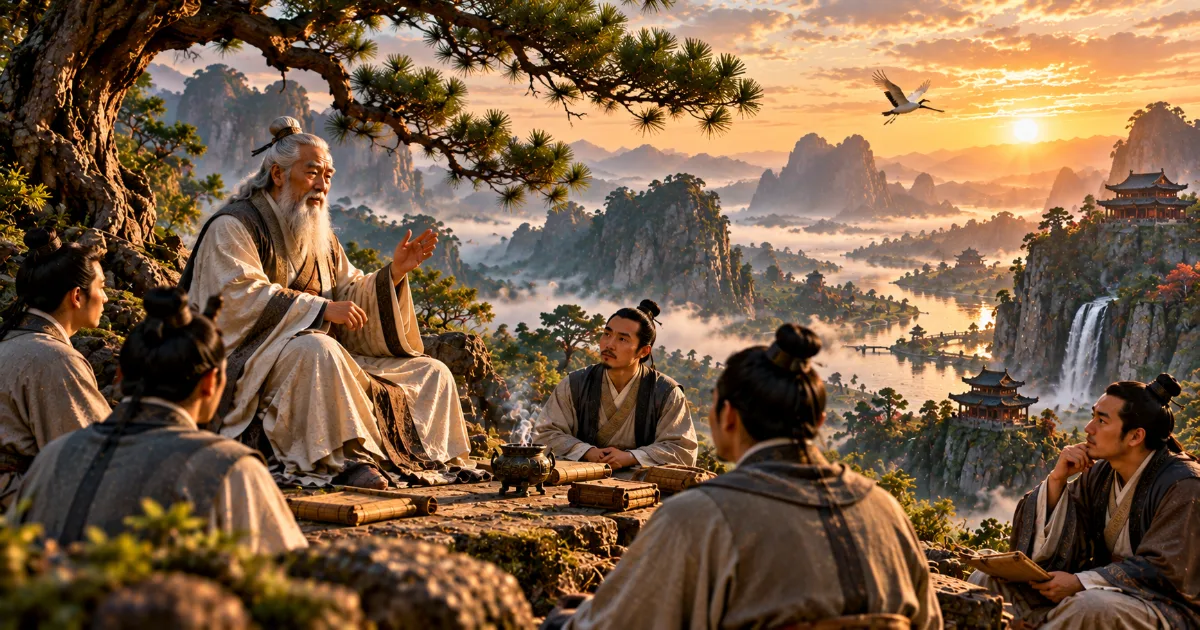
The tradition's emphasis on nature later influenced Chinese painting, poetry, garden design, medicine, and practices of self-cultivation. Landscape paintings often depict human figures as small elements within vast mountains and rivers. This visual relationship suggests that human life is meaningful but not separate from the larger world.
The philosophical value of such imagery lies in perspective. People who see themselves only through social competition may feel trapped within a narrow field of concern. Attention to nature can reveal a wider scale of time, change, and interdependence.
11. Laozi and the Art of Government
Daoism developed partly in response to the political problems of ancient China. The Daodejing contains numerous passages about rulers, laws, warfare, taxation, and the consequences of excessive ambition. Its political thought differs from approaches that seek to establish order primarily through increasingly detailed rules and forceful enforcement.
The text suggests that excessive government intervention can create the very problems it seeks to eliminate. When rulers impose heavy burdens, ordinary people may become desperate. When officials constantly interfere, communities may lose the ability to manage their own affairs. When governments celebrate military expansion, the costs of warfare may undermine the society they claim to strengthen.
These arguments do not amount to a complete modern political program. The Daodejing was written in a very different social and institutional setting, and its brief passages do not provide detailed answers to every question of administration. Nevertheless, its warnings about coercion and excessive ambition remain important.
The ideal ruler in many Daoist passages is restrained. Such a ruler avoids unnecessary displays of authority, does not burden the population with excessive demands, and understands that social stability cannot be created through commands alone. The ruler's task is to maintain conditions in which people can live and work without constant disruption.
This ideal can be compared with the Confucian emphasis on virtuous leadership. Both traditions recognize the importance of the ruler's conduct, but they place different emphasis on how order should be achieved. Confucian thinkers often stress moral example, ritual, and education. Daoist thinkers more frequently warn that deliberate attempts to impose an ideal social order can become counterproductive.
The contrast should not be exaggerated. Confucianism was not simply an ideology of rigid control, and Daoism did not produce one uniform political doctrine. Both traditions contain diverse interpretations. Yet their different emphases helped create a rich debate within Chinese political thought.
Daoist skepticism toward aggressive government also offers a way to evaluate political ambition. A ruler may claim that expansion will bring glory, security, or prosperity. Daoist reasoning asks whether the consequences will actually support those aims. If the population suffers, resources are exhausted, and conflict becomes permanent, the pursuit of power may have defeated its own purpose.
The enduring insight is that government should be judged not only by the strength of its commands but also by the conditions it creates for ordinary life. Stability, prosperity, and public well-being can be damaged when authority becomes excessively attached to control.
12. Daoism and Confucianism: Two Influential Traditions
Daoism and Confucianism are often presented as opposing philosophies, but their relationship was more complex than a simple contest between two schools. Both emerged within the intellectual world of ancient China, and both contributed to debates about personal conduct, political authority, and the meaning of a good life.
Confucianism emphasizes the cultivation of moral character through relationships, education, ritual, and responsibility. It considers the family an important environment in which people learn respect, care, and proper conduct. It also argues that political leaders should cultivate virtue and serve as examples to the people.
Daoism questions whether social conventions and deliberate moral programs can always produce genuine wisdom. It warns that excessive concern with rules, reputation, and distinctions may separate people from a more natural way of living. Rather than relying exclusively on formal instruction, Daoist thinkers encourage people to observe the world, simplify their desires, and cultivate responsiveness.
The differences are visible in their attitudes toward social roles. Confucian thought often treats properly understood relationships as essential to an ordered society. Daoist writing can be more suspicious of rigid roles when they become instruments of ambition or artificial control.
Yet the traditions share several concerns. Both question selfish ambition, criticize the misuse of political power, and value qualities that allow people to live more responsibly. Both recognize that a ruler's behavior can influence the wider society. Both also developed through long processes of interpretation and institutional change.
Throughout Chinese history, many educated people drew upon both traditions. A person might use Confucian principles to fulfill family and public responsibilities while turning to Daoist thought for perspective on ambition, personal freedom, and the limits of social expectations.
This combination became an important feature of Chinese intellectual culture. The traditions did not have to eliminate one another to remain influential. Their differences allowed thinkers to approach human problems from multiple angles.
The relationship between Daoism and Confucianism also demonstrates that Chinese philosophy was not a single, unchanging system. It was a broad conversation in which different schools challenged, borrowed from, and reinterpreted one another over many centuries.
13. The Development of Religious Daoism
Philosophical Daoism and religious Daoism are closely connected, but they should not be treated as identical. The philosophical tradition associated with the Daodejing and the Zhuangzi emphasizes the Dao, naturalness, non-forcing, and the transformation of human understanding. Over time, organized Daoist religious movements developed rituals, institutions, sacred histories, communities, and practices intended to cultivate spiritual well-being.
Religious Daoism emerged through a long historical process. During the later Han period, movements such as the Way of the Celestial Masters developed organized communities with religious leadership and ritual structures. These traditions connected spiritual practice with communal life, moral conduct, healing, and relationships with divine powers.
Over subsequent centuries, Daoist institutions became more diverse. Different schools developed distinct scriptures, ceremonies, meditation practices, systems of cultivation, and understandings of the cosmos. Daoist priests and religious specialists performed rituals for communities, helped people respond to misfortune, and participated in ceremonies associated with health, protection, and the well-being of the dead.
Laozi's status also changed. He was not remembered only as a philosopher or author. In some religious traditions, he came to be revered as a divine figure, associated with revelations and the transmission of sacred teachings. The historical sage of uncertain biography became a central figure in a much larger religious universe.
This transformation illustrates how philosophical figures can acquire new meanings through centuries of religious devotion. The teachings attributed to Laozi remained important, but they became part of practices and institutions that went far beyond the original text.
Religious Daoism also interacted with Buddhism and Confucianism. Chinese religious life did not develop in isolated compartments. Communities borrowed concepts, debated doctrines, shared cultural settings, and sometimes incorporated practices from multiple traditions. This interaction shaped the development of Chinese temples, art, literature, ritual, and popular religion.
It is therefore misleading to describe Daoism exclusively as either a philosophy or a religion. Its history includes both philosophical inquiry and organized religious life. The balance between these dimensions varies according to the period, community, and school being studied.
14. Daoism in Chinese Art, Poetry, and Culture
Daoist ideas influenced Chinese culture far beyond philosophical writing. Their emphasis on nature, simplicity, and the limits of ordinary perception helped shape literary and artistic traditions that valued suggestion, atmosphere, and the relationship between human beings and the wider world.
Chinese landscape painting provides a particularly striking example. Artists often portrayed enormous mountains, rivers, mist, and forests, while human figures appeared comparatively small. This arrangement could express the idea that human life exists within a larger natural order rather than occupying the center of the universe.
The use of empty space in painting also reflects an artistic interest in what is not explicitly shown. A blank area may suggest mist, distance, water, or the possibility of movement beyond the visible scene. This can be compared with the Daodejing's interest in emptiness and the usefulness of what appears to contain nothing.
Daoist influence also appears in poetry. Writers used images of secluded mountains, flowing streams, clouds, distant paths, and quiet retreats to explore freedom from worldly pressure. Such poetry could express a desire to step away from political conflict or social expectations and recover a more direct relationship with nature.
Calligraphy, too, became a field in which naturalness and disciplined spontaneity could be valued together. A skilled calligrapher required years of practice, yet the final brushwork could appear energetic and unforced. This combination resembles the Daoist idea that deep familiarity with a practice can make action more fluid.
Daoist themes also influenced gardens and designed landscapes. A carefully arranged garden might use rocks, water, plants, pathways, and changing views to evoke a larger natural environment. The aim was not always to reproduce nature exactly, but to create a space in which visitors could experience its variety and quiet complexity.
These cultural forms demonstrate that philosophical ideas do not survive only through books. They can become visible in artistic choices, patterns of movement, approaches to space, and ideals of personal cultivation. Daoism became part of Chinese culture partly because its ideas could be expressed in many different forms.
15. Daoism, Health, and Self-Cultivation
Daoist traditions developed a variety of practices concerned with bodily and spiritual cultivation. These included meditation, breathing exercises, movement practices, dietary disciplines, and, in some historical schools, alchemical experimentation. The details varied considerably across periods and communities.
The underlying concern was often the cultivation of balance and the preservation or refinement of vital capacities. Some Daoist traditions understood the human body as connected to the larger patterns of the cosmos. Health was therefore approached not only as a matter of treating individual symptoms but also as a question of how a person lived within their physical, social, and environmental conditions.
Practices associated with Daoist cultivation contributed to the wider history of Chinese movement and exercise traditions. Taijiquan, commonly known as tai chi, developed in a complex historical setting and should not be attributed exclusively to Laozi or to a single ancient origin. Nevertheless, modern interpretations of tai chi frequently draw upon concepts associated with Daoist philosophy, including balance, yielding, coordinated movement, and sensitivity to changing conditions.
Qigong is another broad category of practices involving movement, breathing, attention, or combinations of these elements. Its history includes multiple influences, and individual methods differ in purpose and evidence base. Some gentle movement and breathing practices may support relaxation, mobility, or general well-being, but traditional explanations of energy or longevity should not automatically be treated as scientifically established medical claims.
Daoist alchemy also deserves historical attention. Some practitioners sought methods of physical or spiritual transformation, including the preparation of substances believed to prolong life. Certain historical experiments involved toxic materials, and attempts to produce elixirs could be dangerous. Over time, internal forms of cultivation increasingly emphasized processes understood through the body, breath, attention, and spiritual discipline.
These histories show that Daoism cannot be reduced to a single set of health techniques. Its practices developed through diverse traditions, and their aims changed across centuries. Some were religious, some philosophical, and some concerned with bodily discipline.
The broad principle of balance remains important, but it should be interpreted carefully. Respecting bodily limits, maintaining regular movement, and recognizing the importance of rest can be useful general practices. Specific medical claims, however, require appropriate evidence rather than relying solely on their association with an ancient tradition.
16. Daoism and Its Lasting Influence on Chinese Society
Daoism became one of the major traditions shaping Chinese civilization. Its influence extended through philosophy, religion, literature, art, political thought, medicine, and everyday cultural practices. Although its role varied across different periods, it remained an important source of ideas about nature, personal freedom, and the limits of power.
During periods of political instability, Daoist themes could offer an alternative to the demands of public service and bureaucratic competition. Some scholars turned toward nature, poetry, and philosophical reflection when political life appeared corrupt or dangerous. Their withdrawal was not always permanent or complete, but it expressed the belief that a meaningful life did not have to be measured entirely through official rank.
Daoist ideas also shaped debates about government. Some thinkers drew upon Daoist criticism of excessive intervention to argue for restraint in political administration. Others used its concepts to question rigid moral distinctions or conventional assumptions about success and failure.
In religion, Daoist institutions became deeply involved in community life. Temples, rituals, festivals, and local religious practices helped connect Daoist teachings with ordinary concerns about health, prosperity, family, protection, and the dead. Daoism became part of the lived experience of many Chinese communities rather than remaining the property of a small philosophical elite.
Its influence also extended beyond China. Chinese religious and philosophical traditions travelled across East Asia through trade, diplomacy, migration, and cultural exchange. Daoist concepts interacted with local traditions and influenced wider discussions about nature, self-cultivation, and the relationship between human beings and the cosmos.
At the same time, Daoism changed in response to new circumstances. Its institutions experienced periods of support, reform, criticism, and disruption. Philosophical texts were reinterpreted, religious practices developed, and relationships with other traditions evolved. This capacity for transformation is one reason Daoism remained relevant across such a long historical span.
Its legacy cannot be measured only through the number of people who identified themselves as Daoists. Concepts associated with Daoism became part of a broader Chinese cultural vocabulary. Images of water, emptiness, naturalness, and effortless action influenced people who might not have belonged to any formal Daoist institution.
17. The Relevance of Daoist Philosophy in the Modern World
Although Daoism emerged in ancient China, many of its questions remain recognizable today. Modern societies have developed technologies and institutions that would have been unimaginable to ancient thinkers, yet people still struggle with ambition, uncertainty, conflict, exhaustion, and the desire to control events.
The Daoist emphasis on non-forcing offers one way to reconsider how people respond to pressure. In professional life, constant activity is often treated as evidence of commitment. Yet activity without reflection can produce wasted effort. A person who pauses to understand a problem may discover that a smaller intervention is more effective than a complicated strategy.
The idea of simplicity also challenges the assumption that every new possession or achievement improves life. People may benefit from examining which commitments genuinely matter and which have been adopted mainly because of comparison or expectation. This does not mean abandoning ambition altogether. It means recognizing that ambition becomes destructive when it has no clear limits.
Daoist humility offers another useful perspective. Public debate and online communication can reward certainty, confrontation, and self-promotion. The ability to acknowledge uncertainty, listen carefully, and change one's mind can therefore become a valuable form of strength.
The philosophy's relationship with nature is especially relevant in an era of environmental pressure. Daoist writings do not provide a modern environmental policy, and ancient concepts should not be presented as direct substitutes for scientific research. Nevertheless, their emphasis on interdependence, restraint, and the dangers of excessive interference can encourage reflection about how human activity affects the natural world.
Daoism also reminds people that not every problem has a simple solution. Some situations require decisive action, while others require patience. Some conflicts must be confronted, while others can be reduced through flexibility and careful communication. The challenge is to understand the circumstances rather than apply the same response to every difficulty.
There are limits to these applications. Non-forcing should not become an excuse for avoiding necessary responsibilities, tolerating abuse, or refusing to act against injustice. Simplicity should not become a justification for neglecting material needs, and humility should not require people to deny their abilities. Philosophical ideas are most useful when interpreted with judgment rather than followed as rigid formulas.
The lasting value of Daoism lies in its invitation to reconsider the relationship between effort and outcome. It asks whether human beings can become more effective by understanding the world more deeply, reducing unnecessary struggle, and learning when to act and when to allow events to unfold.
Conclusion: The Enduring Search for Harmony
Laozi occupies a remarkable place in Chinese intellectual history. His biography remains uncertain, and scholars continue to debate the origins and development of the Daodejing. Yet the tradition associated with his name became one of the most influential philosophical and religious currents in China.
Daoism offered a vision of wisdom grounded in the Dao, the underlying Way of existence. It encouraged people to observe nature, question excessive ambition, practice humility, simplify their desires, and recognize that apparent weakness can contain unexpected strength. Through the concept of wu wei, it explored how action could become more effective when it avoided unnecessary force and responded intelligently to circumstances.
The tradition also contributed to political thought by questioning the assumption that stronger control always produces better results. Its teachings about restraint and naturalness influenced debates about government, while its religious developments shaped communities, rituals, and spiritual practices across many centuries.
Daoism's influence reached into Chinese painting, poetry, calligraphy, gardens, and traditions of self-cultivation. Its ideas interacted with Confucianism and Buddhism, helping create the rich and diverse intellectual culture of China.
The importance of Laozi therefore lies not only in the questions surrounding his historical identity but also in the continuing life of the ideas attributed to him. The Daodejing asks readers to reconsider familiar assumptions about strength, success, knowledge, and control. It suggests that wisdom may emerge through careful observation rather than constant assertion, and that a balanced life may depend as much upon recognizing limits as upon pursuing achievements.
In the long history of Chinese civilization, Daoism provided a distinctive answer to the problem of how human beings should live in a changing world. Its message was not that people must abandon society or cease all effort. It was that effort becomes wiser when it is guided by understanding, that strength can exist without domination, and that harmony often begins when people stop trying to force every part of existence to follow their wishes.
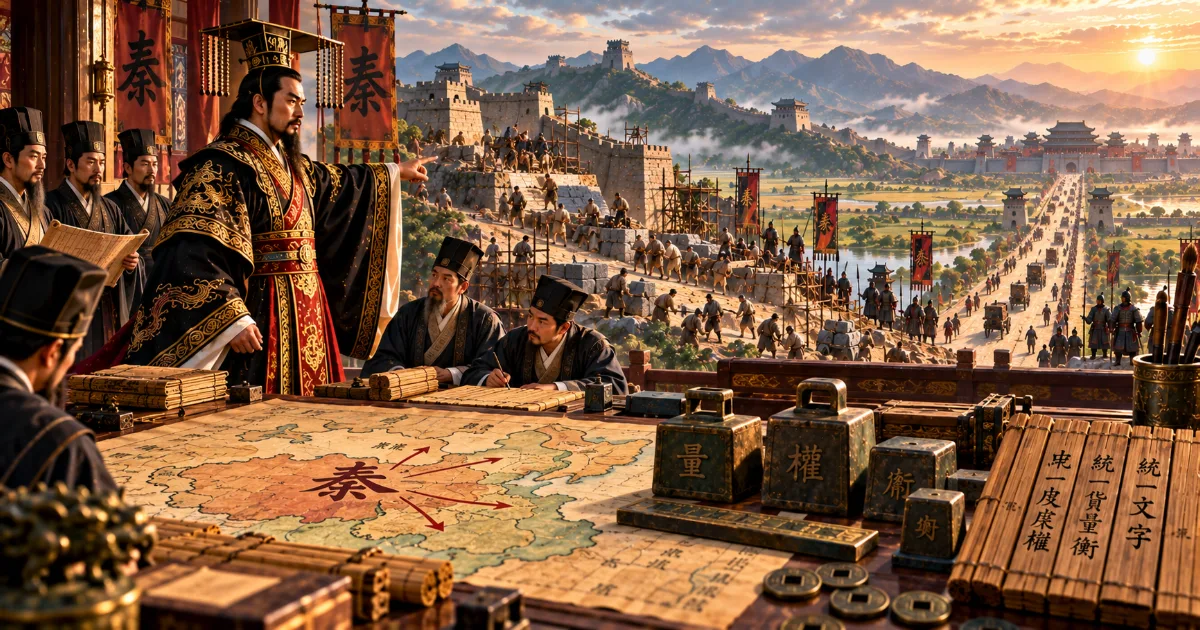
The next article in the History of China series will explore Article 10: The Warring States Period: Rival Kingdoms and Revolutionary Ideas, examining the wars, political reforms, and philosophical debates that transformed China before its eventual unification under the Qin dynasty.
#HistoryOfChina #Laozi #Daoism #Daodejing #AncientChina #ChinesePhilosophy #ChineseHistory #Confucius #EasternPhilosophy #HistoryEducation