Food Security Under Pressure: El Niño, Fertiliser Risks and the Global 4F Crisis
Food security is no longer only a question of how much grain a country produces. It also depends on weather, fuel prices, fertiliser availability, transport networks, international finance, trade policy, and the ability of families to afford essential food. These forces are closely connected. A disruption in one area can quickly create pressure across the entire food system.
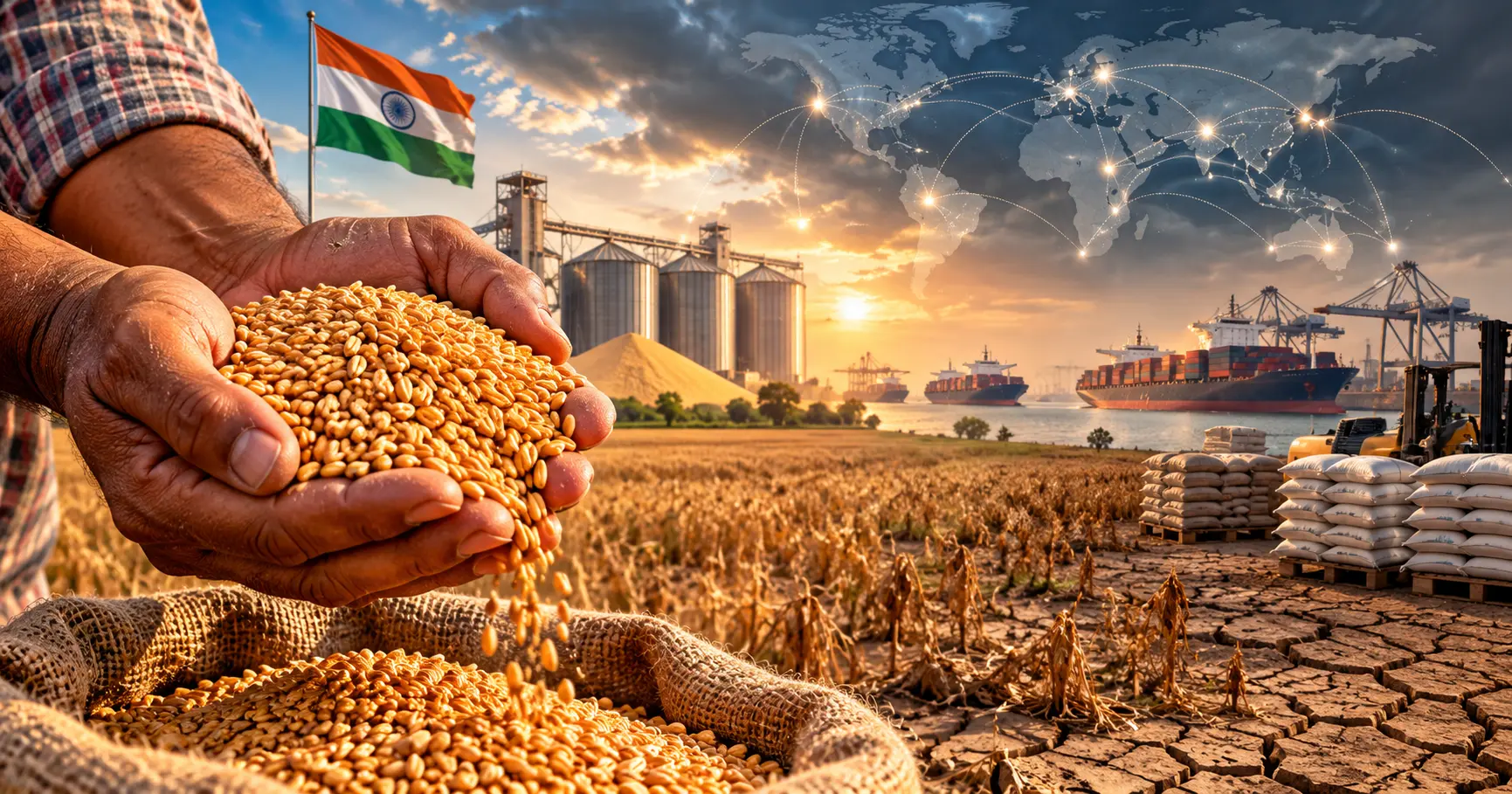
A social media graphic circulating with remarks attributed to India's External Affairs Minister S. Jaishankar warns about the risk of a difficult period for food supplies, grain availability, and fertiliser. A second image summarises a wider concern he has discussed publicly: the interconnected pressures of food, fuel, fertiliser, and finance, sometimes described as the 4F challenge. Such warnings deserve attention, but dramatic headlines should not be treated as proof that a food crisis is inevitable. The outlook depends on weather developments, crop conditions, policy choices, global trade, and the accuracy of the information being shared.
The important question is not whether every alarming prediction will come true. It is whether governments, businesses, farmers, and households are prepared for the risks that can disrupt food production and affordability. Understanding the connections between climate patterns, agricultural inputs, logistics, and prices is an essential first step.
Continue Reading
Why food security matters to every household
Food security means that people have reliable physical and economic access to sufficient, safe, and nutritious food. It includes availability, access, proper utilisation, and stability over time. A country can produce substantial quantities of food and still have households that struggle to afford a balanced diet. Equally, a temporary supply disruption can create serious problems even when national stocks remain adequate.
Food prices influence household budgets directly. When the cost of cereals, vegetables, cooking oil, pulses, dairy products, or transport rises, families may have to reduce other spending or change what they eat. Low-income households are often hit hardest because food accounts for a larger share of their income. Children, older people, and those with specific nutritional needs can be particularly vulnerable when diets become less diverse.
Food security also affects the wider economy. Food inflation can influence wage demands, interest-rate decisions, public spending, and consumer confidence. Governments may face pressure to provide assistance, adjust trade policies, or release public stocks. Farmers can be caught between higher input costs and uncertain selling prices. Retailers and food manufacturers must manage cost changes without making essential products unaffordable.
For these reasons, food security should be treated as a connected economic and public welfare issue, not just an agricultural statistic.
What El Niño means for agriculture
El Niño is a recurring climate pattern associated with warmer-than-average sea surface temperatures in parts of the central and eastern tropical Pacific Ocean. It can influence atmospheric circulation and alter rainfall and temperature patterns in different parts of the world. Its effects vary by region and by event, so it should not be understood as a single forecast that produces the same outcome everywhere.
For agriculture, the concern is that changes in rainfall and temperature can affect planting decisions, crop development, water availability, livestock, and harvests. Some regions may experience drought or heat stress, while others may see different rainfall patterns. The effects depend on local conditions, crop types, soil moisture, irrigation, and the timing of the climate event relative to the growing season.
India's agriculture is influenced by the monsoon, but the relationship between El Niño and Indian rainfall is not perfectly predictable. A climate signal can increase the risk of a weak monsoon without determining the outcome on its own. Indian Ocean conditions, regional weather systems, land temperatures, and other factors also matter. That is why farmers and policymakers need current forecasts from trusted meteorological agencies rather than relying on a headline or a simplified social media graphic.
Heat can affect crop yields even when total rainfall appears reasonable. High temperatures during flowering or grain filling may reduce productivity, while prolonged dry spells can damage crops and reduce groundwater recharge. Heavy rainfall and flooding can also cause losses, disrupt roads, and delay harvests. Resilience requires planning for a range of weather outcomes, not only one climate scenario.
Why grain supply can become vulnerable
Grain supply depends on more than the area planted. Yields, seed quality, water, fertiliser, farm machinery, labour, storage, transportation, milling capacity, and market access all play a role. A shortfall in one important input can affect the final harvest, while a problem in storage or transport can prevent available grain from reaching consumers efficiently.
Wheat, rice, maize, and other grains serve different roles in food systems. They are consumed directly, used as animal feed, processed into ingredients, and incorporated into a wide range of manufactured foods. A disruption in one grain market can therefore influence other markets through substitution, feed costs, and changes in consumer demand.
International trade can help countries balance shortages and surpluses, but it can also transmit price shocks. If several major producing regions experience weather problems at the same time, export availability may tighten. If governments restrict exports to protect domestic consumers, import-dependent countries can face higher costs or more difficulty securing supplies. Such measures may be understandable as a response to domestic pressure, yet widespread restrictions can intensify uncertainty in global markets.
It is important to distinguish between a risk of tighter supply and a confirmed shortage. Stock levels, harvest estimates, export commitments, domestic demand, and logistics all affect the real position. Reliable agricultural data is essential before concluding that a country or the world is running out of grain.
Fertiliser: a critical link in the food chain
Fertilisers supply nutrients that crops need to grow. Nitrogen, phosphorus, and potassium are among the most important nutrients used in crop production, although the right balance depends on the crop, soil, and local conditions. Fertiliser use can support higher yields when applied appropriately and combined with good agronomic practices.
Fertiliser production and distribution are energy-intensive and internationally connected. Natural gas is a major input for many nitrogen fertilisers, while phosphate and potash supply chains depend on mining, processing, and transport. As a result, energy-price shocks, shipping disruptions, sanctions, export controls, currency movements, or production outages can influence fertiliser prices and availability.
When fertiliser becomes expensive or difficult to obtain, farmers face difficult choices. Some may reduce application, change crops, delay purchases, or use available nutrients less efficiently. Those decisions can affect yields, especially where soils are already nutrient-deficient and farmers have limited access to credit. However, the impact varies. Soil health, crop choice, irrigation, organic nutrient sources, and the timing of application all influence how a change in fertiliser use affects production.
Improving fertiliser efficiency is therefore as important as securing supply. Soil testing, balanced nutrient management, precise application, suitable crop rotations, and the responsible use of organic inputs can reduce waste and help farmers get more value from each unit of fertiliser. These practices do not eliminate the need for reliable supplies, but they can make agricultural systems more resilient.
Understanding the 4F crisis: food, fuel, fertiliser and finance
The 4F framework highlights how four essential parts of the global economy interact. Food is the final product that households need. Fuel powers farm machinery, irrigation pumps, fertiliser production, processing, refrigeration, and transport. Fertiliser supports crop productivity. Finance enables farmers, traders, processors, and governments to pay for inputs, maintain stocks, invest in infrastructure, and manage risk.
If fuel prices rise sharply, the cost of operating farm equipment and transporting crops can increase. Higher energy costs can also affect fertiliser production and food processing. If fertiliser prices rise at the same time, farmers may face a double pressure on their production budgets. If interest rates or borrowing costs are also high, working capital becomes more expensive. Businesses may reduce investment or pass some of those costs on to consumers.
Finance can amplify a shock because agriculture requires spending before the harvest is sold. Farmers buy seeds, fertiliser, fuel, equipment, and labour in advance, while revenue often arrives months later. Small farmers may have limited savings or access to affordable credit. Traders and food processors also need working capital to purchase, store, and transport commodities. When credit tightens, the entire chain can become less flexible.
The 4F concept is useful because it discourages governments from treating each problem in isolation. Subsidising one input may help in the short term, but the wider system also needs reliable logistics, effective markets, sensible water management, financial access, and policies that do not create avoidable uncertainty.
India's particular food security priorities
India has built substantial capacity in grain production, public procurement, storage, distribution, agricultural research, and rural development. Public food distribution and buffer stocks are important tools for helping protect consumers and responding to supply disruptions. At the same time, India has a very large population, diverse agro-climatic zones, and significant differences in irrigation access, farm size, income, and market connectivity.
Rice and wheat are central to many food security policies, but dietary needs are broader. Pulses, edible oils, vegetables, fruit, dairy, and other foods contribute to nutrition and household affordability. A complete food security strategy should consider both the availability of staple calories and access to a varied, nutritious diet.
Water management is a major issue. Groundwater supports agriculture in many regions, but excessive extraction can undermine long-term resilience. Crop choices, irrigation efficiency, watershed restoration, rainwater harvesting, and better local water planning can help reduce vulnerability. Solutions need to reflect regional conditions rather than applying one approach to every state.
India also needs dependable agricultural inputs and resilient supply chains. Domestic production can reduce exposure to external shocks in some areas, while international trade remains important for other commodities and inputs. Strategic resilience means diversifying supply, improving efficiency, maintaining appropriate reserves, and preparing for disruptions without assuming that complete self-sufficiency is practical for every product.
Farmers need timely information and practical support
Farmers make decisions under uncertainty. They need to choose crops, buy inputs, manage water, respond to weather, and sell produce in markets that can change quickly. Timely, locally relevant information can improve those decisions. Weather forecasts, pest alerts, soil data, crop advisories, and market prices are most useful when they are accessible, understandable, and delivered in time to act.
Extension services, farmer producer organisations, cooperatives, research institutions, and local agricultural officers can help translate information into practical choices. Digital platforms can widen access, but they should complement trusted local expertise rather than assume that every farmer has reliable connectivity or the same technical needs.
Financial support also matters. Access to affordable credit, suitable insurance, storage, irrigation, and dependable market connections can help farmers withstand temporary shocks. Insurance products should be understandable, claims should be handled transparently, and support programmes should reach the intended beneficiaries.
Farmers should not be expected to absorb every risk created by global markets and extreme weather. Resilience requires cooperation among governments, researchers, lenders, input suppliers, processors, and buyers.
Food prices, transport and the cost of living
Food prices reflect a combination of farm-gate costs, processing, storage, transport, wholesale margins, retail costs, taxes, market conditions, and consumer demand. A higher international commodity price does not always translate directly or immediately into the same increase in local retail prices. Exchange rates, public stocks, domestic production, trade policies, and distribution costs can change the effect.
Transport is a particularly important connection. Fuel prices affect trucks, ships, agricultural machinery, and sometimes cold-chain operations. Poor roads, congestion, inadequate storage, and losses after harvest can raise the cost of getting food from farms to markets. Investment in infrastructure and better logistics can therefore support food affordability as well as agricultural incomes.
Food waste is another avoidable pressure. Crops can be lost because of inadequate drying, storage, packaging, refrigeration, or market access. Improving post-harvest handling can increase the quantity of food that reaches consumers without requiring additional land or water to produce it. Reducing household and retail waste also has economic and environmental benefits.
For households, practical budgeting can help, but personal choices cannot solve structural supply problems. Governments and businesses have responsibilities to maintain fair competition, communicate price changes clearly, and protect vulnerable people when essential costs rise sharply.
What governments can do before a shock becomes a crisis
Preparedness is more effective when it begins before shortages appear. Governments can monitor crop conditions, international commodity markets, fertiliser inventories, rainfall forecasts, storage levels, and transport risks. They can stress-test supply chains against several scenarios and define clear responsibilities for agencies involved in agriculture, trade, energy, finance, and public welfare.
Public reserves can help stabilise supply, but stock management requires care. Storage is costly, grain quality can deteriorate, and decisions about procurement or release affect markets. Transparent rules and reliable data can help governments use reserves effectively while avoiding unnecessary uncertainty.
Trade policy also matters. Predictable and clearly communicated decisions allow farmers, exporters, importers, and food businesses to plan. Emergency restrictions may sometimes be considered to address domestic needs, but policymakers should assess their broader consequences and avoid creating needless disruption for trading partners.
Social protection can help households cope when food becomes less affordable. Targeted assistance, well-functioning public distribution systems, school meal programmes, and nutrition support can protect vulnerable groups. The best approach depends on local circumstances, fiscal capacity, delivery systems, and the nature of the shock.
How businesses can strengthen resilience
Food producers, retailers, restaurants, manufacturers, and logistics companies also need to prepare for disruption. Depending on a single supplier, route, region, or input can create risks when conditions change. Diversification can improve resilience, provided it is combined with quality controls, realistic contracts, and careful cost management.
Businesses can map their supply chains, identify critical inputs, review inventory policies, and establish contingency arrangements. They can assess how a disruption in fuel, fertiliser, packaging, transport, or credit would affect operations. Better forecasting and communication with suppliers can reduce last-minute decisions that raise costs or interrupt service.
Resilience does not mean storing unlimited quantities of everything. Excessive inventory ties up working capital and can lead to spoilage. The objective is to understand which products are critical, what lead times are realistic, and what alternatives are available if a supplier or route becomes unavailable.
Transparent communication with customers is also important. If costs rise, companies should avoid misleading explanations or exaggerated claims. Clear information helps maintain trust during uncertain periods.
What consumers should understand about crisis headlines
Food crisis warnings can be important signals, but they should be evaluated carefully. A social media image may combine a genuine quotation, an interpretation, and a dramatic headline. Those elements need to be distinguished. Readers should check the full speech or interview when available, look for reliable reporting, and consult official climate and agricultural information before treating a prediction as certain.
El Niño is not a guarantee of a global food shortage. A forecast of fertiliser pressure is not proof that every farmer will be unable to obtain inputs. A report of grain supply risks does not mean that every country will face the same conditions. Risk depends on geography, timing, stocks, trade, policy, and the ability of institutions to respond.
At the same time, uncertainty is not a reason to ignore the warning. The purpose of risk assessment is to prepare for plausible problems before they become emergencies. A balanced response avoids both panic and complacency.
People can help by avoiding the spread of unsupported claims, following credible updates, reducing avoidable food waste, and supporting policies that improve long-term resilience. Individual action is useful, but systemic challenges require coordinated action from institutions and industry.
Climate resilience and sustainable agriculture
Climate resilience is becoming a central part of agricultural planning. Farmers and researchers are exploring heat-tolerant crop varieties, improved soil moisture management, diversified cropping systems, better irrigation scheduling, agroforestry, and more accurate weather information. No single practice works everywhere, and each option should be evaluated against local water availability, soil conditions, costs, and farmer priorities.
Healthy soils can improve water retention and support crop productivity. Crop rotation and balanced nutrient management can help maintain soil fertility. Efficient irrigation can reduce waste, while improved drainage may help in regions exposed to heavy rainfall. Seed systems and extension services need to make suitable options accessible to farmers rather than leaving them to manage climate risks alone.
Research and development matter because climate patterns, pests, and crop requirements change. Public research institutions, universities, private companies, and farmers can contribute through trials, data sharing, and practical evaluation. The results should be communicated in ways that farmers can use.
Sustainable agriculture is not only an environmental objective. It is also an economic strategy for protecting production capacity, reducing unnecessary input costs, and maintaining livelihoods over the long term.
International cooperation is part of food security
Food and agricultural input markets cross national borders. Weather disruptions in one major producing region can affect prices elsewhere. Fertiliser supply depends on energy markets and global transport. Countries that share river basins, climate risks, or trade routes may benefit from information exchange and coordinated planning.
International organisations and governments can contribute by improving market transparency, sharing agricultural data, supporting emergency food assistance, and avoiding policies that unnecessarily worsen shortages. Humanitarian needs should be considered alongside domestic political pressures, especially when disruptions threaten people who already struggle to obtain adequate food.
Competition among countries is real, but interdependence is also unavoidable. The same global system that exposes countries to external shocks allows food, technology, finance, and expertise to move where they are needed. The goal should be to manage those connections intelligently rather than pretending they can be removed entirely.
India's diplomatic engagement, agricultural capacity, domestic market, and experience with public food programmes all make it an important participant in global food security discussions. Long-term resilience will depend on practical cooperation, credible information, and policies that balance domestic needs with responsible international engagement.
Conclusion: prepare calmly, strengthen the system
The warning about food, fuel, fertiliser, and finance highlights a real feature of the modern economy: essential systems are connected, and pressure in one can spread to others. El Niño can alter weather risks, fertiliser markets can be affected by energy and trade disruptions, and financing costs can influence how much farmers and businesses can invest in production and distribution.
But a risk is not a certainty. The right response to a food security warning is to assess the evidence, monitor current conditions, protect vulnerable households, support farmers, improve storage and logistics, and prepare for multiple possible outcomes. Dramatic claims should be verified, while credible risks should not be dismissed simply because the future remains uncertain.
For India and the wider world, food security will depend on stronger climate preparedness, efficient use of water and fertiliser, resilient supply chains, sound public policy, accessible finance, and international cooperation. These are long-term tasks that require investment and coordination, not panic.
Food security is ultimately about people. It is about whether families can afford nutritious meals, whether farmers can earn a sustainable livelihood, and whether communities can withstand disruption without losing access to essential supplies. Preparing early and acting on reliable information gives societies a better chance of protecting those outcomes.
#FoodSecurity #ElNino #GlobalFoodCrisis #IndiaAgriculture #SJaishankar #FertiliserCrisis #GrainSupply #FoodInflation #ClimateChange #IndianFarmers #AgricultureIndia #SupplyChainResilience #FoodPrices #GlobalEconomy #IndiaNews