How a Network of Regional Rulers Helped Build the Zhou Dynasty, Why Royal Authority Weakened, and How Political Rivalry Reshaped Ancient China
Introduction: The Dynasty That Gradually Lost Control
The Zhou Dynasty began with a remarkable military victory, but maintaining power proved far more difficult than winning it. After overthrowing the Shang Dynasty around the middle of the eleventh century BCE, the Zhou rulers established a political system that relied on regional leaders, family relationships, military obligations, and ritual loyalty. This arrangement helped the new dynasty extend its influence across a large territory without requiring a highly centralized administration.
For generations, the system provided a framework for governing different communities and securing the Zhou royal house. Regional rulers governed their own territories, organized local resources, and maintained military forces. In return, they recognized the authority of the Zhou king and were expected to support the dynasty when required. Many of these relationships were reinforced through kinship, ceremonial duties, and the distribution of titles and land.
Over time, however, the arrangement created a serious problem. The regional rulers who helped the Zhou establish control gradually developed their own political and economic foundations. Their territories became more powerful, their armies more capable, and their interests increasingly independent of the royal court. As generations passed, the personal relationships that had connected local rulers to the Zhou kings became less effective at ensuring obedience.
The decline of royal authority was not a single event. It unfolded over centuries through changes in military power, regional competition, court politics, and the ability of kings to influence their subordinate rulers. The Zhou continued to possess symbolic and ritual importance even after their practical control had weakened, but the political landscape became increasingly dominated by powerful regional states.
Traditional chronology divides Zhou history into the Western Zhou, conventionally dated from about 1046 to 771 BCE, and the Eastern Zhou, dated from 770 to 256 BCE. The division reflects a major political transition. After the Western Zhou capital was captured and the royal court moved east, the dynasty continued to exist, but its power was substantially reduced. The Eastern Zhou period later became associated with the Spring and Autumn period and the Warring States period, when regional competition transformed Chinese politics and society.
This article examines how the Zhou political system worked, why regional rulers grew stronger, how the royal court lost control, and why the decline of central authority became one of the most consequential developments in ancient Chinese history.
1. The Political System Established by the Zhou
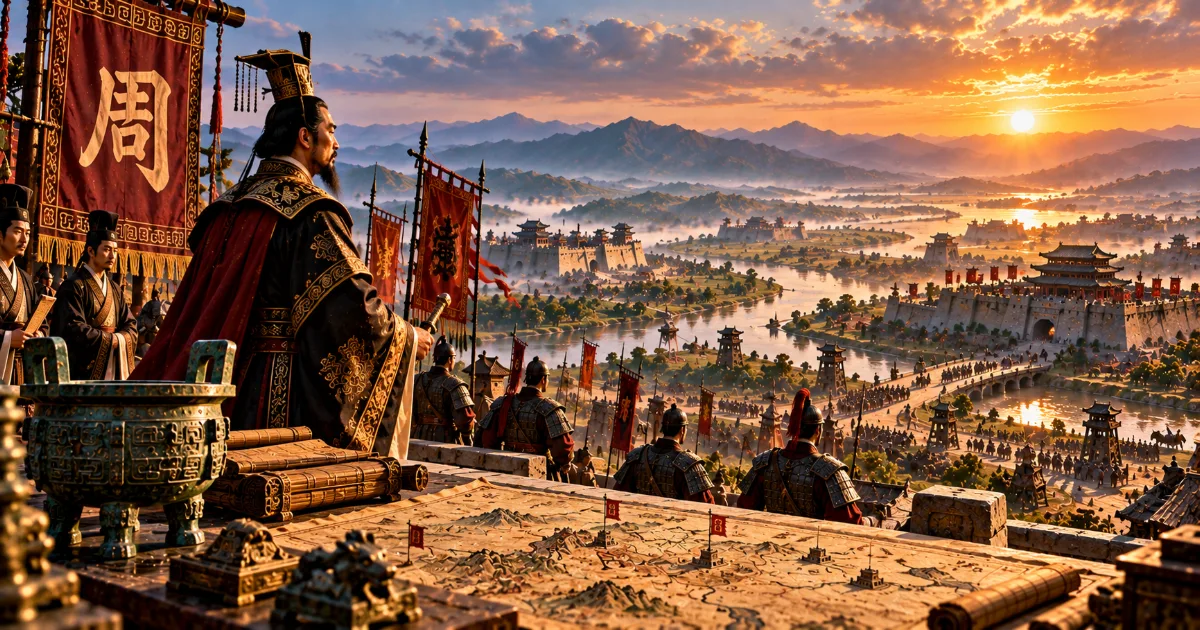
After defeating the Shang, the Zhou rulers faced the challenge of governing a large and diverse region. Their authority had to reach communities with different traditions, local leaders, economic resources, and political interests. The royal court could not directly manage every settlement through a single, uniform administration.
The Zhou therefore established a network of regional rulers who held territories on behalf of the dynasty. Some were members of the royal family, while others were trusted allies or influential leaders whose cooperation was important to the new political order. These rulers received land and political responsibilities and were expected to recognize the Zhou king's superior position.
This arrangement is often described as a system of enfeoffment, associated with the Chinese term fengjian. It is sometimes compared with European feudalism, but the comparison must be used cautiously. Zhou political relationships were shaped by Chinese kinship traditions, ritual obligations, military responsibilities, and royal authority. They were not identical to the institutions that developed in medieval Europe.
Regional rulers governed their own territories and maintained local political centers. They could organize agricultural production, collect resources, appoint subordinate officials, conduct ceremonies, and mobilize military forces. Their ability to perform these responsibilities made them important partners in maintaining the wider Zhou order.
The king's authority was reinforced through formal recognition and ritual. Regional leaders participated in ceremonies, acknowledged royal titles, and maintained relationships with the court. These practices helped establish a shared political hierarchy in which the Zhou king occupied the highest position.
The system was especially useful during the dynasty's early period because it allowed the Zhou to govern through people who already possessed local influence. Rather than replacing every existing leader, the royal house could incorporate trusted figures into a wider network of obligations.
Yet the arrangement also created a long-term weakness. Regional rulers controlled the land, resources, and followers that supported their authority. If the royal court became weak, these local foundations could allow them to act independently. The same political structure that helped the Zhou consolidate power eventually made it difficult for the dynasty to maintain direct control.
2. Land, Kinship, and the Responsibilities of Regional Rulers
Kinship was one of the important foundations of early Zhou political organization. Members of the royal family were placed in influential positions, and relationships between ruling houses helped reinforce loyalty to the central court. Marriage alliances and shared ancestry could connect regional elites to the Zhou dynasty and make political cooperation more durable.
However, kinship did not automatically guarantee obedience. Family relationships could generate competition as well as loyalty, especially when different branches of a ruling house sought greater status or control over resources. Over generations, descendants of the original royal family could develop identities and interests that differed from those of the central court.
Land was another essential foundation of power. Agricultural production supported households, armies, ceremonies, and political institutions. Control over productive territory allowed regional rulers to maintain followers and accumulate resources. As local territories developed, their rulers became increasingly capable of acting without constant direction from the Zhou king.
Regional authority also depended on relationships with local communities. A ruler needed to maintain order, organize labor, secure food supplies, and manage disputes. The ability to perform these tasks strengthened the ruler's position within the territory, even when the central royal court had limited influence over everyday affairs.
The Zhou political system therefore combined hierarchy with considerable regional autonomy. The king stood at the top of the formal order, but much of the practical work of governing was carried out by regional rulers and their subordinate elites.
This arrangement could function effectively when the royal court possessed enough prestige and military strength to maintain cooperation. It became less stable when regional rulers acquired the resources to resist royal demands or when succession disputes weakened the central leadership.
The system also made political power increasingly local. A regional ruler could maintain a court, cultivate relationships with neighboring states, and build a military force. These capabilities created the conditions for the emergence of powerful states that would eventually compete with one another for dominance.
The decline of Zhou authority was therefore not simply a story of disobedient nobles. It reflected a structural problem within the political system. Regional rulers had been given the resources and responsibilities needed to govern effectively, but those same resources could be used to challenge the authority of the king.
3. The Western Zhou: Strength and Stability in the Early Dynasty
The early Zhou period is generally associated with a stronger royal court and a more effective system of regional rule. The dynasty's founders and their immediate successors worked to secure the territories acquired through the conquest of the Shang and to establish political relationships that would support the new ruling house.
The royal center was based in the Wei River region, with important political activity associated with the area around modern Xi'an in Shaanxi Province. From this western base, the Zhou court sought to maintain influence over the central plains and other territories connected to the dynasty.
The early rulers used military power when necessary, but political stability depended on more than force. Ritual practices, royal grants, family relationships, and the recognition of rank helped define the responsibilities of regional elites. The court also used ceremonies and material gifts to reinforce relationships with important families.
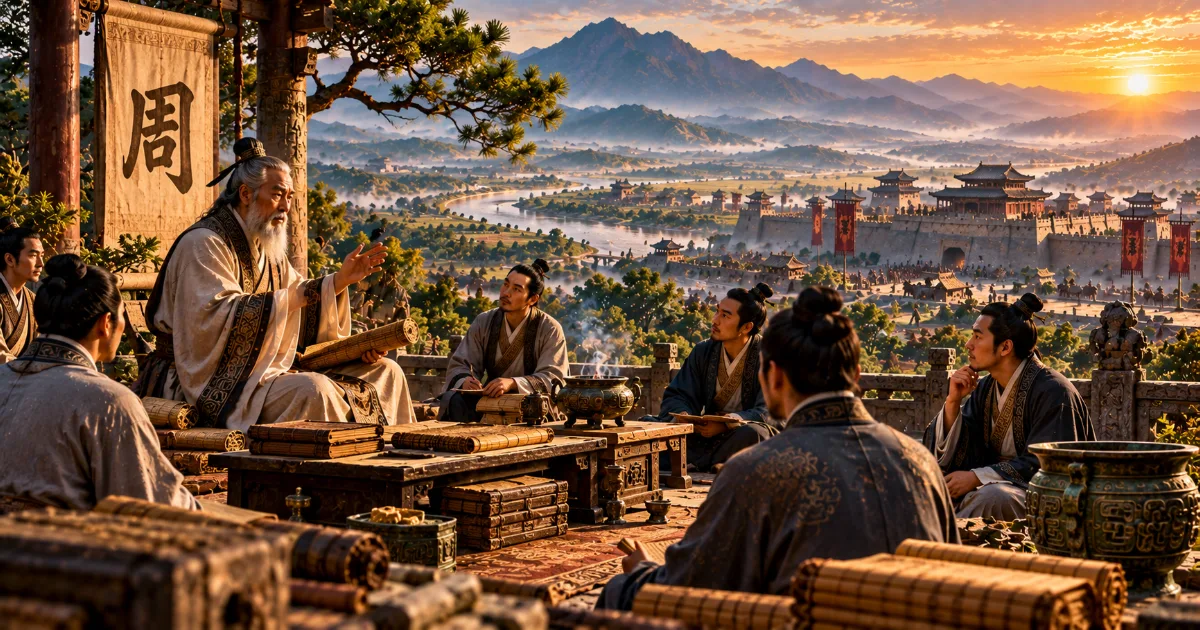
Bronze inscriptions from the Zhou period provide valuable evidence for these practices. Some record royal appointments, grants, military achievements, and the services of individuals to the king. They demonstrate that political relationships were expressed through formal acts and that the royal court sought to preserve a record of important obligations.
Agricultural production supported this political structure. Farming communities supplied food and other resources that sustained ruling households, soldiers, craftspeople, and ceremonial activities. Regional centers could develop as places where resources were gathered and redistributed, strengthening the economic foundation of political authority.
The Western Zhou system was never completely uniform. Different regions had different conditions, and the king's influence could vary according to distance, local leadership, and military circumstances. Nevertheless, the early dynasty possessed enough authority to maintain a recognizable political hierarchy.
The strength of the Western Zhou should not be confused with the centralized administration of later Chinese empires. The king relied on regional rulers and personal relationships rather than a standardized bureaucracy extending uniformly throughout the realm. This arrangement worked while the central court could coordinate the political network, but it became increasingly vulnerable as local powers grew stronger.
The early Western Zhou period established institutions that influenced Chinese political traditions long after the dynasty itself weakened. It also created the foundations for the later conflict between royal authority and regional independence.
4. The Mandate of Heaven and the Duty to Govern Well
The Mandate of Heaven was an important part of Zhou political ideology. It provided a moral explanation for the conquest of the Shang and helped the Zhou justify their own authority. According to the concept, Heaven granted the right to rule to a dynasty that governed properly, but that right was not necessarily permanent.
This idea linked political legitimacy to responsibility. A ruler was expected to maintain order, protect the realm, and govern in a manner consistent with the moral expectations of the political tradition. If a dynasty became oppressive or failed to preserve stability, its authority could be challenged.
The concept did not provide a precise legal procedure for removing a ruler. There was no independent institution that could formally announce that Heaven had withdrawn its support. Instead, the idea served as a framework through which political events could be interpreted. Military defeat, rebellion, famine, or widespread disorder might later be described as signs that a ruling house had lost legitimacy.
The Mandate of Heaven also placed the Zhou dynasty under the same moral principle it had used to justify the conquest of the Shang. If the Shang had lost its authority through misconduct, the Zhou could theoretically face the same judgment. The concept therefore provided both a justification for the dynasty's rise and a warning about the responsibilities of rule.
Over time, the idea became deeply connected with Chinese historical writing. Later historians often explained dynastic change by describing the virtues of founders and the failures of rulers whose houses collapsed. Such accounts reflected a moral interpretation of history, though actual political changes also depended on military strength, resources, alliances, and institutional developments.
The Mandate of Heaven could support political authority, but it could also be used by challengers who sought to justify rebellion. A successful new ruler could claim that victory demonstrated Heaven's support, while the defeated dynasty could be portrayed as having lost the right to govern.
This flexibility helped the concept survive for centuries. It allowed political leaders and historians to connect changes in power with ideas about moral responsibility. Yet it also meant that claims about Heaven's judgment could be shaped by the interests of whoever controlled the political narrative.
For the Zhou, the concept was an important source of legitimacy, but it could not replace the practical requirements of government. The dynasty still needed capable rulers, functioning alliances, sufficient resources, and the ability to respond to regional challenges.
5. The Growth of Regional Powers
As the Zhou Dynasty continued, regional rulers accumulated greater influence within their territories. They developed their own political centers, maintained military forces, and built relationships with neighboring communities. These developments gradually changed the balance of power between the royal court and the regions.
A regional state with productive agricultural land could support a larger population and a stronger army. Its ruler could use resources to build fortifications, commission weapons, attract advisers, and maintain relationships with other elites. Over time, such a state might become capable of resisting the demands of the Zhou king.
The growth of regional powers was not necessarily the result of a deliberate plan to overthrow the dynasty. Many rulers were concerned primarily with protecting their territories, strengthening their families, and improving their position relative to neighboring states. Nevertheless, the cumulative effect was to reduce the royal court's ability to coordinate the wider political system.
Competition between regional states encouraged further development. Rulers needed to defend borders, secure agricultural resources, and maintain military readiness. They also had reasons to improve administration, organize labor, and obtain skilled advisers. Political competition could therefore stimulate institutional changes even as it weakened the authority of the Zhou king.
The royal court increasingly depended on the cooperation of powerful regional leaders. When those leaders supported the dynasty, the king could retain symbolic and practical influence. When they pursued independent goals, royal authority became more difficult to enforce.
The relationship between the Zhou king and the regional rulers was consequently not fixed. It changed according to the strength of individual rulers, the interests of their states, and the wider military situation. Some regional powers might support the royal court at one time and challenge it at another.
The development of these states set the stage for the Spring and Autumn period, when regional competition became a central feature of Chinese politics. Although the Zhou king remained the formal head of the political order, practical power increasingly rested with rulers who controlled their own territories and armies.
The growth of regional power was one of the most important reasons the Zhou system weakened. The institutions that had helped the dynasty govern a broad territory eventually created strong political centers that no longer depended entirely on the royal court.
6. The Crisis of 771 BCE and the Fall of Western Zhou
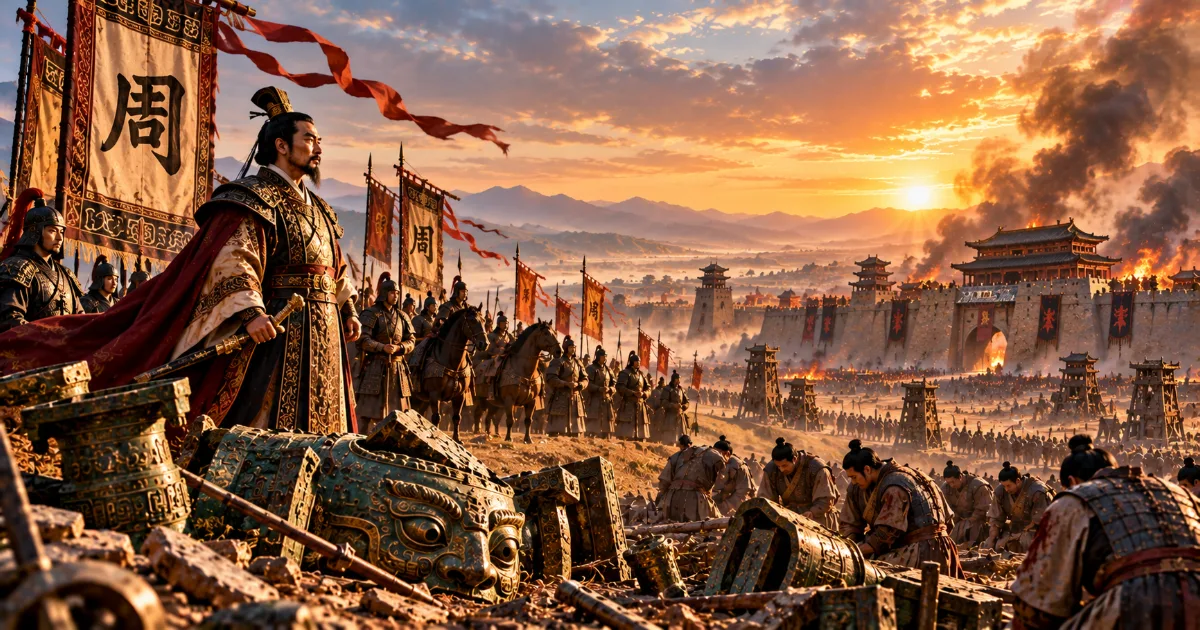
The traditional date of 771 BCE marks a major turning point in Zhou history. In that year, the western royal center was attacked and the Zhou king was killed. The event is associated with a coalition involving the Marquis of Shen and forces from outside the Zhou political order, including groups commonly described in historical sources as the Quanrong.
The details of the crisis are preserved primarily through later accounts, and historians continue to examine the precise circumstances. Nevertheless, the event marked the end of the Western Zhou period and forced the royal court to relocate eastward.
The death of King You of Zhou is often linked in traditional narratives to court intrigue and the king's treatment of his royal household. Some stories emphasize the removal of one queen and her son in favor of another royal consort and heir. These accounts became part of the dynasty's moral history, but they should not be treated as a complete or unquestionably accurate explanation of the collapse.
The political situation was likely more complicated. Royal succession disputes, regional rivalries, military vulnerabilities, and the changing balance of power all contributed to the crisis. The attack demonstrated that the royal center could no longer rely on the same level of security that had supported earlier Zhou rulers.
The destruction or abandonment of the western center had serious consequences. The royal court lost its established base and had to rebuild its position farther east. The move did not end the Zhou Dynasty, but it weakened the dynasty's practical authority and changed its relationship with regional powers.
The event is important because it illustrates how several weaknesses could converge. A court divided by succession disputes might struggle to maintain alliances. Regional rulers with their own interests could respond unpredictably. External military pressure could expose vulnerabilities that had developed over a longer period.
The fall of Western Zhou was therefore not simply the result of one ruler's personal failings. Although later stories emphasized the behavior of King You, the broader political transformation involved structural changes in the Zhou system.
After 771 BCE, the Zhou kings continued to occupy a position of ceremonial and historical importance, but they had much less ability to control powerful regional states. The dynasty entered a new phase in which royal legitimacy survived while effective political power became increasingly decentralized.
7. The Eastern Zhou and the Relocation of the Royal Court
Following the crisis of 771 BCE, the Zhou court moved east, traditionally associated with the establishment of the royal center at Chengzhou, near modern Luoyang in Henan Province. This relocation marks the beginning of the Eastern Zhou period.
The move allowed the Zhou royal house to continue, but it did not restore the authority that earlier kings had exercised. The dynasty's political and military resources were reduced, and the regional rulers had become more capable of pursuing their own interests.
The Eastern Zhou king retained ceremonial importance. His position connected the political world to the Zhou tradition and the Mandate of Heaven. Regional rulers could still seek royal recognition or use their relationship with the Zhou court to strengthen their status. However, the king's ability to command obedience was increasingly limited.
The political order became more fragmented. Powerful states maintained their own courts, armies, and administrative systems. They formed alliances, fought wars, and competed for territory. Some rulers attempted to present themselves as defenders of the wider Zhou order, while others focused on strengthening their own states.
The shift to Eastern Zhou did not mean that all traditional institutions disappeared. Ritual practices, elite genealogies, and concepts of royal legitimacy continued to matter. Yet their practical meaning changed as regional powers gained greater independence.
The relocation also reflected the broader transformation of political geography. The royal court no longer occupied the same position of dominance it had held during the early dynasty. Its survival depended increasingly on accommodation with stronger regional states.
This created a distinctive political situation. The Zhou king remained the formal sovereign in the traditional hierarchy, but other rulers possessed much of the military and administrative power. The gap between symbolic authority and practical control became one of the defining features of Eastern Zhou history.
The Eastern Zhou period is conventionally divided into the Spring and Autumn period and the Warring States period. These phases reflect changing patterns of competition, warfare, and political organization. Together, they provide the setting for some of the most important developments in ancient Chinese philosophy and statecraft.
8. The Spring and Autumn Period: Competition Beneath a Shared Order
The Spring and Autumn period, conventionally dated from 770 to 476 BCE, was a time of political rivalry among regional states. The Zhou king remained the formal head of the political order, but practical authority was increasingly exercised by powerful regional rulers.
The period takes its name from the Spring and Autumn Annals, a chronicle traditionally associated with the state of Lu. The surviving tradition focuses on political events, appointments, conflicts, and other matters relevant to the state. The period's chronology and historical interpretation depend on a combination of such texts, later histories, inscriptions, and archaeological evidence.
Regional states competed for territory, influence, and strategic advantage. Rulers formed alliances, organized military campaigns, and sought recognition from other political centers. Some leaders gained prominence by coordinating coalitions or presenting themselves as defenders of the established order.
The idea of a dominant regional leader, often discussed through the concept of hegemony, became important during this period. Such leaders could claim to uphold the Zhou political order while exercising influence over other states. Their authority did not amount to a unified empire, but it could shape the behavior of neighboring rulers.
The balance of power remained unstable. Alliances could shift, leaders could lose influence, and military campaigns could alter territorial relationships. The weakening of the Zhou king meant that no central authority could reliably settle every dispute or prevent all conflict.
These conditions encouraged changes in political thought. Rulers needed advice about diplomacy, warfare, administration, and the maintenance of social order. Thinkers examined why governments failed and what qualities made leaders effective. The question of how to restore stability became increasingly urgent.
The Spring and Autumn period was also associated with the life of Confucius, who lived from 551 to 479 BCE according to traditional dates. His teachings emphasized moral cultivation, responsible leadership, education, and proper social relationships. Although his thought developed in a particular regional and historical setting, its concerns reflected problems that extended across the wider Zhou world.
The period's importance therefore lies in both its political fragmentation and its intellectual developments. As traditional authority weakened, new approaches to government and ethics emerged, helping prepare the ground for the philosophical debates that would become central to Chinese civilization.
9. From Regional Rivalry to the Warring States Period
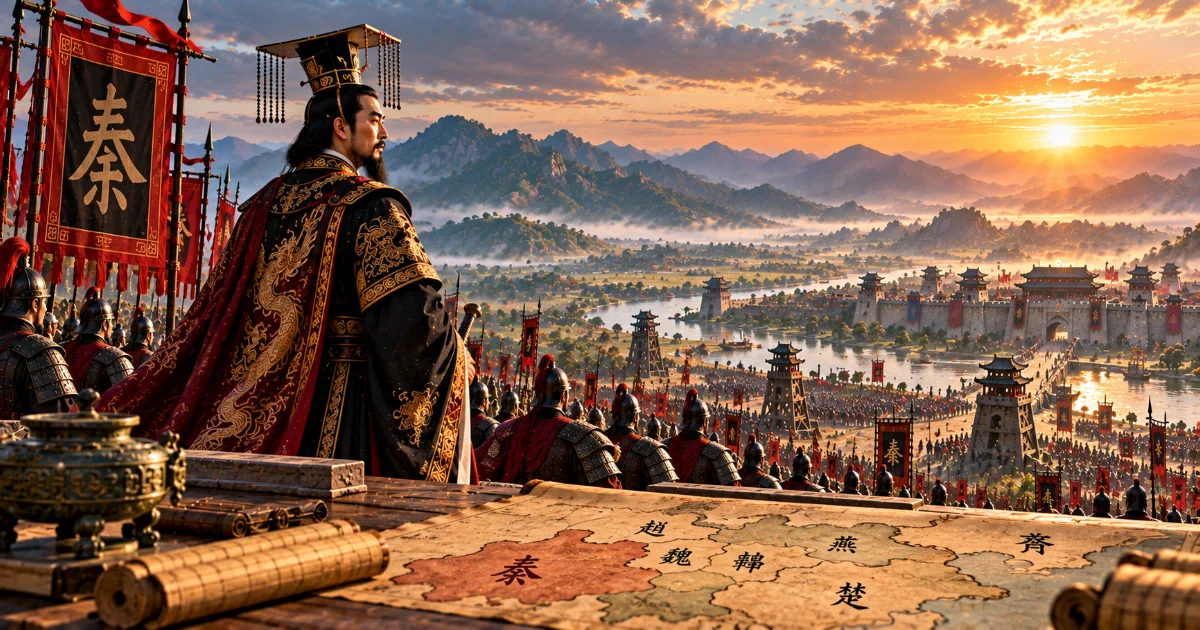
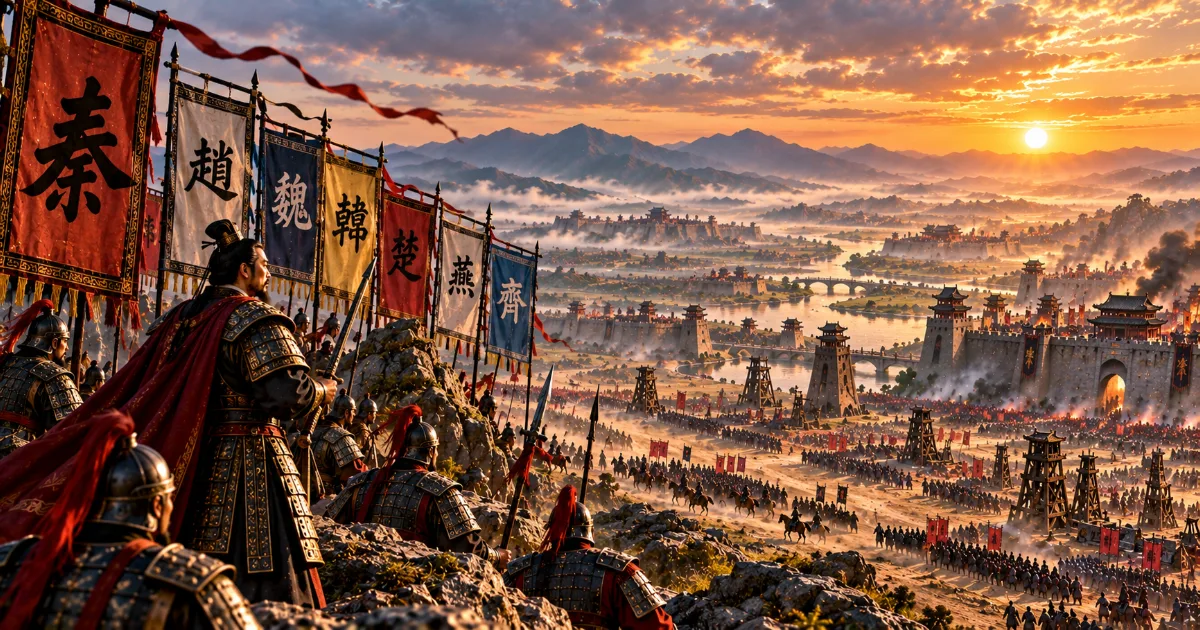
By the fifth century BCE, political competition among the regional states had become increasingly intense. The Warring States period is conventionally dated from 475 to 221 BCE, ending with the Qin unification of China. During this era, several powerful states competed for dominance through warfare, administrative reform, economic development, and diplomatic strategy.
The political environment differed from that of the early Zhou period. Regional rulers increasingly sought to strengthen their own states rather than preserve a shared political order centered on the Zhou king. Armies grew more important, administrative systems developed, and rulers sought methods for mobilizing resources on a larger scale.
Military competition encouraged changes in organization and technology. States needed to supply troops, maintain equipment, secure food, and coordinate campaigns across increasingly large territories. The ability to organize population and resources became a major determinant of political survival.
Rulers also sought skilled advisers. Some thinkers argued that good government depended on moral example and ethical relationships. Others emphasized strict laws, clear rewards and punishments, or the importance of understanding human behavior. These debates reflected different attempts to solve the same fundamental problem: how could a state maintain order and survive in a world of intense competition?
The Warring States period became a major setting for the development of Confucianism, Daoism, Mohism, Legalist thought, and other intellectual traditions. These schools did not all emerge at the same moment, and their later labels sometimes simplify a more complicated history of debate and exchange. Nevertheless, the period encouraged a remarkable range of political and philosophical ideas.
The decline of Zhou royal authority thus had consequences beyond the political structure itself. It created a world in which competing states experimented with different methods of government and thinkers debated the foundations of social order.
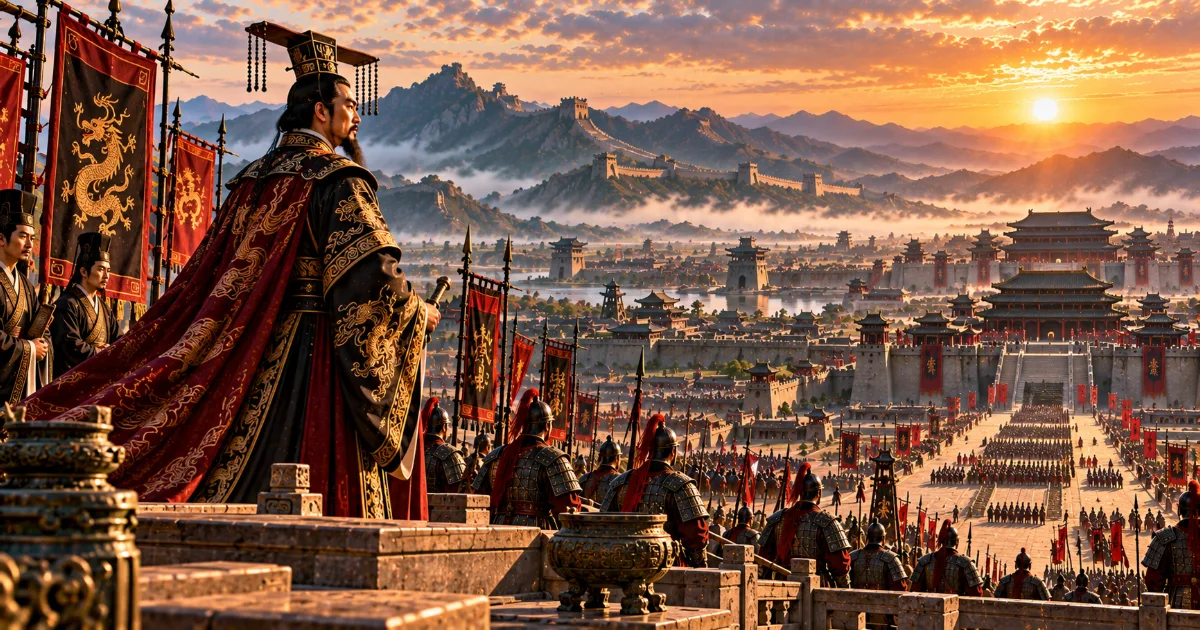
The eventual victory of Qin in 221 BCE ended the Zhou-era pattern of competing kingdoms and established a unified empire. That outcome did not erase the ideas developed during the Zhou period. Many of the philosophical and political traditions that emerged or matured during these centuries continued to shape Chinese society for generations.
10. Why the Zhou Political System Declined
The decline of Zhou authority cannot be explained by one event or one ruler. It resulted from a combination of institutional, military, economic, and political changes that unfolded over centuries.
One major factor was the growth of regional power. The Zhou had granted territories and responsibilities to local rulers because the royal court needed their assistance in governing a large region. Over time, those rulers developed independent resources, armies, and political institutions. Their strength reduced the king's ability to enforce decisions.
Kinship relationships also changed. Early Zhou political organization relied partly on family ties and shared obligations. As generations passed, the descendants of the original royal family developed their own interests and identities. Family connections could still reinforce political relationships, but they could not guarantee loyalty indefinitely.
Military competition placed additional pressure on the system. Regional states needed to defend their territories and compete with neighbors. They developed stronger forces and more elaborate administrative arrangements, increasing their independence from the royal court. Military success could bring further resources, while defeat could weaken a state's position.
Court politics and succession disputes also contributed to instability. Disagreements over royal succession could divide supporters, undermine alliances, and create opportunities for rivals. The crisis of 771 BCE illustrates how internal conflict and external military pressure could combine to threaten the dynasty.
Economic development changed the distribution of power. Productive regions could support larger populations, stronger armies, and more elaborate governments. States that managed their resources effectively gained advantages over rivals, while the Zhou royal court struggled to maintain a comparable level of control.
The Mandate of Heaven remained important as an idea, but it could not solve these practical problems. A theory of legitimacy could help explain why a ruler deserved authority, yet the ability to govern still depended on resources, alliances, military capability, and effective administration.
The Zhou Dynasty therefore weakened because the political structure it had established became increasingly difficult to coordinate. Regional rulers gained the capacity to act independently, and the central court lacked the means to reverse the trend. The resulting fragmentation transformed the political world in which Chinese philosophy and statecraft developed.
Conclusion: The Decline of Royal Power and the Rise of New Ideas
The Zhou Dynasty began by replacing the Shang and establishing a political order built around royal authority, regional rulers, kinship relationships, and the Mandate of Heaven. This arrangement helped the dynasty govern a large and diverse region, but it also gave local rulers the resources needed to become powerful in their own right.
During the Western Zhou period, the royal court maintained substantial influence, although regional autonomy was always an important feature of the system. Over time, regional states strengthened their economies, armies, and political institutions. Royal succession disputes, military pressures, and changing alliances further weakened the central court.
The crisis of 771 BCE marked the end of Western Zhou and the relocation of the royal court eastward. The dynasty survived, but its practical authority declined. During the Eastern Zhou period, regional states increasingly dominated political life, leading first to the Spring and Autumn period and later to the Warring States period.
The Mandate of Heaven remained a powerful explanation of political legitimacy, but the decline of Zhou authority demonstrated that moral claims alone could not preserve a dynasty. Political power depended on effective leadership, resources, military capability, and the ability to maintain relationships with influential groups.
The fragmentation of the Zhou world also created the conditions for major intellectual developments. Thinkers such as Confucius and those associated with Daoist traditions examined the causes of disorder and proposed different ways to achieve a more stable and meaningful society. Other schools developed arguments about law, human nature, warfare, and administration.
The Zhou Dynasty's decline was therefore not merely the story of a royal family losing control. It was a transformation of the political environment that shaped the future of Chinese civilization. As the old order weakened, new ideas emerged about how people should live, how rulers should govern, and what kind of society could achieve lasting stability.
In the next article, we will explore Confucius and the Foundations of Chinese Ethics, examining his life, his teachings on moral character and education, and why his ideas became one of the most influential traditions in Chinese history.
#HistoryOfChina #ZhouDynasty #AncientChina #ChineseHistory #SpringAndAutumnPeriod #WarringStatesPeriod #MandateOfHeaven #WorldHistory