Understanding the Emotional Farewell to Maa Durga
The celebration of Navratri and Durga Puja brings millions of people across India together through prayer, music, dance, devotion, and community gatherings. For many devotees, these days are among the most meaningful periods of the year, filled with the joy of welcoming Goddess Durga into their homes and communities. Yet, as the festivities draw to a close, another important tradition takes place: Durga Visarjan, also known as Durga Bisarjan.
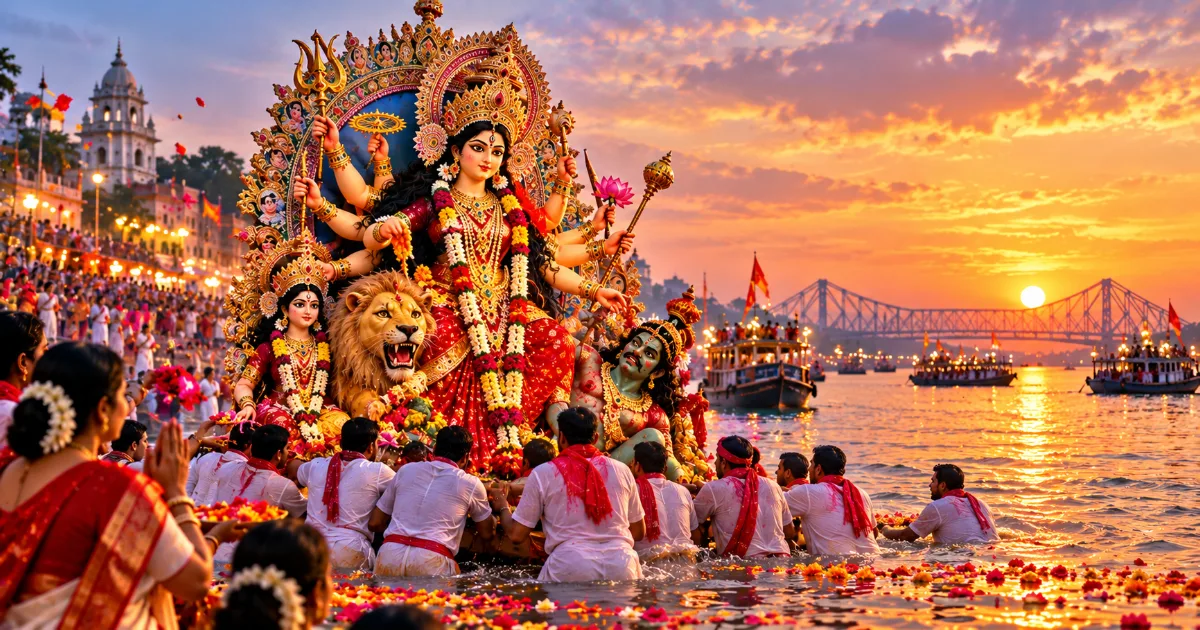
Durga Visarjan marks the ceremonial farewell to Goddess Durga after the completion of Durga Puja. It is a deeply emotional occasion, particularly in West Bengal and other regions where Durga Puja is celebrated on a grand scale. Devotees gather to offer their final prayers, carry beautifully decorated idols in processions, sing devotional songs, and accompany the Goddess to a river, lake, or another designated water body for immersion.
However, Durga Visarjan is much more than the immersion of an idol. It represents the temporary nature of physical existence, the continuing presence of divine blessings, the bond between the Goddess and her devotees, and the hope of welcoming her again in the future.
Continue Reading
What Is Durga Visarjan?
Durga Visarjan is the ritual immersion of Goddess Durga's idol at the conclusion of Durga Puja. The word visarjan broadly refers to a ceremonial farewell or the concluding ritual through which a deity's presence, invoked during worship, is respectfully released from the consecrated image.
During Durga Puja, devotees worship Goddess Durga as the embodiment of divine power, courage, protection, and the triumph of good over evil. The idol becomes the central focus of prayers, offerings, cultural performances, and community celebrations. When the festival concludes, the immersion ceremony symbolically brings the worship period to an end.
The exact timing and rituals of Visarjan vary according to regional customs, religious traditions, and the calendar followed by different communities. In many places, the ceremony takes place on Vijayadashami, the tenth day associated with the conclusion of Durga Puja and the wider Navratri celebrations.
For devotees, the farewell is not simply an ending. It is an expression of gratitude for the Goddess's blessings and a prayer for peace, prosperity, good health, and protection in the days ahead.
The Religious and Spiritual Significance of Durga Visarjan
The Goddess Returns, but Her Blessings Remain
In many Bengali traditions, Goddess Durga's annual visit is understood through the imagery of a beloved daughter returning to her parental home. Her arrival is welcomed with enthusiasm, and her departure is accompanied by affection, sadness, and prayers for her return.
This understanding gives Durga Puja a deeply personal character. The Goddess is not worshipped only as a distant divine power. She is also welcomed as a member of the family and the community. Her departure therefore feels like saying goodbye to someone loved.
Durga Visarjan reminds devotees that the conclusion of a festival does not mean the end of their relationship with the divine. The prayers, values, and spiritual inspiration experienced during the celebration can continue to guide everyday life.
The Cycle of Arrival and Departure
The immersion ritual also reflects the changing nature of life. Festivals arrive, celebrations reach their peak, and eventually the time comes to say goodbye. This pattern reminds people that joy, sorrow, beginnings, and endings are all part of human experience.
The idol's immersion can be understood as a symbolic return to the natural elements from which the materials used to create it may have originated. In traditional idol-making, clay and other natural materials are shaped into a sacred image, which is later immersed as part of the festival's concluding ritual.
This symbolism encourages reflection on humility, impermanence, and the relationship between human life and nature.
Gratitude and the Hope of Renewal
Durga Visarjan is also an occasion for expressing gratitude. Devotees thank Maa Durga for her protection, strength, and blessings, while praying for happiness and well-being for their families and communities.
The hope that the Goddess will return the following year brings a sense of renewal to the farewell. Although the celebration ends, devotees look forward to another opportunity to welcome her with devotion and enthusiasm.
How Durga Visarjan Is Celebrated Across India
Durga Visarjan is observed in different ways throughout India. The central idea of offering a respectful farewell remains important, but the rituals, processions, music, and local customs reflect the diversity of Indian culture.
Durga Visarjan in West Bengal
West Bengal is especially well known for its grand Durga Puja celebrations. Kolkata and many other towns and villages host elaborate pandals, artistic idols, cultural programmes, community feasts, and religious ceremonies.
On Vijayadashami, devotees gather at pandals to offer their final prayers to Goddess Durga. Married women in many Bengali communities participate in a traditional ceremony known as Sindoor Khela, in which vermilion is applied as part of a ritual associated with married life, blessings, and auspiciousness. Customs and participation can vary between communities.
After the farewell rituals, the idols are carried through streets in colourful processions. Devotional music, drums, chants, and cries of “Asche bochor abar hobe,” expressing the hope that the celebrations will happen again next year, accompany the procession in many places.
The idols are then immersed at designated locations, often along rivers or specially arranged immersion sites. For many participants, this moment is both joyful and emotional. The public celebration gives way to a quieter feeling of separation, gratitude, and anticipation for the next Durga Puja.
Durga Visarjan in Other Parts of India
In states such as Assam, Odisha, Bihar, Jharkhand, Tripura, and parts of Maharashtra and other regions, Durga Puja is observed with local variations. Some communities organise public processions, while others perform immersion ceremonies on a smaller scale.
In several places, the celebrations combine worship of Goddess Durga with local music, regional foods, traditional clothing, and community gatherings. The way the farewell is performed may differ, but devotion and the wish for well-being remain common themes.
Across India, it is important to recognise that there is no single ritual followed identically by every community. Religious practices evolve through local history, family traditions, and the customs of individual temples and neighbourhoods.
The Emotional Meaning of the Farewell
One of the most memorable aspects of Durga Visarjan is the emotion surrounding the Goddess's departure. During the days of Durga Puja, people come together to decorate pandals, prepare offerings, meet relatives, visit friends, and participate in cultural events. The festival creates shared experiences that strengthen relationships and community identity.
When the time for Visarjan arrives, those joyful gatherings take on a different atmosphere. People may feel sadness as the idol leaves the pandal, especially after days of worship and celebration. Children watch the procession, families offer final prayers, and community members help carry the idol towards the immersion site.
The farewell can also bring people together across generations. Older family members share memories of past celebrations, while younger participants learn the customs and stories associated with the festival. In this way, Visarjan helps transmit cultural knowledge and traditions from one generation to another.
The sadness of departure is balanced by the belief that the Goddess's blessings do not disappear with the idol. For many devotees, the farewell carries a message of faith: separation is temporary, and the next celebration will bring another opportunity to welcome Maa Durga.
The Importance of Responsible and Eco-Friendly Visarjan
Religious devotion and environmental responsibility can support one another. As public celebrations grow, communities increasingly need to consider the effects of idol immersion on rivers, lakes, and other water bodies.
Traditional clay idols made with natural, biodegradable materials can generally be more environmentally compatible than idols containing materials that persist in water. However, the overall impact also depends on paints, decorations, offerings, and how immersion sites are managed.
Choosing Environmentally Responsible Idols
Where possible, organisers and families can choose idols made from natural clay and use paints that are suitable for environmentally responsible immersion. Non-biodegradable decorations and materials that may pollute water should be avoided.
The specific materials used in an idol matter. An idol described as clay-based is not necessarily free from synthetic paints, coatings, or other substances that can affect the environment.
Following Designated Immersion Arrangements
Many local authorities and community organisations provide designated immersion ponds, tanks, or other managed facilities. Using these facilities where available can help reduce pressure on natural water bodies and make it easier to collect and manage the remaining materials.
Communities should follow local rules concerning immersion, waste collection, and public safety. These arrangements may differ by city or state.
Managing Flowers and Other Offerings
Flowers, leaves, food offerings, plastic packaging, synthetic cloth, and decorative items should not be left scattered around riverbanks or lakes. Separating organic offerings from non-biodegradable waste helps keep public spaces cleaner and reduces pollution.
Community volunteers can also support clean-up efforts after processions and immersion ceremonies.
Balancing Tradition with Environmental Awareness
Eco-friendly practices do not require people to abandon the spiritual meaning of Durga Visarjan. Instead, they offer a way to honour the Goddess while caring for the natural world.
For families and organisers, even small improvements in the choice of materials, waste management, and immersion arrangements can contribute to more responsible celebrations.
What Durga Visarjan Teaches Us About Life
The traditions surrounding Durga Visarjan offer lessons that remain relevant beyond the festival itself.
Every Ending Can Become a New Beginning
Visarjan marks the end of a period of celebration, but it also creates anticipation for the next year. This reminds us that endings are not always final. They can provide an opportunity to reflect on what we have learned and prepare for new experiences.
Gratitude Makes Relationships Stronger
The farewell rituals encourage devotees to express gratitude for blessings received. In everyday life, remembering the people who support us and appreciating the opportunities we have can strengthen personal relationships and create a more positive outlook.
Community Is Built Through Shared Experiences
Durga Puja and Visarjan bring together people from different backgrounds. They cooperate in organising events, maintaining traditions, preparing offerings, and helping with processions. Such collective participation demonstrates the importance of cooperation, respect, and a sense of belonging.
Faith Can Provide Strength During Change
The emotions associated with the Goddess's departure reflect a familiar human experience: letting go of something meaningful. For many devotees, faith offers comfort during transitions and encourages hope for the future.
Respect for Nature Is Part of Responsible Celebration
The use of natural materials and responsible immersion practices highlights the importance of caring for the environment. Protecting rivers and lakes helps preserve the natural resources on which communities depend.
How Families Can Observe Durga Visarjan Meaningfully
Families do not need to participate in a large public procession to understand the meaning of Visarjan. The occasion can be observed through simple acts of devotion, gratitude, and togetherness.
Families can offer prayers according to their traditions, reflect on the values represented by Goddess Durga, and share stories about the festival with children. Visiting a local pandal, where appropriate, can also help younger generations understand the community and cultural dimensions of Durga Puja.
Parents and grandparents can explain why the Goddess is welcomed, why the farewell is emotional, and why the festival returns each year. These conversations help children see the celebration as more than decoration and entertainment.
Families can also choose to support environmentally responsible celebrations by following local immersion guidelines and avoiding littering. Teaching children to respect both religious traditions and public spaces helps create a thoughtful approach to cultural participation.
For those who prefer a quieter observance, offering a prayer at home and expressing gratitude for the festival can be equally meaningful within their family tradition.
Preserving the Cultural Heritage of Durga Visarjan
Durga Visarjan is an important part of India's living cultural heritage. Its significance extends beyond religious worship to include music, sculpture, craftsmanship, performance, food, community organisation, and the transmission of traditions.
Idol-makers, artists, drummers, decorators, priests, volunteers, and local organisers all contribute to the celebration. Their work reflects specialised skills and knowledge developed and passed down over many years.
Public processions and community ceremonies also create spaces where traditional practices meet contemporary life. Younger generations may experience the festival through social gatherings and cultural programmes, while elders help preserve its stories and rituals.
Preserving this heritage requires respect for regional differences. The traditions followed in one part of India may not be identical to those in another, and each community's practices deserve to be understood in their own cultural context.
Documentation, responsible tourism, support for traditional artisans, intergenerational learning, and environmentally conscious celebrations can all help sustain the festival for future generations.
Conclusion: The Spirit of Maa Durga Lives Beyond Visarjan
Durga Visarjan is a farewell filled with devotion, emotion, and hope. It brings the Durga Puja celebrations to a close while reminding devotees of the strength, courage, and protection associated with Maa Durga.
From the grand processions of West Bengal to the varied traditions observed across India, the ceremony reflects the country's cultural richness and the enduring importance of community. Its spiritual meaning encourages gratitude, acceptance of change, respect for nature, and confidence in new beginnings.
As the idol is immersed, the celebration does not erase the memories, values, or faith built during the festival. Instead, devotees carry these experiences into their daily lives, looking forward to the day when they can welcome the Goddess again.
The true meaning of Durga Visarjan lies not only in saying goodbye, but also in remembering the values that Maa Durga represents: courage in difficult times, compassion towards others, strength in the face of challenges, and the determination to stand for what is right.
May Maa Durga bless every home with peace, happiness, strength, and prosperity. May the spirit of devotion inspire us to care for one another and for the world we share.
Jai Maa Durga!